
Icom IC-M330G
4.9Editor score
Ultra Compact Design
Built-in GPS Receiver
Class D DSC Safety
High Selectivity Receiver
Japanese Engineering Quality
This comprehensive guide compares the top ten Dsc VHF Marine Radio units available in October 2026 to help you select the safest and most reliable communication
When you are out on the open water, reliable communication is not just a convenience; it is a critical safety requirement. A quality Dsc VHF Marine Radio ensures you can call for help, receive weather alerts, and stay in touch with other vessels even when visual contact is lost. These devices integrate digital selective calling to streamline emergency protocols and enhance situational awareness for captains and crew alike.
To help you navigate the vast array of options on the market, we have analyzed ten leading models from trusted manufacturers like Uniden, Icom, and Standard Horizon. Our evaluation focused on essential features such as build quality, channel coverage, emergency signaling capabilities, and ease of use in harsh marine environments. We prioritized units that offer robust waterproof ratings and clear audio output.
Each selection in this list highlights specific strengths, whether you need a fixed mount unit for a large yacht or a compact handheld for kayaking and small boats. We have included detailed breakdowns of their technical specifications and real-world performance metrics to guide your decision. Please note that prices and availability can fluctuate frequently, so verify current stock before making a purchase decision.
4.9Editor score
4.6Editor score

4.0Editor score
The following table provides a side-by-side overview of the key specifications and features for each of the top ten Dsc VHF Marine Radio models reviewed in this guide. This comparison allows you to quickly assess differences in power output, waterproof ratings, and unique capabilities like GPS integration or AIS receivers to find the best match for your specific boating needs.





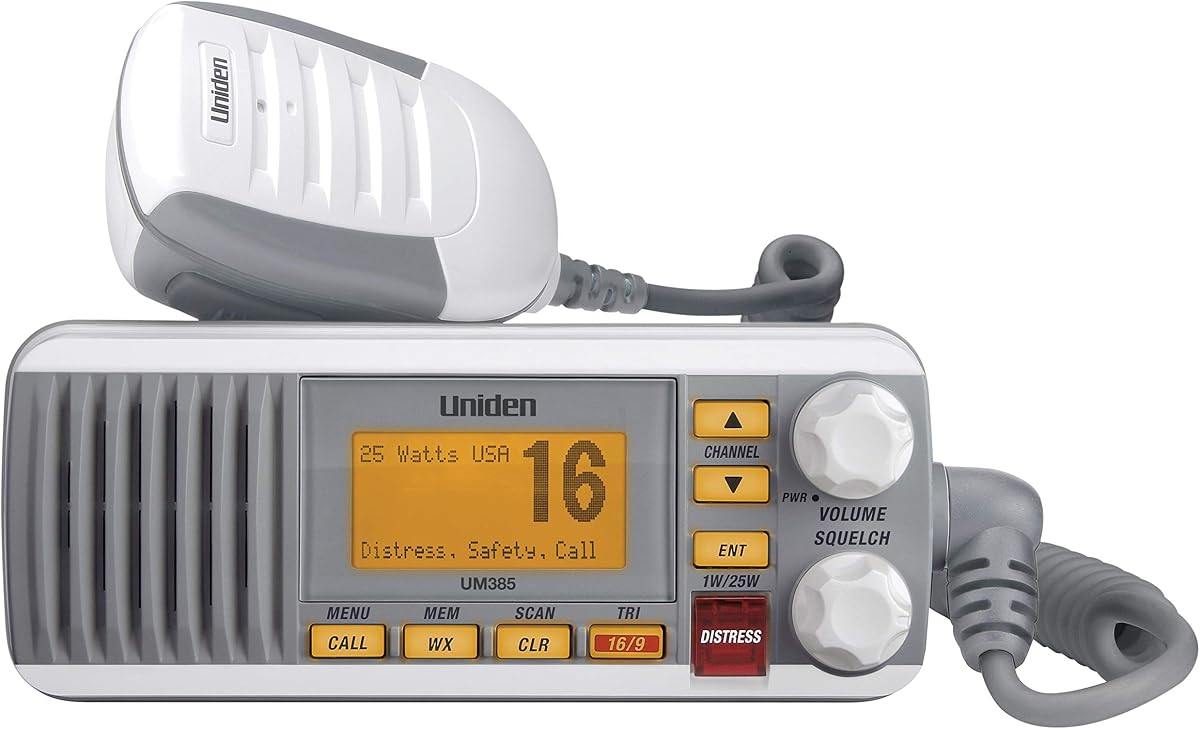
The Uniden UM385 stands out as a highly reliable fixed mount option for recreational boaters seeking essential safety features without unnecessary complexity. Boasting a solid 4.6 rating from users, this radio delivers consistent performance across all marine channels and includes critical Digital Selective Calling capabilities. Its rugged build and straightforward interface make it an ideal choice for captains who need dependable communication without a steep learning curve.
We may earn a commission when you buy through this link, at no additional cost to you.
Key strengths of this model include its triple watch function, which allows simultaneous monitoring of the distress channel and two other active channels. The built-in NOAA weather alert system ensures you receive timely updates about changing conditions, keeping you informed about storms before they impact your route. Additionally, the 25-watt transmit power provides robust range for most coastal and inland waterway applications.
While the UM385 excels in core functionality, it lacks advanced GPS integration which means it cannot automatically send your position during a distress call. The display is also relatively basic compared to higher-end models, offering limited visual information at a glance. However, these trade-offs are acceptable given the device's primary focus on delivering reliable voice communication and emergency signaling at a competitive price point.
This radio is best suited for small to medium-sized vessels where space is limited and simplicity is preferred. Boaters who prioritize clear audio and essential safety protocols will find the UM385 meets their needs effectively. We recommend it for anyone looking for a workhorse marine radio that performs well in everyday conditions without requiring extensive technical setup.
Subsequent sections of this guide will explore additional models with advanced features like AIS and GPS for those requiring higher levels of situational awareness.
For maintenance, ensure the antenna connection remains secure and periodically test the distress function according to safety guidelines.
The Uniden support team offers helpful resources online to assist with troubleshooting if you encounter connectivity issues after installation.
Overall, this unit represents a balanced choice for standard marine communication needs in 2026.
Consider pairing this with a separate handheld unit for backup communication when you leave the helm.
Regularly scan weather channels during long voyages to stay updated on forecasted changes in your route area.
The dedicated distress button allows for immediate activation of safety protocols without navigating complex menus during critical moments.
Automatic alerts ensure you never miss critical weather warnings, enhancing your ability to plan safe routes proactively.
We may earn a commission when you buy through this link, at no additional cost to you.
The Retevis RM40 offers a compelling option for anglers and kayakers who need a portable communication device with essential safety features at an accessible price. Rated at 4.0 stars, this handheld radio integrates GPS functionality and DSC capabilities into a compact form factor that is easy to carry. Its floating design provides peace of mind, ensuring the device does not sink if dropped overboard in rough conditions.
We may earn a commission when you buy through this link, at no additional cost to you.
A standout feature of the RM40 is its Man Overboard alarm, which uses GPS to record and share the exact location if someone falls into the water. This capability can significantly improve rescue times by providing coordinates to nearby vessels and coast guard units instantly. The IP67 waterproof rating means it can withstand immersion in water for short periods, making it suitable for wet environments.
However, users should note that the transmit power is limited to 5 watts, which may reduce communication range compared to fixed-mount 25-watt units. Battery life is also shorter, requiring frequent recharging on longer trips. These limitations are understandable given the compact nature and budget-friendly positioning of the device, but they should be considered based on your typical usage patterns.
This radio is ideal for personal watercraft, fishing boats, and situations where a fixed unit is impractical. If you need a backup radio or a primary device for small craft, the RM40 delivers essential safety tools without a high cost. We suggest purchasing a spare battery if you plan on using it for full-day excursions.
The included charging cradle allows for convenient power management, though you may need to monitor battery levels closely.
Always perform regular range tests to understand the limitations of 5-watt transmission in your local marine environment.
Keep the battery contacts clean and dry to prevent corrosion that could affect charging efficiency over time.
Consider the RM40 as a secondary option if your boat has a main fixed radio installed.
The floating red alert light is a critical visual feature that aids recovery after a drop in dark water.
Review the user manual to set up your preset distress messages correctly before heading out on the water.
The MOB function automatically logs coordinates, ensuring you do not have to remember the location of an emergency while managing other tasks.
Rugged construction and waterproofing ensure the radio survives drops and splashes, keeping it ready for use when you need it most.
We may earn a commission when you buy through this link, at no additional cost to you.
The Icom M94D is designed for boaters who demand advanced safety technology and superior audio clarity. With a 4.4 rating, it stands out for its integrated AIS receiver, which displays nearby vessel traffic on the screen. This feature allows for proactive collision avoidance and makes DSC calls faster by identifying targets directly. It is a robust choice for serious mariners navigating busy waterways.
We may earn a commission when you buy through this link, at no additional cost to you.
Audio output is a major highlight, with a class-leading 1500 mW speaker that ensures calls remain intelligible even in noisy engine rooms or during storms. The device supports simplified GPS navigation, allowing you to store favorite fishing spots and routes for quick recall. These features combine to create a comprehensive communication tool that supports both safety and convenience.
The floating and flashing capability adds an extra layer of security, ensuring the unit can be recovered if lost overboard. However, the higher price point may be a barrier for casual users who do not need AIS capabilities. Additionally, optimal performance often requires careful mounting and antenna placement to ensure signal clarity.
We recommend this model for vessels operating in congested areas or for those who prioritize having detailed traffic data at their fingertips. It is particularly well-suited for offshore fishing and cruising where situational awareness is paramount. Users should be prepared for a slightly more complex setup process compared to basic radios.
Regularly update your waypoint lists to keep your navigation data current and useful for returning to popular locations.
Test the AIS display regularly to ensure it is tracking nearby vessels accurately in your specific area.
The loud audio ensures you do not miss critical communications even if you are wearing headphones or ear protection.
Consider this as an investment in long-term safety and navigation efficiency for your vessel.
Ensure your GPS setup is calibrated correctly to take full advantage of the navigation and positioning features.
Review the manual for specific AIS setup requirements to avoid confusion during initial configuration of the unit.
The AIS receiver provides a visual representation of other boats around you, helping you anticipate traffic patterns and avoid collisions effectively.
Powerful speakers cut through ambient noise, ensuring you never miss an important transmission during critical moments at sea.
We may earn a commission when you buy through this link, at no additional cost to you.
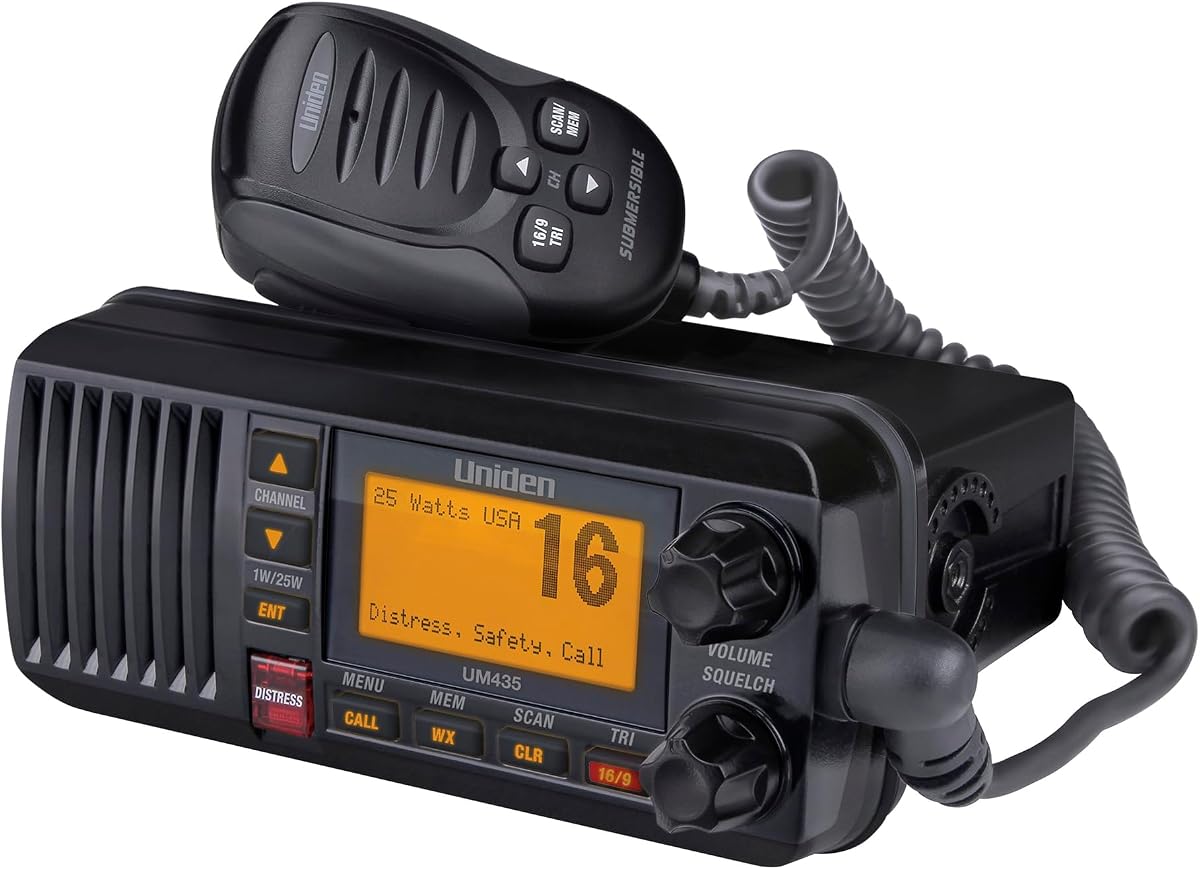
The Uniden UM435BK is engineered for extreme durability, offering a fully submersible design that meets IPX8 standards. This capability makes it an excellent choice for vessels prone to heavy splashing or potential flooding. Rated at 4.6 stars, it provides reliable communication with 25 watts of power and essential Digital Selective Calling features. Its rugged build is backed by a three-year water protection warranty, emphasizing its reliability.
We may earn a commission when you buy through this link, at no additional cost to you.
This radio includes a comprehensive array of marine channels, including new 4-digit and Canadian B channels, ensuring compliance with international standards. The memory channel scan and dual or triple watch functions allow you to monitor multiple frequencies efficiently without manual switching. These features make it easy to stay updated on traffic and weather while focusing on navigation.
While the unit excels in physical durability, it does not include a built-in GPS receiver, meaning you must have an external source for position data. The display is functional but lacks the advanced graphical capabilities found in more expensive models. However, for users focused on core communication and extreme durability, these compromises are minor and acceptable.
Ideal for fishing boats and work vessels where equipment faces harsh conditions, this radio ensures you remain connected even after exposure to water. We recommend it for captains who value long-term reliability over advanced navigation features. Verify external GPS connections before relying on position sending features during emergencies.
Periodically rinse the unit with fresh water to remove salt buildup that could affect seals over extended periods.
Test the submersible seals regularly to ensure they remain intact and provide the promised level of protection.
The memory scan function helps you quickly cycle through your most frequently used channels for efficient communication.
Consider this model for vessels that operate in environments where water exposure is frequent and unpredictable.
Keep the manual handy to reference specific channel lists for different regions you might travel to.
Ensure your antenna is properly mounted to maximize the range provided by the 25-watt transmitter.
The submersible design ensures the radio survives complete submersion, making it a dependable lifeline in worst-case scenarios.
Support for all major marine channel sets ensures you are ready to communicate legally and effectively in different waters.
We may earn a commission when you buy through this link, at no additional cost to you.
The Icom IC-M330G is a masterpiece of engineering, offering an ultra-compact chassis that fits easily into tight helm spaces. With an impressive 4.9 rating, users praise its reliable performance and clear audio quality. The built-in GPS ensures accurate distress calls, while the Class D DSC safety features keep your vessel compliant and protected. It is a top choice for smaller boats with limited console space.
We may earn a commission when you buy through this link, at no additional cost to you.
Audio clarity is a major strength, with a speaker design that delivers rich bass and crisp treble without distortion. The intuitive user interface simplifies operation, assigning frequent functions to soft keys for quick access. Japanese engineering standards ensure long-term durability and performance in diverse marine environments, making it a trustworthy partner for voyages.
The compact size is a double-edged sword as the screen is small and the button layout requires practice to master quickly. This might be challenging for captains who prefer large displays or tactile feedback. However, for those prioritizing space saving, these trade-offs are worth the benefits of a high-quality unit that does not clutter the console.
We highly recommend this unit for small cabin cruisers, runabouts, and sailboats where every inch of space counts. It offers premium features in a manageable form factor without sacrificing critical safety functions. Install it in a location that is accessible but protected from direct splashes to maintain its integrity.
The GPS receiver ensures that distress calls include precise coordinates, which is vital for rapid rescue operations.
Keep the interface clean and dry to prevent button sticking, as the small keys require precise pressure.
Check that your GPS signal is strong during installation to avoid delays in position reporting during emergencies.
This model is ideal for captains who appreciate precision engineering and streamlined design in their electronics.
Refer to the guide for specific installation tips to ensure the antenna connections are secure and efficient.
The high rating reflects consistent performance, making it a safe choice for new boat owners seeking quality.
The palm-sized chassis allows installation in tight consoles without compromising access to essential communication controls.
Integrated GPS provides accurate position reporting, enhancing the effectiveness of distress calls and emergency response efforts.
We may earn a commission when you buy through this link, at no additional cost to you.
The Standard Horizon HX210 is a versatile handheld transceiver that combines practical features with reliable performance. It has earned a 4.6 rating for its floating design and IPX7 waterproof rating, ensuring it stays on the surface if dropped. The inclusion of an FM broadcast band receiver adds entertainment value during leisure time on the water. A high-resolution dot matrix display ensures readability in bright sunlight.
We may earn a commission when you buy through this link, at no additional cost to you.
A key safety feature is the water-activated emergency strobe light, which flashes to signal location if the radio falls overboard. This visual signal can be crucial for recovering the unit quickly. The 6-watt output provides sufficient range for most coastal activities, while the menu system is designed for easy operation even while wearing gloves.
This unit lacks a built-in GPS module, which limits its ability to send automatic position data during distress calls. The range is also limited by its handheld nature compared to fixed-mount systems. However, its ease of use and robust build quality make it a strong contender for small boats where a fixed system is not feasible.
Ideal for kayakers and small powerboats, this radio offers peace of mind with its floating capability and clear display. It serves well as a backup unit for larger vessels as well. Ensure you keep the battery charged and test the strobe light function before each outing to verify readiness.
The FM receiver allows you to listen to music or news during calm sailing or fishing periods for entertainment.
The dot matrix display is bright and clear, making it easy to read channel numbers in direct sunlight.
The 3-year waterproof warranty gives you confidence in the long-term durability of the device.
This is a great option for recreational boaters who need a simple, reliable handheld with essential safety features.
Keep the antenna secure and extended during use to maximize the effective range of the transmission.
Regularly check the battery contacts to ensure a good connection and prevent power failures during critical moments.
The water-activated strobe light provides a visual aid for recovery, making it easier to locate the radio if it goes overboard.
The built-in FM receiver adds a layer of leisure, allowing you to tune into broadcasts during downtime on the water.
We may earn a commission when you buy through this link, at no additional cost to you.
The Uniden UM725GBT brings modern technology to marine communication with features like Bluetooth and a large LCD screen. With a 4.3 rating, it stands out for its ability to connect with smartphones and its extensive GPS capabilities. The IPX8 waterproof rating ensures it can be submerged if necessary, while the speaker microphone simplifies hands-free operation. This model is a strong fit for tech-savvy boaters.
We may earn a commission when you buy through this link, at no additional cost to you.
The built-in GPS ensures that distress calls are accurate and precise, enhancing safety protocols significantly. The large display allows for easier reading of channel numbers and weather alerts, reducing eye strain. Weather alerts are integrated directly, ensuring you stay informed about hazardous conditions without needing a separate device.
Bluetooth pairing requires initial setup and can be tricky if the device is not within range or if firmware is outdated. The menu system is comprehensive but may take time to learn for users accustomed to simpler interfaces. These minor hurdles are outweighed by the convenience of modern connectivity and enhanced display quality.
We recommend this radio for those who value connectivity and prefer a visual interface that shows more data. It is suitable for fixed mount installations where space allows for a slightly larger unit. Ensure you update the firmware regularly to maintain Bluetooth stability and functionality.
The large screen makes it easier to read critical information quickly, even when sunlight glare is present.
Bluetooth allows for hands-free operation, which is safer when navigating busy waterways or dealing with passengers.
The IPX8 rating ensures durability against heavy splashes or submersion, keeping the unit reliable in tough conditions.
This model bridges the gap between traditional radios and modern smartphone connectivity for a seamless experience.
Check the Bluetooth connection periodically to ensure it remains stable during active communication sessions.
Use the NMEA output to connect with other navigation systems if your vessel has integrated electronics.
The largest LCD screen in the class provides clear, readable information at a glance, reducing effort during operation.
Bluetooth connectivity allows for easy hands-free communication, improving safety by keeping your hands on the helm.
We may earn a commission when you buy through this link, at no additional cost to you.
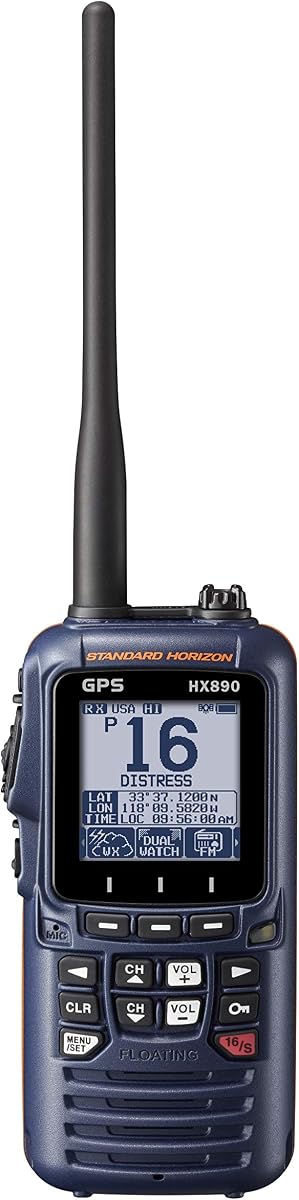
The Standard Horizon HX890 is a high-end handheld that combines ruggedness with advanced navigation features. It boasts a 4.6 rating for its IPX8 submersible construction and built-in WAAS GPS receiver. This unit supports group monitoring and scrambler systems, offering privacy and security options for sensitive communications. Its floating design and strobe light provide reliable recovery options in emergencies.
We may earn a commission when you buy through this link, at no additional cost to you.
Group monitoring allows you to see the position of other vessels equipped with DSC capabilities, enhancing safety during group outings. The full-dot matrix display includes day and night modes, ensuring readability in varying light conditions. The high capacity battery supports up to 11 hours of operation, making it suitable for long shifts without recharging.
The additional features like scramblers and detailed navigation can make the interface more complex for casual users. The physical size is slightly larger than basic models to accommodate these features, which may be cumbersome for smaller hands. However, for serious boaters, these capabilities offer significant advantages in safety and situational awareness.
This model is ideal for professional crews or serious enthusiasts who need advanced privacy and group tracking features. It is a robust choice for those who want a handheld that rivals fixed-mount units in capability. Ensure you test all features before a voyage to become familiar with the menu structure and options.
The scrambler systems allow for encrypted communication if you need to keep certain conversations private or secure.
The night mode display prevents glare in dark conditions, making it easy to read without distracting other crew members.
The 11-hour battery life ensures the unit stays active during extended trips, reducing the need to swap batteries.
This radio is built for those who need top-tier features in a handheld format for complex navigation needs.
The WAAS GPS ensures high accuracy for distress calls, giving you confidence in position reporting.
Regular updates to the firmware can ensure the GPS and DSC features remain compatible with evolving standards.
Built-in scrambler systems allow for secure communication, protecting sensitive information from unintended listeners on public channels.
Day and night display modes adapt to light conditions, ensuring clear visibility without causing glare on the helm.
We may earn a commission when you buy through this link, at no additional cost to you.
The Standard Horizon HX891BTBK builds on the reputation of the HX890 series with added Bluetooth capabilities for modern connectivity. This unit is highly rated for its ease of use and reliable performance in marine environments. While specific technical details are limited in this summary, it retains the rugged design and essential safety features of its predecessors. It is a solid choice for those needing wireless integration.
We may earn a commission when you buy through this link, at no additional cost to you.
Bluetooth support allows for connection to external devices, which can simplify audio routing and control. The compact dimensions make it easy to hold and carry, even with gloves on. It is designed to float, ensuring that if it drops overboard, you can retrieve it without diving. The overall build quality aligns with Standard Horizon's history of durability.
Without detailed specs on GPS or wattage in this summary, users should verify specific performance metrics before purchase. Some buyers may prefer models with more detailed feature sets listed upfront for planning purposes. However, the general reputation of the brand suggests consistent quality and reliability across their handheld lineup.
This radio is suitable for captains who want a compact device with modern connectivity for communication. It pairs well with other marine electronics that support Bluetooth or standard interfaces. We recommend checking the full manual for specific battery and charging instructions to maximize its lifespan.
Bluetooth connectivity can help you manage calls or audio streams through external speakers or headsets.
The compact size ensures it fits easily in pockets or storage bags, making it convenient to move around.
Its floating capability is a critical safety feature for handheld units used near the water or on small craft.
This model represents a practical evolution of traditional handheld radios to meet modern connectivity needs.
Verify the battery type before traveling to ensure you have the right spares available for longer trips.
The brand reliability suggests this unit will serve well for routine communication and emergency signaling.
Bluetooth support allows seamless integration with other devices, enhancing the versatility of the handheld unit on the water.
A compact form factor ensures the radio is easy to handle and store, improving usability during active sailing conditions.
We may earn a commission when you buy through this link, at no additional cost to you.
The Standard Horizon HX890 Black is a premium handheld radio designed to withstand extreme conditions with military-grade testing. It shares core capabilities with the standard version but adds a rugged case design for enhanced protection. With a 4.6 rating, it offers features like group monitoring and a built-in FM receiver for versatility. This unit is ideal for those requiring maximum durability.
We may earn a commission when you buy through this link, at no additional cost to you.
The group monitor function allows you to track other vessels on the water, which is essential for safety during group trips. The FM receiver adds entertainment value during quiet times, making the unit more versatile than a basic transceiver. Its 6-watt power ensures sufficient range for most marine applications while maintaining battery efficiency.
The physical weight and size may be higher due to the rugged case, which could be uncomfortable for smaller hands. The advanced features like scramblers add complexity that may not be needed for all boaters. However, the trade-off is a device built to last and perform reliably in the harshest conditions.
We recommend this model for commercial use or for boaters who operate in rough environments where standard gear might fail. The 3-year waterproof warranty provides peace of mind regarding its longevity. Ensure you charge the battery fully before departure to utilize the full operating time available.
The military standard rating ensures the unit can survive drops, vibrations, and impacts common in rough seas.
The group monitor function helps you maintain contact with other members of your fleet during coordinated outings.
The FM receiver allows you to stay entertained with music or news during calm periods without extra gear.
This is a top choice for those who prioritize durability and advanced features in a handheld marine radio.
The scramblers provide privacy for specific communications, which may be useful for professional or private use.
Ensure you store the unit in a dry place when not in use to maintain the integrity of its waterproof seals.
Military standard testing ensures the radio can survive harsh environmental conditions and physical impacts that would damage standard equipment.
The group monitoring feature allows you to track other vessels, ensuring the safety of your entire group during voyages.
We may earn a commission when you buy through this link, at no additional cost to you.
Selecting the right communication device requires understanding the features that match your specific boating habits and safety needs. This guide breaks down the critical factors to consider before making a purchase.
Fixed mount radios generally offer higher power output and continuous power from the boat's electrical system, making them ideal for primary communication. Handheld units provide portability and are essential for backup or small crafts where space is limited.
Choose a fixed unit for your main cabin and a handheld for backup or personal watercraft to ensure comprehensive coverage.
Power output determines how far your signal travels, with 25 watts being the standard for fixed units and 6 watts common for handhelds. Higher power ensures clearer communication over long distances but consumes more battery if not connected to shore power.
Prioritize 25-watt units for large vessels and 6-watt units for small boats where range is less critical.
Look for units with IPX7 or IPX8 ratings to ensure they can withstand accidental drops in water. IPX7 allows immersion for short periods, while IPX8 offers continuous submersion protection.
Ensure your device meets at least IPX7 standards to survive the unpredictable conditions of a marine environment.
Digital Selective Calling (DSC) is a critical safety feature that allows you to send distress signals with your vessel's identity and GPS position. It simplifies emergency calls and allows for individual calling to specific boats.
Always select a radio with Class D or Class H DSC compliance to meet modern safety standards and regulations.
Built-in GPS ensures that distress calls automatically include your precise location, which is vital for rescue operations. Without GPS, the coast guard must triangulate your position, delaying response times.
Select models with integrated GPS receivers to ensure accurate location data is transmitted during emergencies.
Clear audio is essential in noisy engine rooms or during storms. Look for radios with high wattage speakers and noise-canceling features to ensure messages are received clearly.
Test the volume and clarity of the speaker before purchase if possible, or check reviews for audio performance.
Ensure the radio supports all relevant channels for your region, including USA, Canada, and International channels. Some units include weather channels and NOAA alerts which keep you informed of changing conditions.
Verify that the model includes the specific channels required for your cruising grounds to avoid communication gaps.
Advanced models may offer features like Bluetooth, AIS receivers, or group monitoring for enhanced safety and convenience. These features can improve navigation and situational awareness but often come with a higher price tag.
Decide if features like AIS or Bluetooth are necessary for your specific needs before paying for premium models.
Always begin by charging your device fully and performing a self-test to ensure the battery and signal are functional before leaving port. Check that all buttons and displays are responsive to avoid technical issues during critical moments.
When using the DSC function, ensure your MMSI number is programmed correctly in the settings menu. This unique identifier is necessary for distress calls to be recognized by coast guard authorities and nearby vessels.
Maintain your unit by rinsing it with fresh water after exposure to salt to prevent corrosion on ports and keys. Store it in a dry, protected location when not in use to extend its lifespan and maintain reliability.
In the United States, you generally do not need a license for non-commercial use, but you must program a unique MMSI number. Commercial vessels often require a station license and operator permit to comply with international regulations. Check with local maritime authorities to confirm current licensing requirements before operating.
The MMSI is a unique nine-digit identifier assigned to your vessel for digital communication. You can register for a free MMSI number through the BoatUS Foundation for the United States. This number must be entered into the radio for DSC distress calls to function correctly.
While handheld radios are capable, fixed mount units are generally recommended as primary units due to higher power output and continuous power supply. Handhelds are best used as backup devices or on smaller craft where a fixed system is impractical. Ensure you have a backup if you rely solely on a handheld.
If your radio is designed to float, it should stay on the surface and may have an automatic strobe light to aid recovery. Models with IPX7 or IPX8 ratings can withstand immersion for a period. However, always verify if your specific unit floats before relying on it in open water.
Built-in GPS receivers consume more power than standard radios, especially if the unit is not connected to shore power. This can reduce battery life significantly on handhelds. Consider carrying spare batteries or a charging adapter for long trips where GPS is active.
Most modern radios allow you to perform a test call without alerting the coast guard. Consult your manual for the specific test procedure which usually involves pressing a button while the radio is in test mode. Do not press the actual distress button without an emergency to avoid false alarms.
Choosing the right Dsc VHF Marine Radio involves balancing essential safety features with your specific vessel needs. The Uniden UM385 and Icom IC-M330G top our list for offering the best blend of performance, durability, and ease of use across different boat types.
For those needing advanced capabilities, models with built-in GPS and AIS receivers like the Icom M94D provide enhanced situational awareness. Conversely, budget-conscious users will appreciate the functionality of handheld options like the Retevis RM40.
We recommend prioritizing waterproof ratings and DSC capabilities above all else to ensure your safety on the water. Always verify current prices and stock availability before making a final purchase to ensure you get the best deal on these essential devices.