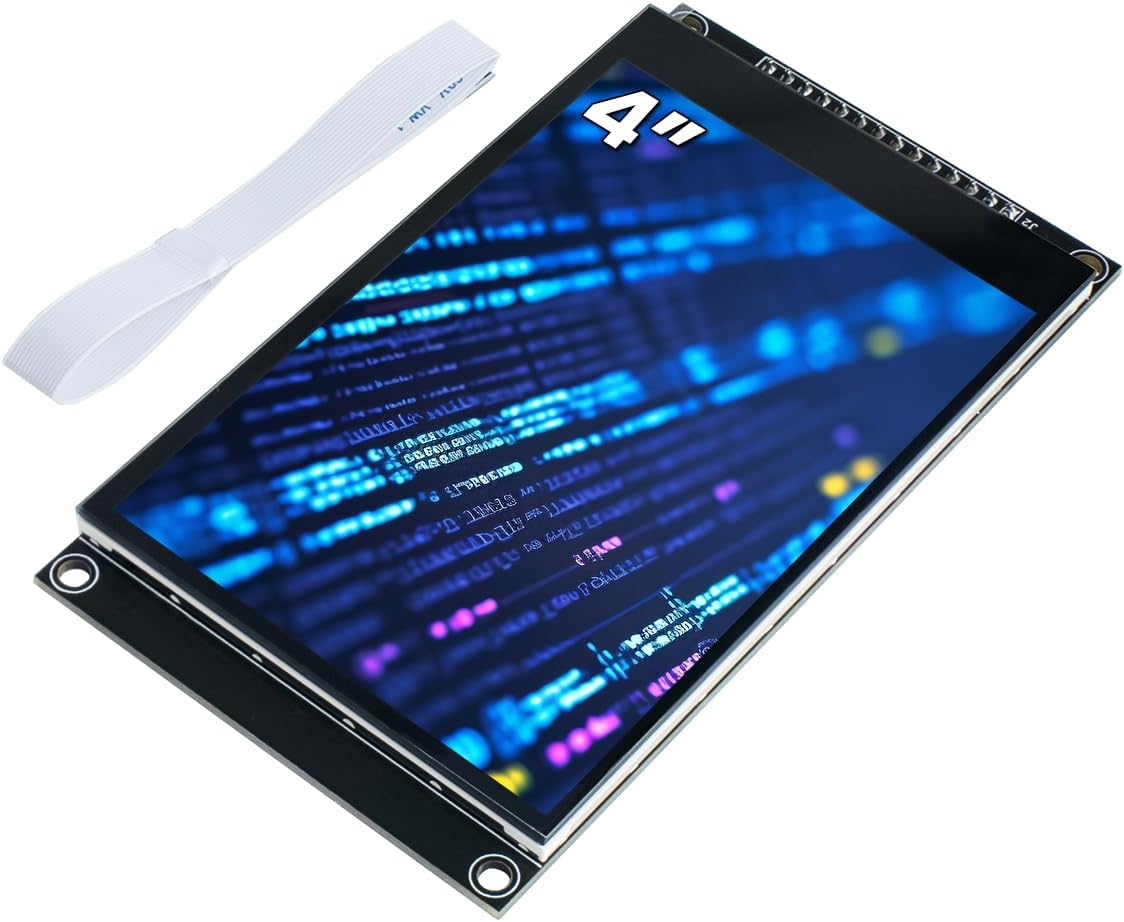
Hosyond 4.0 Inch TN Capacitive Touch
4.0Editor score
320×480 Resolution
Capacitive Touch Panel
SPI Serial Interface
This guide compares the best LCD Graphic Displays for 2026, evaluating resolution, touch capabilities, and compatibility for projects.
LCD graphic displays are essential components for modern electronics projects, offering vibrant visuals and interactive capabilities. Whether you are building a smart home device or a custom industrial interface, selecting the right screen can define the success of your application.
We have evaluated ten top-rated models based on resolution, interface options, and developer support. Our analysis focuses on practical performance, ease of integration with popular microcontrollers, and the clarity of the visual output for various use cases.
Each pick highlights key strengths and potential limitations to help you make an informed decision. Please note that availability and pricing may change over time, so verify current details before finalizing your purchase for your next build.
4.0Editor score

3.8Editor score

4.2Editor score
The following table provides a side-by-side comparison of all ten models. It highlights critical specifications such as screen size, resolution, and connectivity options to help you quickly identify the best fit for your specific requirements.


The Thermalright Trofeo Vision LCD Black Edition offers a substantial 6.86-inch display with a high 1280×480 resolution. This screen is designed specifically for case sub-displays, allowing users to monitor system parameters dynamically.
We may earn a commission when you buy through this link, at no additional cost to you.
It features a full-color IPS panel that provides accurate color reproduction and good viewing angles. The software support allows for switching between static and dynamic images, giving users significant flexibility in how they display data.
While the resolution is excellent, the reliance on specific software for full functionality may require some setup time. The magnetic panel design is innovative but may not fit all chassis configurations without adjustment.
This display is ideal for enthusiasts who want to showcase system stats or personalized themes on their PC case. It stands out for its size and clarity, making it a strong contender for custom builds.
Users can freely switch between static logos and real-time system monitoring data using the included software tools.
The magnetic screen allows for easy repositioning within the chassis, offering flexibility in design placement.
We may earn a commission when you buy through this link, at no additional cost to you.
The Hosyond 4.0 Inch module provides an accessible entry point into capacitive touch displays for hobbyists. It features a 320×480 resolution which is sufficient for many standard interface applications.
We may earn a commission when you buy through this link, at no additional cost to you.
Its capacitive touch technology offers a more modern and responsive feel compared to older resistive screens. The ST7796S driver ensures compatibility with common microcontrollers like Arduino and ESP32.
As a TN panel, the viewing angles may not be as wide as IPS alternatives. However, the cost effectiveness and ease of use make it a solid choice for indoor projects where viewing angles are less critical.
This module is perfect for DIYers looking to add a touch interface to their project without breaking the budget. It balances functionality and cost effectively.
The transition to capacitive touch allows for smoother and more intuitive user interaction in embedded interfaces.
Compatible with Arduino, STM32, and ESP32, making it versatile for a wide range of hardware projects.
We may earn a commission when you buy through this link, at no additional cost to you.
The ELECROW 7 Inch ESP32 Display is a powerful all-in-one solution for smart device creation. It combines a high resolution 7 inch screen with a robust ESP32-S3 processor.
We may earn a commission when you buy through this link, at no additional cost to you.
With integrated WiFi and Bluetooth, this display simplifies the creation of connected devices. The touch interface is responsive, supporting complex Human Machine Interface designs with ease.
The cost is higher than basic modules, but you are paying for the integrated processing power and connectivity. This reduces the need for external components in your final build.
This is an excellent choice for professionals or serious hobbyists building IoT devices. The support for LVGL graphics library makes it highly adaptable for complex user interfaces.
Built-in wireless capabilities eliminate the need for separate WiFi modules, streamlining the device architecture.
Multiple ports allow for easy connection of peripherals like SD cards, speakers, and batteries.
We may earn a commission when you buy through this link, at no additional cost to you.
This OLED module offers a compact display solution with high contrast capabilities typical of OLED technology. The 256×64 resolution is well suited for data text or simple icons.
We may earn a commission when you buy through this link, at no additional cost to you.
The SSD1322 driver provides multiple communication options including parallel and SPI, giving developers flexibility in wiring. The bright green color ensures readability even in bright conditions.
Buying a two-pack offers good value for projects requiring multiple display instances. However, the resolution limits its use for graphical interfaces or detailed maps.
Ideal for small dashboard indicators or status readouts. The OLED technology ensures low power consumption and long life for static text displays.
OLED technology delivers deep blacks and bright colors, ensuring excellent visibility in various lighting conditions.
Support for both parallel and SPI interfaces allows for easier integration with different microcontroller setups.
We may earn a commission when you buy through this link, at no additional cost to you.
This module is a classic choice for embedded projects requiring a small graphical display. The 240×320 resolution supports detailed graphics for its size.
We may earn a commission when you buy through this link, at no additional cost to you.
The ILI9341 driver is widely supported across development platforms, making software integration straightforward. It connects via SPI, minimizing the number of pins required.
While it lacks touch capabilities, its compact form factor is ideal for wearable devices or handheld consoles. The color depth is sufficient for most graphical user interfaces.
A reliable and proven option for developers who need a small, efficient display with good color reproduction.
The SPI interface reduces pin count on the microcontroller, freeing up resources for other sensors.
Wide community support for the ILI9341 driver makes finding code examples and libraries simple.
We may earn a commission when you buy through this link, at no additional cost to you.
Designed specifically for the Arduino Mega2560, this display plugs directly onto the board for easy setup. It offers a high 480×320 resolution for crisp visuals.
We may earn a commission when you buy through this link, at no additional cost to you.
The level conversion chip ensures compatibility with both 5V and 3.3V systems, protecting the microcontroller from voltage mismatches. This feature simplifies wiring and reduces risk.
Although it does not support touch input, the resolution and ease of use make it excellent for static displays. The direct plug design saves time on breadboarding or custom PCBs.
This is a solid choice for projects using the Arduino Mega where a large, clear display is needed without touch interaction.
Onboard level conversion ensures safe operation across different MCU voltage standards without extra circuitry.
The connector aligns perfectly with the Mega2560 headers, allowing for a clean and direct connection.
We may earn a commission when you buy through this link, at no additional cost to you.
This FSTN module is built for rugged environments where standard LCDs might fail. Its transflective nature allows it to be readable in bright sunlight without excessive backlighting.
We may earn a commission when you buy through this link, at no additional cost to you.
The 240×128 resolution is ideal for displaying complex data tables or charts in industrial settings. It is designed to withstand harsh conditions and varying temperatures.
While not suitable for colorful media, its reliability and contrast performance are unmatched in its class. It is often used in control panels and outdoor equipment.
A robust option for engineers needing a display that can survive demanding operational conditions with high reliability.
The transflective design reflects ambient light, ensuring visibility in bright outdoor environments.
Designed for industrial use, this module resists environmental factors that typically degrade standard displays.
We may earn a commission when you buy through this link, at no additional cost to you.
This 5-inch display combines a high resolution screen with a protective acrylic case for immediate usability. It runs on the ESP32-S3 core, offering strong processing power for interfaces.
We may earn a commission when you buy through this link, at no additional cost to you.
The built-in touch support and compatibility with the LVGL library make it easy to create professional user interfaces. The case provides durability and a polished look for finished projects.
While the performance is solid, it may lack some of the advanced features found in larger models. However, the included case adds value for those seeking a quick deployment solution.
Great for home automation or small industrial HMI where a ready-made solution is preferred over custom assembly.
Full compatibility with LVGL graphics library enables creation of complex and animated user interfaces.
The acrylic case provides structural support and protection, reducing the need for a custom enclosure.
We may earn a commission when you buy through this link, at no additional cost to you.
This module offers a high resolution 480×320 display with touch capabilities suitable for Arduino projects. It includes an SD card slot for expanding storage capabilities.
We may earn a commission when you buy through this link, at no additional cost to you.
The SPI interface ensures efficient data transfer with minimal pin usage. The driver is well documented for Arduino users, providing a good starting point for development.
While the touch experience may not be as refined as capacitive screens, it is functional for menu navigation. The included sample programs help speed up the initial setup process.
A practical choice for hobbyists wanting a larger screen with touch input and storage options for a standard Arduino board.
An onboard SD card slot allows for storing custom images and logs directly on the display module.
The module is specifically designed to work seamlessly with Arduino Nano, R3, and Mega controllers.
We may earn a commission when you buy through this link, at no additional cost to you.
This mini IPS module offers a high resolution display in a compact 2 inch form factor. It is ideal for portable devices where space is at a premium.
We may earn a commission when you buy through this link, at no additional cost to you.
The IPS technology ensures good color accuracy and viewing angles, which is rare for modules of this size. It operates efficiently, making it suitable for battery powered applications.
Despite its small size, the resolution remains high enough for detailed graphics. It connects via SPI, keeping the wiring simple and compact.
Perfect for wearable tech or handheld gadgets where a small but bright and clear screen is essential for functionality.
IPS technology provides consistent colors from wide angles, enhancing the visual quality of small screens.
Low power consumption ensures that portable devices can run for extended periods on limited battery capacity.
We may earn a commission when you buy through this link, at no additional cost to you.
Selecting the right display involves balancing resolution, size, and connectivity. This guide breaks down the key factors to consider before making a purchase.
Higher resolutions allow for more detailed graphics and sharper text. For complex interfaces, consider models with at least 480×320 pixels to ensure readability.
Prioritize resolution that matches your content needs without exceeding the processing power of your microcontroller.
Capacitive touch screens offer better responsiveness and a modern feel compared to resistive ones. If user interaction is frequent, opt for capacitive models.
Resistive screens are cheaper but may require harder pressing and are less durable in high usage scenarios.
SPI interfaces are common and use fewer pins than parallel options. This is crucial if your microcontroller has limited GPIO pins available for the project.
Choose SPI for most standard hobby projects to save space and simplify wiring on your circuit board.
IPS panels offer better color accuracy and viewing angles than TN panels. OLED screens provide high contrast and deeper blacks but may be more expensive.
Select IPS for general use and OLED for high contrast needs, keeping cost and viewing angles in mind.
Ensure the display driver is supported by your chosen microcontroller. Many modules come with example code for Arduino or ESP32 to simplify development.
Check the driver chip model against your development environment compatibility list before purchasing.
Larger screens consume more power and may require an external power source. Small modules can often run directly from USB or a microcontroller.
Calculate total power needs to ensure your power supply can handle the display and other components simultaneously.
Measure your enclosure to ensure the display fits without interference. Consider the bezel size and the total mounting dimensions including pins.
Choose a size that fits comfortably within your project housing while maintaining visual usability.
Look for displays with active community support and libraries. Good documentation can save hours of debugging during your project development.
Verify that the required libraries are available for your preferred programming language.
Connect the display carefully to the corresponding pins on your microcontroller. Double check the voltage levels to avoid damaging the module or your board.
Install the necessary drivers and libraries to initialize the screen properly. Use example code as a starting point and modify it for your specific interface needs.
Avoid touching the screen surface with sharp objects to prevent scratches. Keep the display in a dry environment to ensure longevity and optimal performance.
SPI uses fewer pins and is easier to wire, making it ideal for compact projects. Parallel interfaces offer faster data transfer but require more pins on your microcontroller.
Yes, most modern modules support the ESP32 due to its high processing power and GPIO flexibility. Verify the specific driver compatibility before purchasing.
No, only specific models include touch functionality. Check the product details carefully if a touch interface is required for your project.
Check the module specifications for voltage and current ratings. Ensure your power source can supply the required amperage without dropping voltage.
Standard LCDs may struggle in direct sunlight. Consider transflective models if you need high visibility outdoors without a bright backlight.
LCDs generally have a longer lifespan than OLEDs, which can suffer from burn-in. However, OLEDs offer better contrast and response times for dynamic content.
We reviewed ten diverse models ranging from compact 2 inch modules to large 7 inch touch screens. Each offers unique benefits depending on your project size and complexity.
Focus on resolution and interface compatibility to ensure your screen integrates smoothly. Consider power needs and touch capabilities to match your application requirements.
Prices and stock levels can vary, so check the latest availability before buying. Select the model that best aligns with your technical needs and budget constraints.