
Alstar Laser Collimator 1.25"
4.5Editor score
Pre-adjusted with fine tuning options
Side window for beam reflection check
Includes detailed English and German guides
Finding the right alignment tool is critical for reflector telescope owners who demand sharp images. A laser collimator for telescope alignment simplifies the process of aligning optics, ensuring every photon hits the target correctly for maximum clarity.
We evaluated ten leading models based on build quality, beam precision, ease of use, and compatibility. Our comparison covers everything from budget-friendly units to premium electronic solutions, highlighting key features that matter most for stargazers.
Each pick shows distinct strengths for different needs and telescope types. While models vary in price and features, all listed tools aim to deliver accurate alignment. Remember that pricing fluctuates, so check current offers before purchasing.
4.5Editor score

4.5Editor score
4.7Editor score
As an Amazon Associate we earn from qualifying purchases.
The following table provides a side-by-side overview of the ten selected laser collimator for telescope alignment tools. Each entry includes key specifications to help you quickly identify the model that fits your specific telescope and workflow requirements.
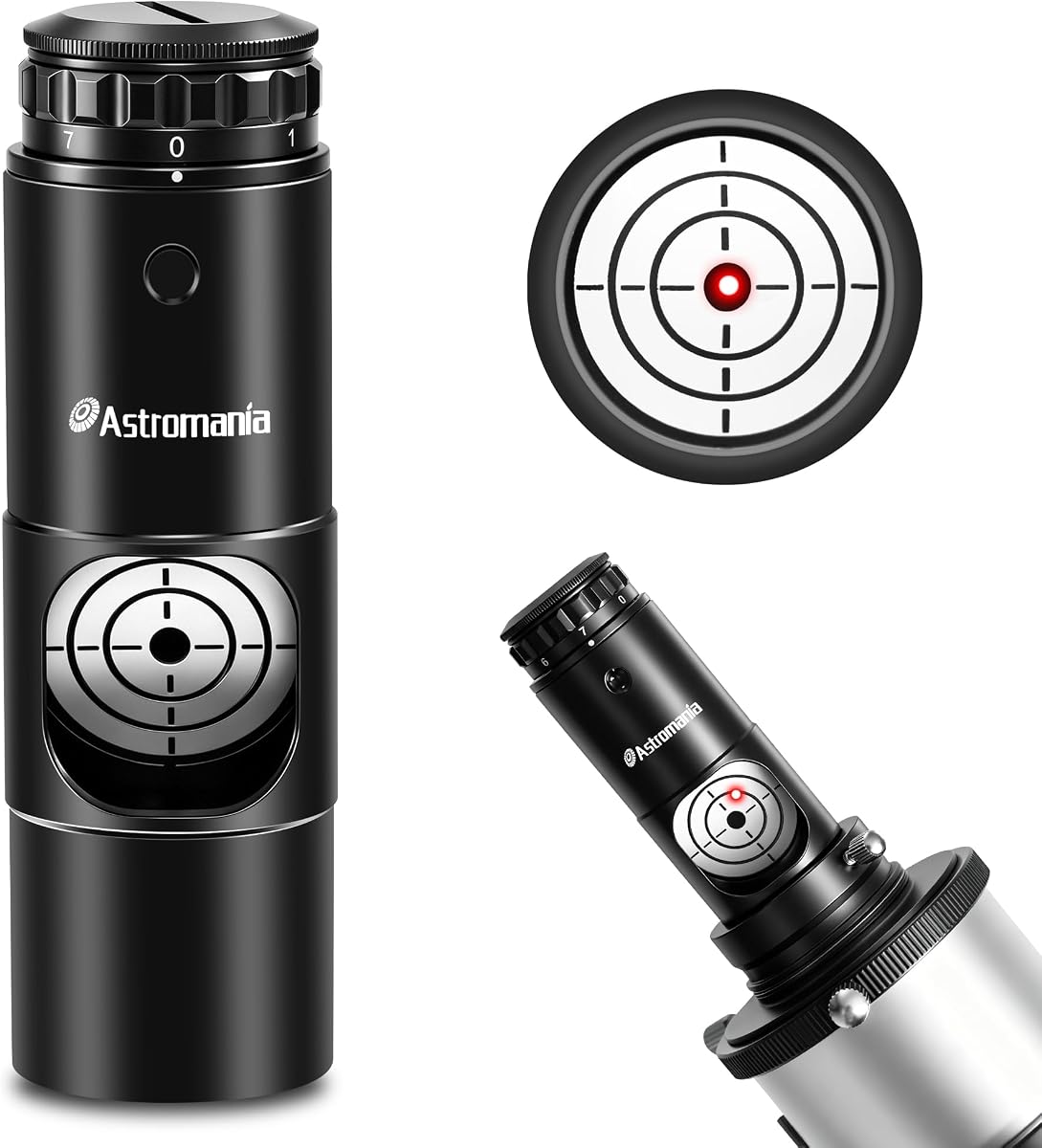


The Astromania Laser Collimator stands out as the top choice for most Newtonian telescope owners seeking precise alignment. With a 4.5 rating from verified users, it delivers reliable performance and ease of use. Its dual-fit design for 1.25 and 2 inch focusers makes it incredibly versatile.
We may earn a commission when you buy through this link, at no additional cost to you.
Key strengths include the 7-level brightness adjustment, allowing clear visibility in various light conditions. The durable anodized aluminum body resists wear, while the included CR2032 battery means you can start collimating immediately. The side window helps verify beam return for accurate setup.
While the instruction manual is limited to German and English, the clear diagrams minimize confusion. The 3.8 mW output complies with Class 3R safety standards, protecting eyes during use. These minor points are acceptable given the overall value and precision provided.
This model is ideal for beginners and experienced observers alike who want a straightforward tool. Whether you have a 1.25 or 2 inch focuser, this collimator ensures sharp views quickly. It is a solid investment for anyone serious about improving telescope performance.
The included 2 inch adapter ensures the tool fits standard focusers without needing extra purchases. This convenience saves money and simplifies storage for observers with multiple telescope types.
Seven brightness levels let you tune the laser intensity for dark skies or indoor alignment. This flexibility ensures the beam remains visible without causing eye strain or glare.
We may earn a commission when you buy through this link, at no additional cost to you.
This 1.25 inch specific model offers the same high-quality features as its dual-fit sibling at a lower price point. With a 4.5 rating, it remains a reliable choice for standard Newtonian telescopes. It simplifies the collimation process effectively.
We may earn a commission when you buy through this link, at no additional cost to you.
Its compact body moves smoothly within 1.25 inch focusers without strain. The 7 brightness levels adapt to different observing environments, ensuring the beam remains clear. The included battery and durable metal construction add to its appeal for value seekers.
The main limitation is compatibility with 2 inch focusers, requiring an adapter if your scope uses that standard. However, the 3.8 mW output is safe for eyes. For owners with 1.25 inch systems, this trade-off is minor compared to the savings.
Ideal for budget-conscious astronomers needing reliable performance, this unit delivers sharp views. It is perfect for those who do not need dual-fit capability. Consider this if your telescope uses a 1.25 inch focuser and you want quality without overspending.
The smaller body fits natural into 1.25 inch focusers, allowing smooth movement. This design ensures stability during adjustment, preventing slippage that can ruin alignment precision.
Priced lower than dual-fit versions, it offers core features without extra adapters. This makes it an attractive entry point for beginners focusing on 1.25 inch systems.
We may earn a commission when you buy through this link, at no additional cost to you.
The SVBONY collimator is designed for calibrating reflecting telescopes with ease. It supports both 1.25 and 2 inch focusers via a removable adapter. With a 4.5 rating, users appreciate its accuracy and sturdy build quality.
We may earn a commission when you buy through this link, at no additional cost to you.
A triple cemented lens ensures the red dot remains stable during adjustment. The 7 brightness levels suit different light conditions for day or night alignment. Detailed instructions guide users through the process step-by-step for success.
Battery exclusion means you must source a CR2032 cell separately, which adds minor effort. The solid metal body may add slight weight compared to plastic alternatives, but it ensures longevity. These points are acceptable for the performance delivered.
This model suits owners seeking a robust tool with clear instructions. Whether upgrading telescopes or starting fresh, it delivers reliable results. It is an excellent choice for those prioritizing build quality and dual compatibility.
The lens assembly reduces vibration and maintains beam focus over time. This stability is critical for precise alignment, ensuring the laser dot does not drift during adjustment.
Full step-by-step procedures are included to guide even new users. This clarity reduces trial and error, making the alignment process less intimidating for amateurs.
We may earn a commission when you buy through this link, at no additional cost to you.
This bundle offers unique value by including an aspheric eyepiece alongside the collimator. Rated 4.5 stars, it provides a complete package for alignment and viewing. The eyepiece delivers a 62-degree field of view for maximum detail.
We may earn a commission when you buy through this link, at no additional cost to you.
The collimator itself features 7 brightness levels for precise beam adjustment. Class I laser safety ensures safe use even during daylight alignment. The 1.25 inch fit works with most standard astronomical telescopes for broad field observation.
Lower laser output power compared to other models means the beam may be fainter in bright conditions. It is limited to 1.25 inch focusers without an adapter. However, the included eyepiece adds significant utility for general observing.
Ideal for those wanting a multi-purpose tool, this bundle covers both alignment and viewing. The eyepiece enhances deep sky observations. Consider this if you need a versatile package for both collimation and general astronomy.
The 62-degree apparent field of view creates an immersive viewing experience. This wide angle is ideal for star clusters and nebulae, adding value beyond collimation.
Class I safety rating allows safer handling during daytime checks. This feature is valuable for those prioritizing eye safety during extended setup sessions.
We may earn a commission when you buy through this link, at no additional cost to you.
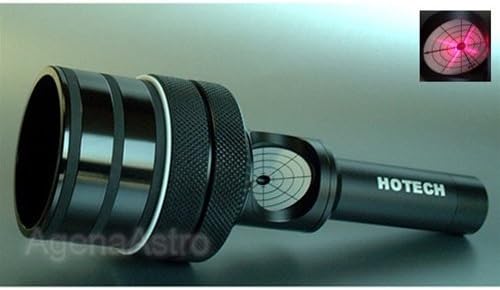
The Alstar collimator is pre-adjusted out of the box, saving time for users. With a 4.5 rating, it delivers solid alignment for standard Newtonian telescopes. The side window allows checking if the beam reflects back correctly.
We may earn a commission when you buy through this link, at no additional cost to you.
Its adjustable brightness levels help adapt to various light conditions. Clear instructions in English and German guide new astronomers through setup. The metal build ensures it withstands field use without issues.
Battery exclusion requires a CR2032 purchase separately, adding minor cost. The 1.25 inch only fit limits use on larger telescopes. However, the pre-adjustment ensures accuracy for standard setups immediately.
Best for budget buyers with 1.25 inch focusers, this unit provides reliable results. It minimizes setup time. Consider this if you need a quick, affordable solution for routine alignment checks.
A side window allows users to see the 45-degree disk with a central hole. This feature helps verify the laser returns on itself for confirming collimation accuracy.
Factory settings ensure the beam starts aligned, reducing initial effort. This saves time and prevents frustration for beginners learning the collimation process.
We may earn a commission when you buy through this link, at no additional cost to you.
This Alstar model features dual-fit capability for 1.25 and 2 inch focusers. A removable adapter makes upgrades seamless without needing extra tools. It offers the same features as budget-friendly units at a reasonable price.
We may earn a commission when you buy through this link, at no additional cost to you.
The triple cemented lens provides stable projection, while 7 brightness levels adapt to conditions. Durable metal construction ensures longevity. It is ideal for single-person calibration, enabling quick alignment sessions.
Battery exclusion means sourcing a CR2032 cell separately. The rating is slightly lower than competitors, but users find it reliable. The price point remains attractive for dual-fit functionality.
Ideal for owners needing 2 inch compatibility without high cost, this unit works well. It provides solid performance for daily use. Consider this if you prioritize versatility and budget balance.
Fits both standard focusers, making it flexible for multiple scopes. This eliminates the need to buy separate collimators for different telescope configurations.
Seven levels ensure visibility in daylight or dark skies. This flexibility makes alignment possible in varying environments without needing additional lighting.
We may earn a commission when you buy through this link, at no additional cost to you.
This unique bundle pairs the collimator with a cell phone adapter for astrophotography. Rated 4.4 stars, it offers imaging potential alongside standard collimation. The adapter fits eyepieces from 25 to 48mm diameter.
We may earn a commission when you buy through this link, at no additional cost to you.
It works with numerous smartphone models like iPhone and Samsung. The collimator features 7 brightness levels for precise alignment. The clamp uses a steel bolt for secure holding during shots.
The bolt design is robust but may require more effort to adjust than spring clamps. It does not support 2 inch eyepieces, limiting larger optics. However, the imaging value is significant.
Ideal for photographers wanting both alignment and imaging tools, this bundle simplifies workflow. It saves buying separate accessories. Consider this if you plan to capture celestial images alongside alignment.
The phone clamp allows mobile photography through eyepieces easily. This lowers the barrier for beginners wanting to capture deep sky targets without expensive cameras.
A steel bolt ensures the phone stays secure during exposures. This stability prevents vibration, resulting in sharper captured images compared to loose springs.
We may earn a commission when you buy through this link, at no additional cost to you.
This bundle combines a laser collimator with a Cheshire eyepiece for versatile alignment. Rated 5.0 stars, users appreciate the dual approach. The Cheshire works without batteries for daytime use.
We may earn a commission when you buy through this link, at no additional cost to you.
The laser offers 7 brightness levels for night collimation. The eyepiece has fine crosshairs for aligning secondary mirrors. Both fit standard 1.25 inch focusers for broad compatibility.
The Cheshire limitation to 1.25 inch focusers restricts use on larger scopes. The laser needs a separate battery purchase. However, having both tools ensures alignment day and night.
Ideal for thorough observers wanting both tools, this bundle covers all bases. It provides flexibility for different lighting conditions. Consider this if you want a complete toolkit for secondary and primary adjustments.
The Cheshire eyepiece works without batteries for precise daylight secondary alignment. This is crucial for achieving perfect optical paths before night viewing begins.
Combining laser and Cheshire tools ensures you have options for any situation. This comprehensive package reduces the need for future purchases.
We may earn a commission when you buy through this link, at no additional cost to you.
The HoTech collimator separates itself from others with patented self-centering technology. Rated 4.7 stars, it eliminates slop issues found in standard models. It works with 1.25 and 2 inch focusers.
We may earn a commission when you buy through this link, at no additional cost to you.
The SCA adapter ensures precise, repeatable installation every time. The crosshair model aids in detailed adjustments. It comes with a CR123 battery and manuals for immediate use.
The price is higher than budget options, reflecting the premium build. It may be heavier, but stability is improved. For serious astronomers, this investment ensures consistent results.
Ideal for demanding users who need repeatability, this unit delivers professional results. It solves the common problem of off-axis installation. Consider this if precision is your top priority.
The patented SCA mechanism removes slop in the focuser fit. This ensures the laser axis aligns perfectly with the optical axis every time.
Installation remains precise and repeatable across different telescope brands. This consistency is critical for accurate, reliable collimation results.
We may earn a commission when you buy through this link, at no additional cost to you.
This electronic collimator uses software guidance for precise adjustments. Rated 4.5 stars, it offers pixel-level accuracy out of the box. It supports Newtonian and Schmidt Cassegrain telescopes.
We may earn a commission when you buy through this link, at no additional cost to you.
Calibration circles built into the unit enable fast adjustments. The one-unit design is portable for field use. Smartphone compatibility allows advanced configuration via apps.
The price is higher than standard options. It relies on a smartphone for calibration features, which might not suit all users. However, accuracy and convenience are unmatched.
Ideal for those seeking tech-forward solutions, this tool delivers professional alignment. It is perfect for imaging sessions requiring precision. Consider this if you prioritize digital accuracy over budget.
Guided software circles simplify complex optical axis adjustments. This ensures alignment accuracy beyond manual methods.
Factory settings ensure optimal baseline accuracy for imaging. This reduces initial setup time and improves final image quality.
We may earn a commission when you buy through this link, at no additional cost to you.
Choosing the right laser collimator for telescope alignment requires understanding your telescope type and specific needs.
Ensure the collimator fits your focuser. Standard 1.25 inch models work for most Newtonians. Dual-fit versions with adapters are needed for 2 inch focusers.
Choose dual-fit for flexibility.
Look for models with adjustable brightness. Levels allow tuning for dark skies or indoor alignment.
Adjustable brightness ensures visibility.
Metal bodies offer better durability than plastic. Anodized aluminum resists corrosion and wear.
Metal ensures long-term reliability.
Check safety ratings like Class 3R or Class I. Higher safety protects eyes during setup.
Prioritize safety classifications.
Some collimators include batteries; others do not. Including CR2032 batteries saves extra trips to stores.
Check if battery is included.
Advanced models offer self-centering adapters for precision. Standard units require careful installation to avoid slop.
Self-centering ensures precision.
Look for side windows for reflection checks or bundles with eyepieces. These add value beyond collimation.
Bundles offer extra utility.
Clear manuals help beginners. Guides in your language simplify setup.
Choose clear instructions.
Insert the collimator into the focuser and secure it. Turn on the laser to check alignment.
Adjust screws to center the beam. Ensure the dot hits the correct mirror target.
Store in a dry place to prevent damage. Regular calibration checks maintain accuracy.
If your telescope uses a Newtonian or reflector design, a laser collimator for telescope alignment is essential. It ensures the mirrors are aligned correctly for sharp images.
The difference lies in focuser size. Dual-fit units come with adapters to work with both. Standard 1.25 inch models only fit small focusers.
Yes, provided the laser is safe. Many units feature adjustable brightness to be visible even in bright light conditions.
High-end units with self-centering technology rarely need recalibration. Basic models may require occasional adjustment using the provided tools.
Ensure the laser meets safety standards like Class 3R. Never look directly into the beam. Safety is paramount during setup.
Battery life depends on usage. CR2032 cells typically last for multiple sessions. Always carry spares for field work.
Yes. Most units include clear instructions. Following steps ensures quick learning and successful alignment.
This could indicate loose construction or misalignment. Check for internal looseness or consider upgrading to a model with a triple cemented lens.
We reviewed ten models offering a range of features from budget to premium. The Astromania and SVBONY models provide great value for most users.
Prioritize focuser compatibility and build quality. If precision is critical, consider the HoTech SCA collimator.
Check current prices before purchasing. Tools vary in cost, but the best choice depends on your specific needs.