
ASUS Dual Radeon RX 9060 XT 16GB GDDR6 Gaming Graphics Card
4.7Editor score
16GB GDDR6 Memory
2.5-Slot Design
Dual BIOS Switch
Compare the top GPUs for Comfyui workflows including memory, architecture, and performance to find the best graphics card for your generative AI image
Choosing the right GPU for Comfyui is essential for smooth generative AI workflows. You need ample memory and modern architecture to handle complex node graphs efficiently.
We evaluated ten leading graphics cards based on VRAM capacity, tensor core performance, and compatibility with Comfyui nodes. This list covers professional workstation options and consumer gaming cards.
Each pick highlights specific strengths like memory bandwidth or cooling design. Prices fluctuate frequently so verify current listings before finalizing your purchase decision today.
4.7Editor score

4.3Editor score

4.6Editor score
This side-by-side comparison highlights the critical specifications of each graphics card to help you decide which model offers the best value for your Comfyui setup.




This workstation-grade GPU offers unmatched memory capacity for running large diffusion models locally in Comfyui. Its 96GB GDDR7 ECC memory ensures stability during long generation sessions without crashes. The 5th Gen Tensor Cores accelerate AI workloads significantly compared to previous generations.
We may earn a commission when you buy through this link, at no additional cost to you.
The architecture supports fine-grained control and parallel processing which fits well with Comfyui node workflows. PCIe Gen 5 support allows rapid data transfer between system RAM and GPU memory. Universal MIG capabilities enable secure isolation when sharing the card across multiple users or containers.
While the price is prohibitive for most hobbyists, it is justified for professional studios handling enterprise-scale workflows. Export restrictions may limit availability outside the US requiring additional compliance steps. The lack of retail packaging means installation might require extra care from IT staff.
Buyers needing absolute reliability and maximum VRAM for massive models should consider this top-tier option. It delivers best-in-class performance for those who prioritize stability and memory size above all else in their Comfyui setup.
ECC memory prevents data corruption during long render jobs. Universal MIG allows secure multi-user isolation on a single card.
5th Gen Tensor Cores boost AI processing speeds. PCIe Gen 5 doubles bandwidth for faster data movement between CPU and GPU.
We may earn a commission when you buy through this link, at no additional cost to you.
The Arc Pro B60 provides a compelling alternative for users who need high memory at a lower price than NVIDIA equivalents. It features 24GB GDDR6 memory which supports large batch sizes and complex workflows. Intel's Xe2-HPG architecture includes dedicated AI engines for faster inference.
We may earn a commission when you buy through this link, at no additional cost to you.
Workstation optimization ensures stability for professional software and driver support is improving regularly. The blower-style cooler allows multi-card stacking if you need to scale performance with multiple GPUs. Four DisplayPort 2.1 outputs enable expansive multi-monitor setups for monitoring generation progress.
Intel driver maturity varies compared to NVIDIA so users may encounter occasional node compatibility issues in Comfyui. The blower fan design prioritizes airflow over quiet operation which might disturb nearby workers. Ensure your system supports PCIe 5.0 to maximize bandwidth benefits.
Consider this GPU if you require multiple monitors and high VRAM on a budget. It offers strong potential for scaling AI workloads across multiple cards in Linux environments.
Four DP 2.1 outputs support four 8K displays simultaneously. Ideal for monitoring complex Comfyui node graphs and results side by side.
Optimized for Linux multi-GPU LLM deployments. Allows you to scale AI performance across multiple cards if needed.
We may earn a commission when you buy through this link, at no additional cost to you.
This card brings Blackwell architecture to the mid-range segment offering excellent performance for Comfyui users. The 16GB GDDR7 memory allows handling high-resolution images without memory bottlenecks. Axial-tech fans ensure low noise even during extended generation sessions.
We may earn a commission when you buy through this link, at no additional cost to you.
ASUS Dual BIOS lets you choose between quiet operation or max performance depending on your workload needs. The 2.5-slot design fits well in smaller cases where space is constrained. AI performance metrics show significant improvements over previous generation cards.
The premium price reflects the new architecture and faster memory speeds available now. Compatibility is solid for Comfyui nodes relying on Tensor Core acceleration. You should verify power requirements as newer cards might demand efficient power delivery.
Buyers wanting a balance of size performance and reliability will find this card ideal. It serves as a strong foundation for professional work without needing enterprise-level pricing.
Axial-tech fan design uses smaller hub for longer blades. Increased downward air pressure keeps temperatures low during heavy AI loads.
GDDR7 memory delivers faster data transfer. Enables quicker processing of large datasets in Comfyui image generation nodes.
We may earn a commission when you buy through this link, at no additional cost to you.
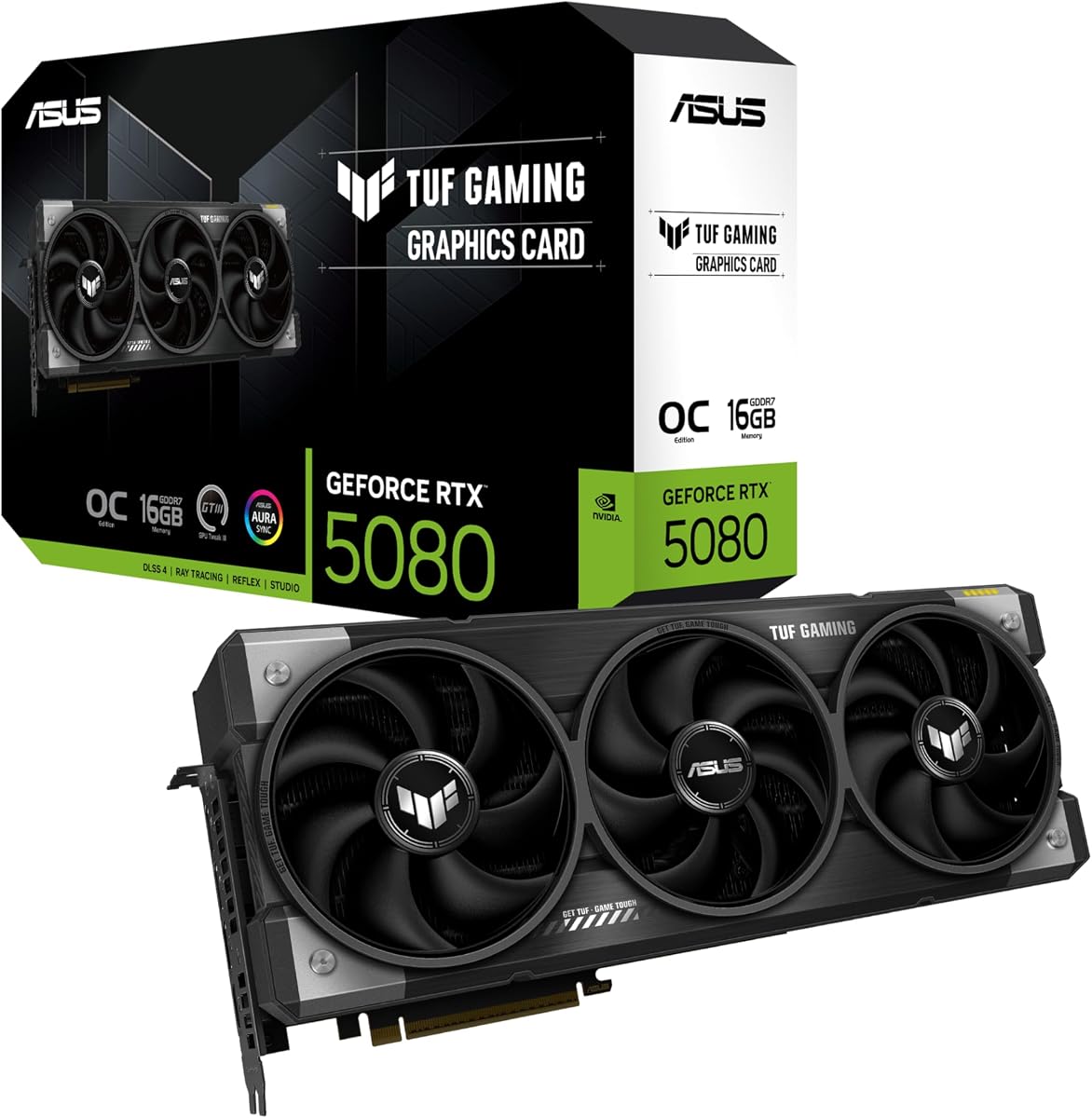
The RTX 5080 delivers flagship performance for users needing speed in generative workflows. 16GB of GDDR7 memory supports complex node chains without running out of VRAM. WINDFORCE cooling keeps the card cool during intensive AI tasks ensuring sustained boost clocks.
We may earn a commission when you buy through this link, at no additional cost to you.
Blackwell architecture improves inference speeds which directly reduces generation times in Comfyui. PCIe 5.0 support prepares your system for future bandwidth demands. The factory overclocked mode provides extra performance without manual tweaking.
Users must ensure their PSU handles the power draw efficiently to avoid instability. The physical size requires a spacious case to prevent airflow restrictions. This GPU justifies its cost for professionals needing maximum throughput daily.
Consider this if you need the highest possible speed within consumer limits. It represents the peak of current gaming GPU technology adapted for professional creative workloads.
WINDFORCE cooling system optimizes airflow. Ensures sustained performance without throttling during long Comfyui workflows.
Newer architecture improves efficiency and speed. DLSS 4 integration supports advanced rendering techniques for faster results.
We may earn a commission when you buy through this link, at no additional cost to you.
This card emphasizes longevity and stability for demanding environments. Phase-change thermal pads outlast traditional paste ensuring better heat transfer over time. Protective PCB coating guards against moisture and dust which is vital for 24/7 rendering setups.
We may earn a commission when you buy through this link, at no additional cost to you.
Military-grade components provide rock-solid power delivery reducing the risk of electrical failure. GPU Tweak III allows deep monitoring and tweaking of thermal profiles. The card performs excellently in Comfyui workflows requiring consistent uptime.
Users need an 850W PSU minimum to handle peak power draw effectively. The large size requires careful case planning before purchasing. Despite high cost the reliability features justify investment for professional use.
Buyers prioritizing system longevity should choose this over standard gaming variants. It is built to withstand heavy loads without degradation over years of use.
Phase-change thermal pads ensure optimal performance. Outlasts traditional thermal paste under heavy AI loads.
Protective PCB coating prevents short circuits. Ideal for environments with dust or moisture exposure.
We may earn a commission when you buy through this link, at no additional cost to you.
This AMD card offers strong raw performance and memory for Comfyui users willing to navigate the software landscape. 16GB GDDR6 supports high-resolution tasks while PCIe 5.0 ensures fast data throughput. Server-grade thermal gel improves cooling efficiency significantly.
We may earn a commission when you buy through this link, at no additional cost to you.
WINDFORCE cooling maintains stable temperatures during extended generation runs. While some AI tools favor NVIDIA CUDA this card handles many workflows effectively with ROCm support. It provides excellent value for those avoiding high NVIDIA pricing.
Check node compatibility for Comfyui since some custom nodes rely on CUDA-specific libraries. Ensure drivers are up to date to avoid compatibility issues. It remains a powerful option for open-source AI workflows.
Buyers seeking raw power at a lower price point will appreciate this option. It offers compelling performance for 3D tasks and general AI workloads without excessive cost.
Server-grade thermal gel conducts heat better. WINDFORCE fans maintain optimal temperatures during heavy GPU loads.
16GB GDDR6 handles large textures and models. Sufficient VRAM for complex Comfyui workflow graphs.
We may earn a commission when you buy through this link, at no additional cost to you.
This card is the most affordable option offering 16GB VRAM for generative workloads. It fits compact builds with its 2.5-slot design and delivers quiet operation via 0dB technology. Axial-tech fans ensure effective cooling without noise during idle periods.
We may earn a commission when you buy through this link, at no additional cost to you.
Dual BIOS switching lets you toggle between quiet and performance modes easily. The memory capacity allows handling basic diffusion models even if speeds are slower than high-end cards. It is ideal for students or hobbyists entering Comfyui workflows.
Users needing maximum speed may find performance limited compared to NVIDIA options. Compatibility varies for some AI libraries but many Comfyui nodes work well with ROCm. Verify software requirements before purchasing to avoid frustration.
Buyers on a tight budget who need ample VRAM should consider this choice. It balances cost and memory effectively for entry-level AI image generation tasks.
0dB technology stops fans at low loads. Ensures quiet experience for home offices and shared spaces.
16GB GDDR6 provides enough headroom. Handles standard image generation nodes without needing upgrades.
We may earn a commission when you buy through this link, at no additional cost to you.
The RTX 5070 balances performance and memory for general Comfyui usage. 12GB GDDR7 memory offers speed but may limit complex large workflow chains. Blackwell architecture ensures compatibility with the latest AI features and node updates.
We may earn a commission when you buy through this link, at no additional cost to you.
Phase-change thermal pads maintain consistent performance during heavy rendering tasks. Protective coating adds longevity which is valuable for professional setups. GPU Tweak III allows fine-tuning of power limits and thermal profiles effectively.
Users planning to run massive diffusion models might find VRAM insufficient. The cost is higher than AMD alternatives but CUDA compatibility often saves time. Verify if 12GB meets your specific workflow requirements before buying.
Buyers wanting NVIDIA reliability without flagship prices will find this suitable. It fits mid-level professional work well where 12GB is enough for daily needs.
Blackwell architecture optimizes AI tasks. 12GB GDDR7 balances speed and capacity for general use cases.
Protective PCB coating guards against damage. Military-grade components ensure rock-solid power delivery.
We may earn a commission when you buy through this link, at no additional cost to you.
This GPU is designed for entry-level AI tasks and compact builds. 8GB VRAM supports basic image generation but limits complex chains. Blackwell architecture ensures compatibility with modern Comfyui nodes and tools.
We may earn a commission when you buy through this link, at no additional cost to you.
The 2-slot design fits tiny form factor systems where space is tight. Silent fans keep noise down even during active workloads. Dual BIOS switching provides flexibility between quiet and performance profiles easily.
Users requiring heavy generation will find this card insufficient for large models. It works well for learning Comfyui or simple edits without high memory needs. Ensure your workflow fits within 8GB before purchasing.
Buyers building a mini-PC for light Comfyui usage will appreciate this choice. It balances modern tech with minimal physical footprint and power consumption.
2-slot design maximizes compatibility. Fits SFF cases without blocking other components or vents.
0dB technology enables light gaming in silence. Fans stop when load is low to reduce noise.
We may earn a commission when you buy through this link, at no additional cost to you.
PNY offers a compact option that balances small size with performance. The dual-fan cooling distributes heat efficiently across the card maintaining boost clocks. VelocityX software allows fine-tuning of fans and clocks via intuitive interface.
We may earn a commission when you buy through this link, at no additional cost to you.
Blackwell architecture provides the latest AI features for Comfyui workflows. It fits small cases where larger cards won't fit without sacrificing key specs. Factory overclock delivers extra performance without manual tweaking for users.
Users needing massive VRAM should look elsewhere as this model is entry-level. It serves well for medium tasks where space is constrained but speed matters. Ensure your case has adequate clearance for optimal airflow.
Buyers with small PC builds needing reliable NVIDIA performance should pick this. It offers strong value for users prioritizing form factor alongside modern features.
VelocityX software provides full control over card performance. Save profiles for instant recall during different workflow types.
Dual fans distribute heat across compact frame. Maintains boost clocks without requiring full-length card slot.
We may earn a commission when you buy through this link, at no additional cost to you.
Selecting the right graphics card requires evaluating memory capacity architecture and power needs to match your specific AI generation workflows.
Virtual memory capacity is critical for Comfyui as it loads model weights and image data into GPU memory. High resolution generation and large models require at least 16GB to avoid crashes or slow performance. Cards with 24GB or 96GB offer future-proofing for larger AI datasets.
Prioritize higher VRAM capacity if you plan to run multiple nodes simultaneously. This ensures stability and prevents out-of-memory errors during complex workflows.
Modern architectures like NVIDIA Blackwell or Intel Xe2 offer specialized cores for AI tasks. Tensor Cores accelerate matrix operations used in diffusion models which speeds up generation times significantly. Newer generations also bring improved driver support and better compatibility with Comfyui nodes.
Check for 5th Gen Tensor Cores or equivalent AI accelerators to ensure you benefit from the latest optimizations. Older cards may struggle with newer node types requiring complex computations.
Bandwidth determines how fast data moves between memory and compute cores which impacts rendering speed. Higher bandwidth allows faster texture processing and model loading reducing wait times during generation. GDDR7 memory generally offers better bandwidth than GDDR6 counterparts.
Look for cards with high memory bandwidth specs to avoid bottlenecks during large data transfers. This metric often matters as much as raw VRAM size for speed.
High-performance GPUs draw significant power requiring robust power supply units. Cards like the RTX 5080 need 850W+ PSU and specific 16-pin connectors for stable power delivery. Insufficient power leads to throttling or system instability during peak loads.
Ensure your PSU meets the minimum wattage and connector requirements for the chosen GPU. Always leave headroom for system spikes when running continuous rendering tasks.
Physical size matters if you have a compact PC case or multiple GPUs. Some cards require 3.6 slots which limits compatibility with smaller enclosures. Always measure case clearance before buying to avoid fitting issues.
Consider 2.5-slot or 2-slot cards if you have space constraints. Compact designs often offer better airflow in small chassis preventing thermal throttling.
CUDA support is often preferred in Comfyui for broad compatibility with community nodes. NVIDIA cards generally have better node support than AMD ROCm alternatives. Verify node compatibility if you rely on specific custom tools in your workflow.
Check if the manufacturer provides tools like GPU Tweak III or VelocityX for monitoring and tuning performance. Good software support helps maintain optimal performance and thermal safety.
Effective cooling keeps performance stable during long generation sessions. Blower-style fans allow multi-GPU setups while open designs run quieter for single cards. Dual BIOS options allow switching between performance and silent profiles for different needs.
Prioritize thermal design based on your environment and workload. High-end models use phase-change thermal pads for better heat transfer and longevity.
Price varies widely from entry-level consumer cards to enterprise workstations. Determine how much you can spend on hardware relative to your project scale. Mid-range cards often offer the best balance of cost and performance for most users.
Invest in higher-end options only if your workflows demand massive memory or speed. For hobbyist use budget models with 16GB VRAM often suffice for general tasks.
Install the latest drivers from the manufacturer's website to ensure stability and compatibility with Comfyui nodes. Update your system BIOS to support PCIe 5.0 features if your motherboard allows for maximum bandwidth.
Use software tools like GPU Tweak III or VelocityX to monitor temperatures during generation. Set custom fan curves to balance noise and thermal headroom based on your environment needs.
Regularly clean dust from fans and heatsinks to maintain cooling efficiency. Check thermal paste or thermal pads periodically if you use the card for continuous heavy workloads over years.
For most users 16GB is the sweet spot for handling large models and high resolutions. Smaller models may run on 8GB but you will face limits with complex workflows. Professional users should consider 24GB or higher for extensive tasks.
NVIDIA is generally preferred due to CUDA support which ensures broader node compatibility. AMD cards work well with ROCm but may require extra setup steps. If stability is your priority NVIDIA remains the safer choice.
High-end cards require high wattage and specific connectors like 16-pin PCIe. Verify your PSU meets the minimum power and connector requirements listed by the manufacturer. Upgrading your PSU may be necessary if you install a new powerful GPU.
Yes many cards like the PNY RTX 5060 OC fit compact cases with 2-slot designs. Ensure your case has enough clearance and airflow to prevent thermal throttling during generation.
Yes Comfyui supports multi-GPU setups using node splitting or specialized extensions. Linux environments offer better scalability for scaling workloads across multiple cards efficiently.
PCIe Gen 5 doubles bandwidth compared to Gen 4 which helps in data-heavy workflows. This ensures faster transfer between CPU memory and GPU which reduces bottlenecks.
The NVIDIA RTX PRO 6000 stands out for professionals needing massive memory and stability while the RTX 5080 offers premium performance for most users. Budget buyers should consider the Radeon RX 9060 XT for its balance of memory and cost.
Prioritize VRAM capacity and architecture over brand names to ensure smooth Comfyui workflows. Selecting a card with 16GB or more memory prevents bottlenecks and future-proofs your setup.
Prices change frequently so check current listings before finalizing your purchase decision today. Always verify power and case compatibility before installing your new graphics card.