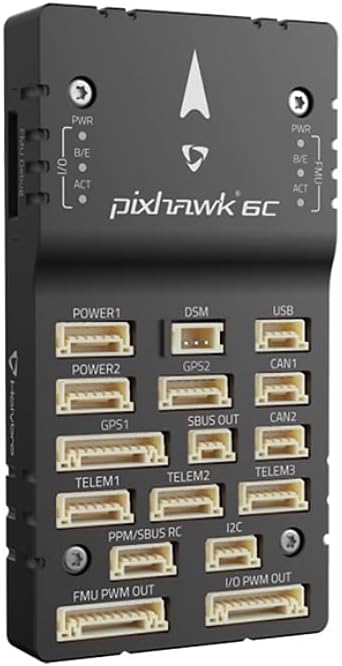
Pixhawk 6C Flight Controller
4.9Editor score
Advanced vibration isolation
Dual redundant IMU sensors
Temperature controlled electronics
This guide compares the top flight controllers for hybrid Vtol and Vtol drones to help you find the best autopilot for your specific build needs.
Choosing the right flight controller is critical for hybrid VTOL and VTOL drones. These systems manage complex transitions between fixed-wing and multirotor modes. A reliable controller ensures stability, safety, and precise control during every flight phase.
We evaluated ten top models based on processor power, sensor quality, firmware support, and VTOL specific features. Each product was assessed for its ability to handle autonomous missions, manual control, and hybrid flight modes effectively and efficiently.
Each pick highlights key strengths, ideal use cases, and important trade-offs for builders. Note that prices and availability change frequently, so verify current details before purchasing your next flight controller for a hybrid VTOL project.
4.9Editor score

4.8Editor score

5.0Editor score
The following table provides a quick side-by-side comparison of all ten flight controllers reviewed in this guide. Use it to compare key specifications, compatibility, and core features at a glance.


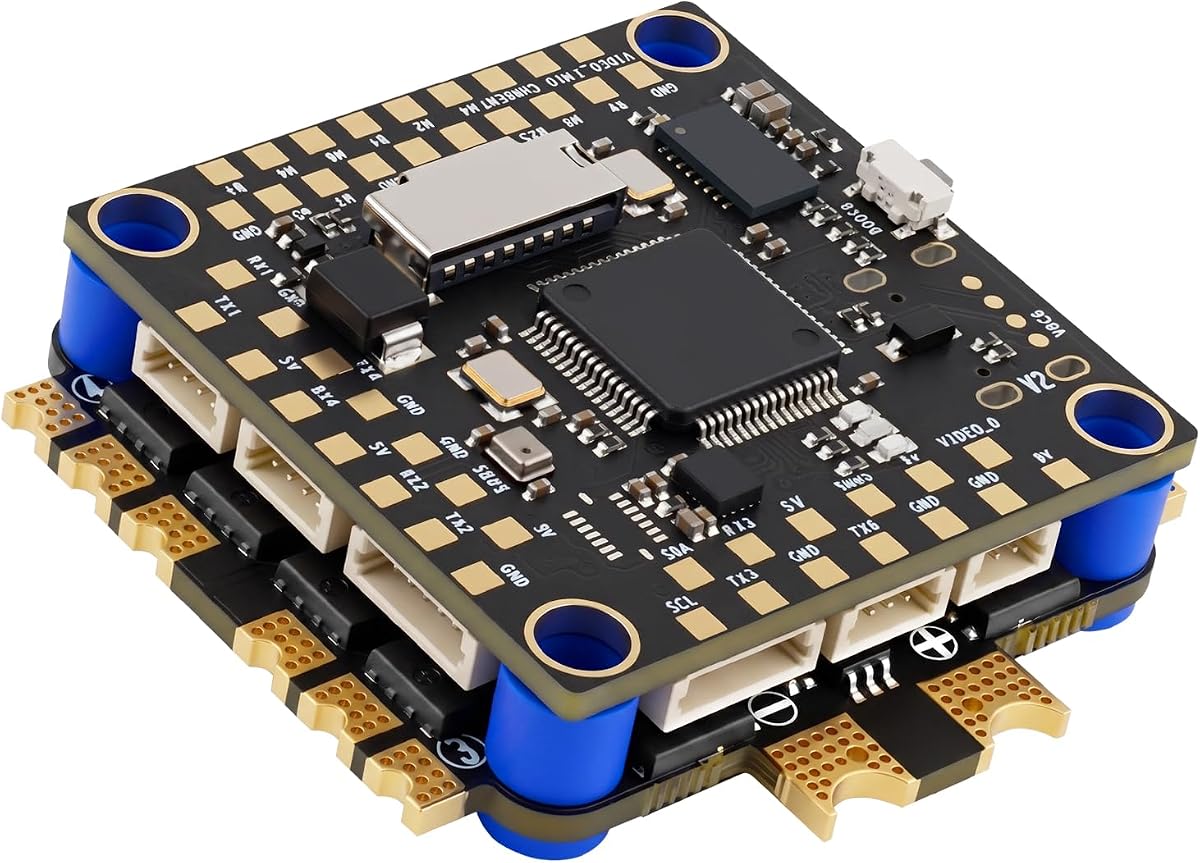

The Pixhawk 2.4.8 stands out as a powerful open source flight controller ideal for hybrid VTOL builds. With its 32-bit ARM processor and fail-safe co-processor, it delivers reliable autopilot functions for fixed-wing and multirotor modes. This controller is a top choice for those who want deep customization and control over their drone's flight logic.
We may earn a commission when you buy through this link, at no additional cost to you.
Its open source nature allows developers and hobbyists to modify code to suit specific mission requirements. The included GPS module simplifies initial setup for autonomous navigation. With support for diverse sensors and peripherals, this controller adapts easily to complex hybrid configurations requiring precise transition management.
Setup requires significant technical expertise compared to plug-and-play alternatives. Users must be comfortable with firmware flashing and parameter tuning. However, the trade-off is worth it for those seeking maximum flexibility and the ability to tailor every aspect of flight behavior to their unique build.
For advanced pilots and researchers building hybrid VTOL drones, this controller offers unmatched potential. It balances high performance with broad compatibility. We recommend it for anyone prioritizing open source development and robust autopilot capabilities in their next project.
Users can modify source code to create custom flight modes and logic specific to their hybrid VTOL transition needs.
The dedicated co-processor ensures critical safety functions remain active even if the main processor encounters issues during flight.
We may earn a commission when you buy through this link, at no additional cost to you.
The Pixhawk 6C represents the pinnacle of flight controller technology for demanding hybrid VTOL missions. Its STM32H743 processor delivers massive computing power for complex autonomous algorithms. With dual redundant IMUs and advanced vibration isolation, it ensures precise sensor readings even in high-vibration environments typical of VTOL transitions.
We may earn a commission when you buy through this link, at no additional cost to you.
Temperature control for IMUs guarantees consistent performance across varying weather conditions. This feature is crucial for long endurance hybrid flights where thermal drift could affect navigation accuracy. Pre-installed PX4 Autopilot allows users to start flying immediately without complex setup steps.
The premium price reflects its advanced features and build quality. It requires a solid understanding of UAV systems to configure fully. However, for commercial or research applications requiring maximum reliability and performance, this controller justifies the investment with its superior stability and redundancy.
Ideal for professional developers and serious enthusiasts building high-performance hybrid drones. This unit provides the stability and power needed for reliable autonomous operations. We recommend it for projects where flight safety and data accuracy are non-negotiable priorities.
Using two high-performance IMUs from different manufacturers ensures accurate orientation data even if one sensor fails during flight.
Integrated vibration isolation filters high-frequency noise, preventing motor vibrations from corrupting sensor data during transitions.
We may earn a commission when you buy through this link, at no additional cost to you.
The KK 2.1.5 is a classic budget flight controller designed with VTOL and V-tail aircraft in mind. It offers stable self-balancing capabilities that make flying easier for newcomers to the hobby. With its straightforward setup process, users can get airborne quickly without needing extensive technical knowledge or complex software tools.
We may earn a commission when you buy through this link, at no additional cost to you.
Its support for VTOL configurations allows it to manage transitions between modes effectively for small-scale projects. While it lacks advanced telemetry and connectivity options found in modern controllers, it delivers reliable performance for basic flight needs. This simplicity is a strength for hobbyists focused on fun rather than complex automation.
The low price makes it accessible for students or those testing new airframe designs. It may not handle high-end autonomous missions or heavy payloads well. However, for learning the basics of flight dynamics and VTOL control, it remains a solid and dependable option in the current market.
Recommended for beginners or small hobby projects needing basic stability. It provides essential flight control without overwhelming complexity. Choose this controller if you want to start flying quickly while keeping your initial investment low and manageable.
The onboard interface allows users to quickly calibrate and enable self-balancing modes for stable flight without a computer.
New users can learn flight dynamics without the steep learning curve associated with modern digital autopilot systems.
We may earn a commission when you buy through this link, at no additional cost to you.
The COREWING F405 V2 is designed primarily for RC airplanes but can adapt to hybrid VTOL needs. Its F405 processor ensures stable performance for fixed-wing flight phases. This controller focuses on core flight stability and basic stabilization features. It is suitable for builders who prioritize fixed-wing performance over complex multirotor transitions.
We may earn a commission when you buy through this link, at no additional cost to you.
While it lacks explicit VTOL branding, its robust processing power supports standard flight modes well. The compact layout simplifies installation into smaller airframes. However, advanced VTOL mode switching may require manual configuration and tuning to ensure smooth transitions between lift and cruise phases.
This unit is best suited for hybrid builds where fixed-wing flight dominates the mission profile. It offers reliable performance at a reasonable cost. Users should expect to invest time in configuring transition logic manually. Overall, it is a solid choice for performance-oriented fixed-wing drones with VTOL capability.
Recommended for builders focused on speed and fixed-wing efficiency with basic VTOL needs. It delivers strong performance for traditional RC airplane flight. Consider this if your VTOL flights are short transitions into high-speed fixed-wing missions requiring consistent control.
The firmware and hardware tuning prioritize aerodynamic efficiency for fixed-wing phases over complex multirotor hovering modes.
Small footprint allows easy installation in lightweight hybrid airframes without adding unnecessary bulk or weight.
We may earn a commission when you buy through this link, at no additional cost to you.
The PIX 2-12S is explicitly designed for VTOL and multirotor applications. It supports Mavlink telemetry and a wide range of receiver protocols like SBUS and CRSF. With its STM32F405VGT6 processor and integrated sensor suite including gyroscope and magnetometer, it provides accurate orientation data for smooth transitions and stable flight.
We may earn a commission when you buy through this link, at no additional cost to you.
This controller supports power inputs from 2 to 12S, making it versatile for various hybrid power setups. The inclusion of a barometer ensures altitude stability during hover phases. Its design caters to hobbyists and builders focused on DIY autonomous driving systems or complex VTOL configurations.
Initial setup may require detailed knowledge of wiring and parameter configuration. Some users might need to source specific connectors for GPS and telemetry. Despite this, the comprehensive feature set and VTOL focus make it a reliable option for advanced hybrid builds needing precise control and telemetry feedback.
Recommended for VTOL builds prioritizing telemetry and autonomous features. Its hardware supports complex hybrid flight modes well. Choose this if you need robust Mavlink support and wide voltage compatibility for your next hybrid VTOL project.
Built-in gyroscope, magnetometer, and barometer provide essential data for maintaining stability during VTOL transitions.
Full Mavlink support enables real-time data streaming to ground stations for monitoring and mission control.
We may earn a commission when you buy through this link, at no additional cost to you.
The F405 Wing offers a unique advantage with smartphone-based control via the Ardupilot app. Designed for fixed-wing drones with VTOL capabilities, it simplifies configuration for beginners and experienced pilots alike. Its lightweight design minimizes added weight while maintaining robust functionality for diverse flight modes.
We may earn a commission when you buy through this link, at no additional cost to you.
With Ardupilot firmware support, users gain access to a powerful open-source ecosystem. The app allows easy monitoring of flight parameters without needing a laptop. This accessibility makes transitioning between hover and fixed-wing modes more intuitive. It is an excellent choice for hybrid builds prioritizing ease of use.
Users should note that GPS must be purchased separately. Also, the firmware is limited to Ardupilot, reducing compatibility with other options. However, for those already invested in the Ardupilot ecosystem, this controller provides a streamlined experience. It balances performance with user-friendly setup for reliable hybrid VTOL flights.
Recommended for Ardupilot users seeking easy smartphone configuration. Its focus on fixed-wing VTOL makes it ideal for hybrid builds. Choose this if you want a lightweight controller that simplifies tuning without sacrificing flight capability.
Configure and monitor flight parameters directly from a smartphone, eliminating the need for complex computer setups.
Specific tuning ensures smooth transitions between multirotor lift and fixed-wing cruise for hybrid missions.
We may earn a commission when you buy through this link, at no additional cost to you.
The H743 60A stack combines a powerful flight controller with a high-quality ESC in a compact 30×30 format. Featuring dual IMU sensors, it offers enhanced stability for complex hybrid VTOL maneuvers. Compatible with Betaflight, INAV, PX4, and Ardupilot, this stack supports nearly any mission profile from racing to autonomous delivery.
We may earn a commission when you buy through this link, at no additional cost to you.
The 32-bit 60A ESC ensures precise motor control suitable for heavy hybrid airframes. Its lightweight design helps keep the center of gravity optimized. While designed for racing drones, its versatility and sensor suite make it a strong candidate for DIY VTOL builds needing reliable electronic control.
Users must ensure proper wiring to avoid interference between sensor and motor data. The stack requires careful integration to leverage its full potential. However, its performance and flexibility outweigh these challenges for advanced hobbyists seeking a modern and robust flight control solution.
Recommended for hybrid builds needing powerful electronics and broad firmware support. Its dual IMU adds value for stability. Choose this stack if you want high performance and flexibility for a demanding VTOL drone project.
Redundant IMUs reduce noise and improve accuracy during rapid transitions in hybrid flight modes.
Support for major firmware platforms ensures you can switch flight logic without replacing hardware.
We may earn a commission when you buy through this link, at no additional cost to you.
The H743 50A stack offers a balanced solution for mid-size VTOL projects. With dual IMUs and high-frequency PWM, it ensures smooth motor control for both multirotor and fixed-wing phases. Its lightweight profile simplifies assembly, allowing builders to maintain an efficient balance across the airframe.
We may earn a commission when you buy through this link, at no additional cost to you.
This stack supports versatile firmware options for different flight modes. The 50A continuous current is sufficient for many hybrid builds without excess weight. While it may lack the raw power of higher amp models, it excels in precision and stability for smaller to medium-sized hybrid aircraft.
Integration requires careful calibration of sensors and motors for best results. Users should verify that their battery voltage does not exceed the 2 to 6S limit. With proper setup, this stack provides reliable performance for agile hybrid drones needing accurate flight control and easy integration.
Recommended for agile hybrid drones needing precision and low weight. Its IMU support improves reliability. Choose this if you prioritize smooth control and standard mounting compatibility for a versatile build.
Supports DSHOT and ONESHOT protocols for faster throttle response and smoother flight dynamics.
Total weight of 21.5 grams allows easy integration without adding unnecessary bulk to small airframes.
We may earn a commission when you buy through this link, at no additional cost to you.
The AERO SELFIE F405NC integrates modern O3 and O4 AIR interfaces, making it ideal for VTOL builds requiring high-quality video transmission. Its F405 processor and dual IMU sensors provide solid flight control. The included DPS310 barometer enhances altitude stability during hover phases crucial for hybrid transitions.
We may earn a commission when you buy through this link, at no additional cost to you.
Designed for FPV and racing, this stack adapts well to hybrid VTOL needs needing compact electronics. The lightweight design ensures minimal impact on overall weight. However, the 8-bit ESC may limit power for larger motors, making it better suited for smaller agile hybrid aircraft rather than heavy cargo models.
Setup requires attention to detail for video and sensor alignment. Users should ensure proper grounding to avoid interference with video signals. With careful configuration, this stack delivers reliable flight and video performance. It is an excellent choice for hobbyists prioritizing modern video technology in their VTOL projects.
Recommended for agile VTOL builds needing modern video. Its compact design suits small frames well. Choose this if you want integrated sensor support and video compatibility for FPV-based hybrid drones.
Ready for O3 and O4 AIR systems ensures high-definition video transmission during complex VTOL maneuvers.
Dedicated barometer provides precise altitude hold, essential for safe takeoff and landing in hybrid modes.
We may earn a commission when you buy through this link, at no additional cost to you.
The AERO SELFIE H743 brings high performance to hybrid VTOL builds with its advanced H743 processor and 32-bit ESC. Dual IMU sensors and a compass provide the data needed for reliable navigation and orientation. This stack is ideal for users wanting robust flight control and precision in demanding conditions.
We may earn a commission when you buy through this link, at no additional cost to you.
Its compatibility with major firmware platforms allows flexibility for diverse mission profiles. The comprehensive sensor suite ensures accurate data during complex transitions. While limited to 6S batteries, it handles mid-sized VTOL drones effectively. Its performance and features make it a strong contender for serious hobbyists building hybrid aircraft.
Careful integration is necessary to ensure all sensors function correctly. Users should test transitions thoroughly before real-world flight. With proper setup, this stack offers reliable power and control. It is an excellent choice for hybrid builds needing advanced electronics and consistent performance.
Recommended for hybrid VTOL builds seeking high performance. Its 32-bit ESC and dual IMU support stable flight. Choose this if you want a reliable stack with advanced features for serious hybrid VTOL applications.
The high-clock-speed processor handles complex flight algorithms smoothly, ensuring responsive control during mode switches.
32-bit motor control allows precise throttle regulation, improving stability and efficiency during transitions.
We may earn a commission when you buy through this link, at no additional cost to you.
Selecting the right flight controller requires balancing performance, firmware support, and specific VTOL features. This guide explains the key factors to consider for your build.
Firmware dictates the flight modes and autonomous capabilities available. For hybrid VTOL drones, Ardupilot or PX4 are often required for seamless transitions between fixed-wing and multirotor modes. Ensure the controller supports your preferred firmware to avoid compatibility issues.
Choose firmware that supports VTOL flight modes and offers a strong community for troubleshooting and updates.
Modern VTOL transitions demand significant processing power. Controllers with STM32F4 or H7 processors handle complex algorithms and sensor fusion effectively. A strong processor ensures smooth mode switching and reliable autonomous flight.
Prioritize processors with higher clock speeds and memory for advanced hybrid missions requiring precise control and telemetry.
Hybrid VTOL transitions are critical moments where sensor accuracy matters. Dual IMU systems provide redundancy against sensor noise or failure. A compass and barometer further improve navigation and altitude hold during flight phase changes.
Look for controllers with dual IMUs and integrated compass and barometer to ensure flight safety during complex operations.
Motors and propellers create vibrations that can corrupt sensor data. Advanced controllers include mechanical or digital vibration isolation to prevent this noise. Effective isolation ensures cleaner data for accurate attitude estimation.
Opt for controllers with built-in vibration isolation features to maintain sensor accuracy during high-vibration phases.
Hybrid builds often have unique power needs. Ensure the controller supports your battery voltage range and current draw. Some controllers include power modules or ESCs for convenience, while others require separate integration.
Verify voltage limits and current capacity to ensure the controller can handle your power system safely.
VTOL builds may need extra sensors like GPS or airspeed units. Sufficient UART ports and interfaces for expansion are essential. Compatibility with common peripherals allows for flexible and scalable designs.
Check the number of UART ports and available interfaces to ensure you can connect all necessary sensors.
Physical dimensions and mounting patterns must fit your airframe. Standard sizes like 30x30mm simplify integration, but some hybrid frames may need custom solutions. Weight is also critical for flight efficiency.
Choose a controller size and weight that fits your frame without compromising structural integrity or balance.
A strong user community helps troubleshoot issues and share configurations. Detailed documentation accelerates setup and tuning. Open-source controllers usually benefit from active community contributions and frequent updates.
Select controllers with active forums and clear documentation to streamline your build process and maintenance.
Begin by mounting the flight controller securely with vibration-dampening materials. Ensure all sensors are aligned with the airframe's axes. Connect the motors, servos, and receivers according to the wiring diagram provided in the firmware setup.
Calibrate the IMUs, compass, and barometer using the ground station software. This step ensures accurate sensor data during flight. Perform a ground test to verify motor spin directions and control surface responses before the first flight.
Regularly update firmware to benefit from bug fixes and new features. Inspect connectors and cables for wear after each flight. Proper maintenance prolongs the life of the controller and ensures reliable performance during hybrid transitions.
The best controller depends on your specific needs. For advanced users seeking open source flexibility, Pixhawk 2.4.8 or Pixhawk 6C are top choices. For budget-conscious builders, the KK 2.1.5 provides reliable VTOL stability. Always check firmware compatibility with your VTOL mission requirements.
While any processor can run VTOL modes, faster ones like STM32H7 or F4 series handle complex transitions more smoothly. For high-end autonomous missions, prioritize a powerful processor. For basic hobby builds, standard processors are often sufficient.
Standard multirotor controllers lack specific VTOL transition logic. Using one may require significant firmware modification. For best results, choose controllers explicitly supporting VTOL or hybrid flight modes in their configuration.
Vibration is critical for VTOL builds since motor noise affects sensor accuracy during mode transitions. Controllers with built-in isolation or external mounting dampers improve stability. For high-performance builds, vibration isolation is highly recommended.
Firmware support is essential as it defines flight modes and safety features. Ardupilot and PX4 are standard for hybrid VTOL. Ensure your controller is compatible with these platforms to access VTOL-specific parameters and community support.
The KK 2.1.5 is widely recognized as a budget-friendly option for VTOL builds. It offers basic stability and VTOL support at a low price. For slightly more features, consider mid-range options with F405 processors.
Upgrading depends on hardware compatibility. Most standard controllers lack necessary ports or processing power. A new controller with VTOL support is often more reliable. Evaluate your current system's limits before attempting major modifications.
Dual IMUs, compass, and barometers are critical for VTOL stability. These sensors provide orientation and altitude data essential for smooth transitions. Ensure your controller supports all three to minimize flight instability during mode changes.
We reviewed ten flight controllers offering diverse features for hybrid VTOL and VTOL drones. Our top picks include the Pixhawk 2.4.8 for open source flexibility, the Pixhawk 6C for premium reliability, and the KK 2.1.5 for entry-level stability.
When choosing a controller, prioritize firmware compatibility with VTOL modes, sensor redundancy, and vibration isolation. Consider your specific mission needs, whether for autonomous research or hobby flying. Each controller in this guide offers unique strengths for different budgets and complexity levels.
Remember to verify current prices and availability before purchasing. Technology and pricing change quickly, so always check the latest product details. With the right flight controller, your hybrid VTOL project will be on track for stable and successful flights.