
SIRUI Night Walker 35mm T1.2
4.4Editor score
T1.2 Low Light Performance
Lightweight 500g Build
APS-C S35 Coverage
This guide compares the top ten cine lenses for filmmakers, covering aperture speed, mount compatibility, and optical quality to help you choose the right lens.
Cine lenses are essential tools for professional filmmakers who demand precise control over focus and exposure. Unlike standard lenses, they offer smooth focus throws and consistent T-stops for accurate lighting. Choosing the right one ensures your footage looks polished and cinematic on any production.
We evaluated ten top-rated options based on optical performance, build quality, and versatility. Our analysis includes full-frame and APS-C sensors, various mounts, and price points. Each product was selected for its ability to deliver sharp imagery and reliable handling in real-world shoots.
Every pick highlights key strengths like aperture range, gear compatibility, and weight. These details help you match a lens to your camera and workflow needs. Remember that availability and pricing can change over time so check current listings before purchasing.
4.4Editor score
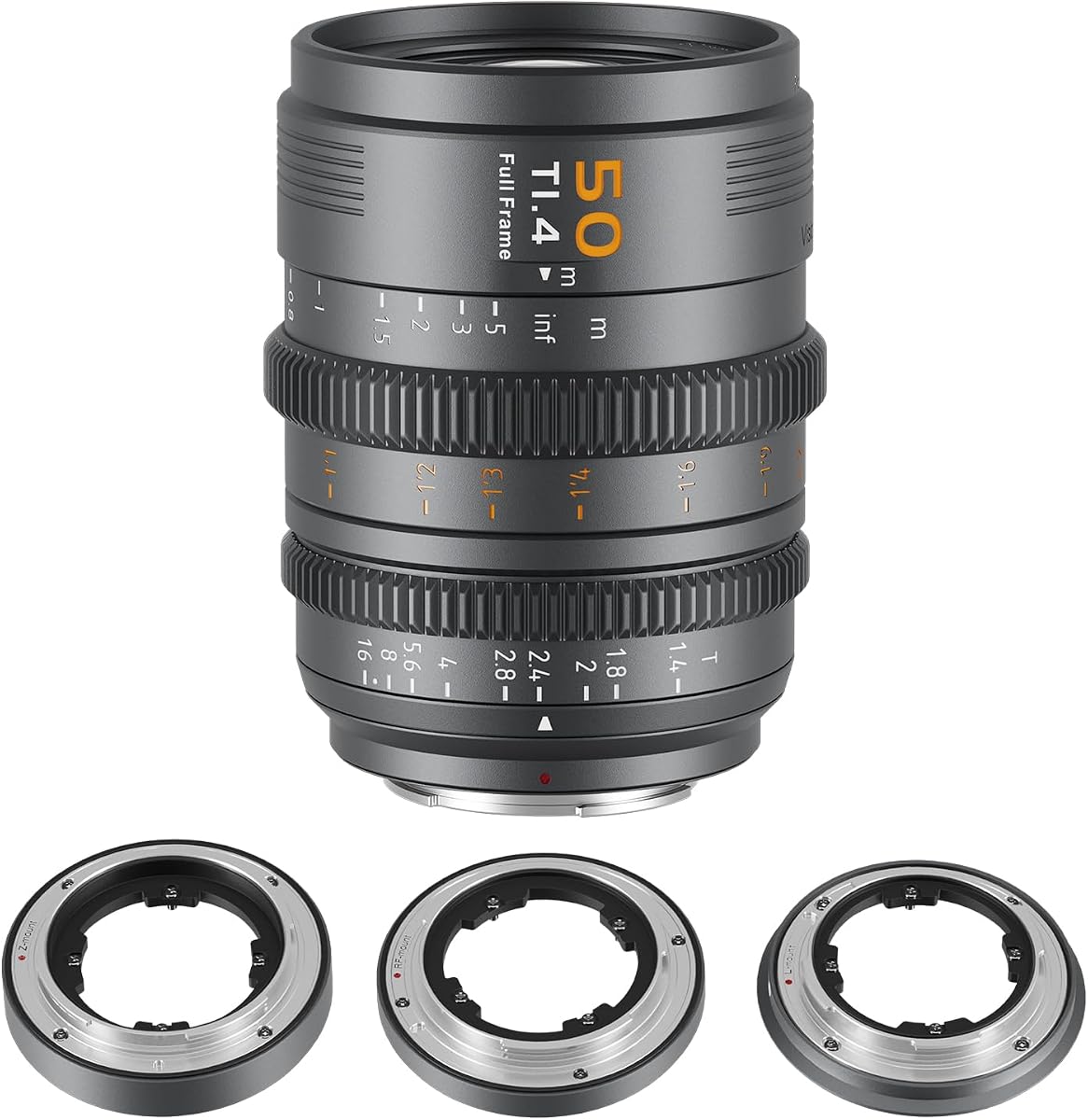
5.0Editor score

5.0Editor score
This table provides a side-by-side comparison of all ten cine lenses reviewed in this guide. You can quickly compare focal length, aperture, and key specifications to find the best fit for your camera system.


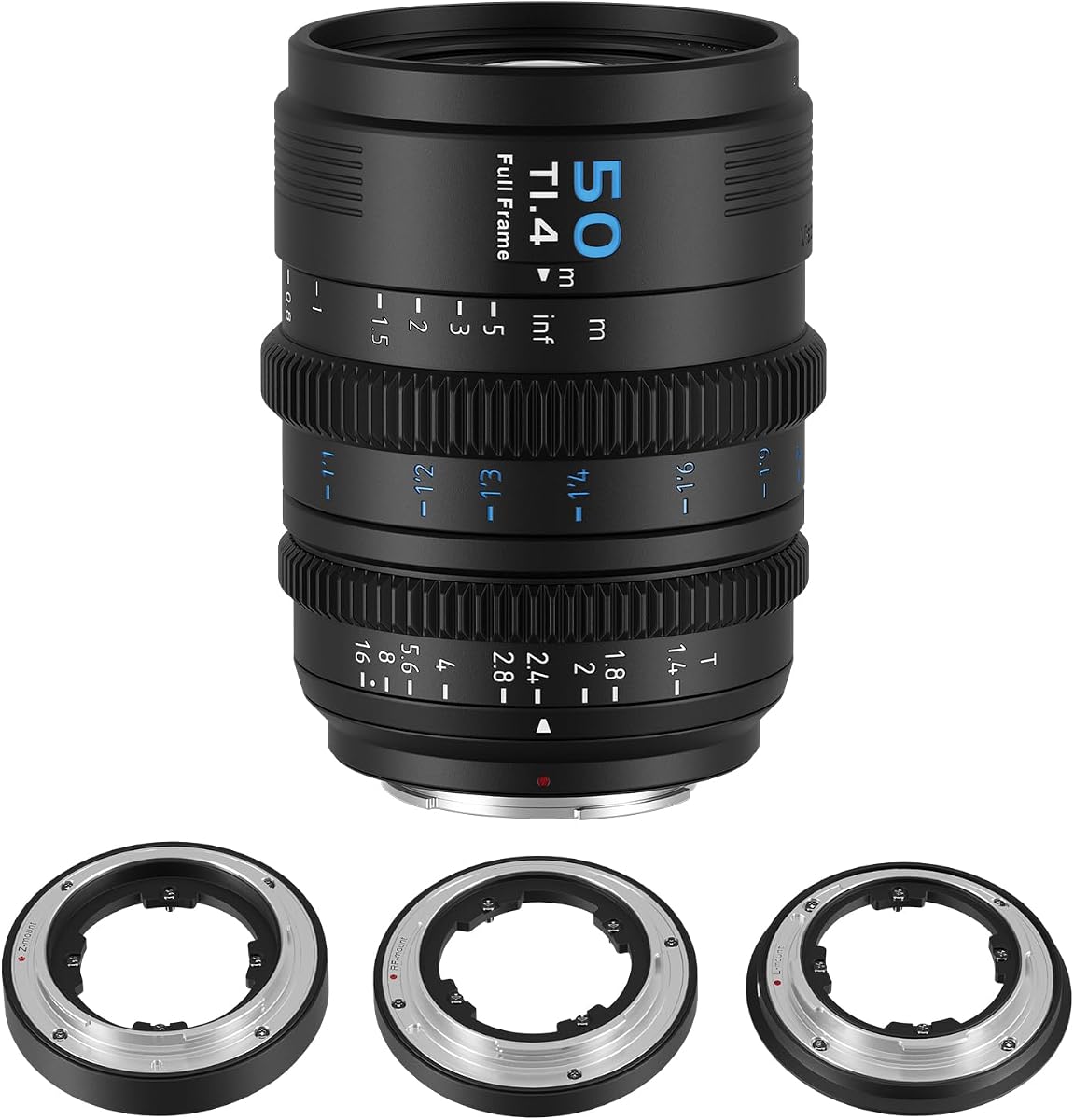


The SIRUI VP-1 Vision Prime 1 50mm T1.4 stands out as the best overall cine lens for versatile filmmakers. It boasts a perfect 5.0 rating from users who praise its sharpness and flexibility. The interchangeable mount system makes it easy to switch between Sony Canon Nikon and Panasonic cameras.
We may earn a commission when you buy through this link, at no additional cost to you.
Its T1.4 aperture allows for exceptional low-light performance while keeping ISO noise low. The lens includes aspherical ED and HRI glass elements that minimize distortion and chromatic aberrations. This results in crisp details across the entire frame ideal for 8K storytelling.
The main trade-off is the manual focus requirement which can be challenging for beginners. However the 270-degree rotation ring provides smooth precise control for professional operators. Its compact design also ensures stable handheld gimbal use without extra support gear.
Filmmakers seeking a reliable prime for multiple camera systems should buy this lens. It offers high optical quality without the bulk of traditional cinema glass. We recommend it for documentary travel and narrative projects requiring consistent image characteristics.
The user-interchangeable RF Z and L mounts allow seamless transitions between camera brands without buying multiple lenses. This saves cost and simplifies your inventory for varied shooting assignments.
Advanced glass engineering delivers edge-to-edge sharpness essential for modern high-resolution sensors. You get minimal focus breathing and controlled aberrations for polished professional visuals.
We may earn a commission when you buy through this link, at no additional cost to you.
The ROKINON CINE DS T1.5 Kit provides a comprehensive solution for filmmakers needing a full range of focal lengths. With 24mm 35mm 50mm and 85mm lenses it covers most shooting scenarios. Users give it a 4.9 rating for its consistency and value.
We may earn a commission when you buy through this link, at no additional cost to you.
All lenses in the kit are color matched and feature unified gear and aperture positions. This standardization speeds up lens swaps during production. The T1.5 aperture ensures good low-light capability while maintaining sharp imagery on full-frame sensors.
The de-clicked aperture rings allow smooth exposure transitions during video. However the physical bulk of four lenses can be challenging for handheld work. You may need additional support systems like a tripod or dolly for smooth operation.
This kit is ideal for studio productions or shooters upgrading from photo lenses. It delivers professional cine features at an accessible price point. We suggest it for filmmakers who need versatile focal lengths in one box.
Every lens shares identical gear positions and aperture ring layouts. This uniformity reduces setup time and ensures consistent handling across different focal lengths.
The lenses cover full-frame sensors with minimal vignetting. You get broad angles of view from 24mm wide to 85mm telephoto for complete creative flexibility.
We may earn a commission when you buy through this link, at no additional cost to you.
The SIRUI Night Walker 35mm T1.2 delivers exceptional low-light performance for budget-conscious creators. With a bright T1.2 aperture it captures clean footage in dark scenes without high ISO noise. Users appreciate its 4.4 rating for optical clarity and lightweight design.
We may earn a commission when you buy through this link, at no additional cost to you.
The lens features 12 aperture blades that create smooth pleasing bokeh in out-of-focus areas. Its aluminum housing keeps the weight around 500g making it ideal for gimbal use. The focus ring rotates 270 degrees for precise manual adjustments.
One limitation is the S35 coverage which limits use on full-frame cameras. Also it works best with E mount cameras. However for hybrid shooters using APS-C sensors this lens offers a premium feel at a fraction of the cost.
Documentary filmmakers and travel videographers will find this lens valuable. It balances speed portability and image quality effectively. We recommend it as an entry point into cine lenses for E mount users.
The T1.2 aperture lets you shoot in challenging lighting conditions. You maintain clean images with minimal digital noise even in dim environments.
Weighing only 500g the lens is easy to carry and stabilize. This reduces fatigue during long shoots and allows for smoother handheld footage.
We may earn a commission when you buy through this link, at no additional cost to you.
The Rokinon 35mm T1.5 Cine DS provides reliable wide-standard coverage for Canon EF users. It is part of the DS line known for color consistency and unified specs. With a 4.6 rating it is trusted for regular production tasks requiring stable optics.
We may earn a commission when you buy through this link, at no additional cost to you.
The lens covers full-frame sensors with a T1.5 aperture that allows shallow depth of field. Its aperture gear positions are matched with other DS lenses for easier integration. The minimum focusing distance of 3.6 feet enables close subject work.
It uses a 77mm filter size which may increase accessory costs compared to 67mm models. The manual focus throw is smooth but requires practice for repeatability. These factors are acceptable trade-offs for the optical quality offered.
Shooters needing a consistent standard prime for storytelling should buy this. It pairs well with other Rokinon lenses for a unified kit. We recommend it for narrative work requiring reliable framing and exposure.
This lens matches color and gear specs with other Rokinon DS options. You get consistent handling and look across your entire lens set.
The optical design covers full-frame sensors without edge softness. You achieve the intended angle of view on both full-frame and APS-C bodies.
We may earn a commission when you buy through this link, at no additional cost to you.
The SIRUI Night Walker 24mm T1.2 RF mount lens excels at immersive compositions for video. It allows focusing as close as 0.3m for detailed subject shots. Users note a 4.3 rating for its optical sharpness and cinematic handling.
We may earn a commission when you buy through this link, at no additional cost to you.
The T1.2 aperture captures ample light for dynamic storytelling. The focus rotation enables smooth precise manual adjustments. Advanced optics control aberrations to ensure clean edges even at maximum aperture.
Its RF mount compatibility limits use to specific Canon and RED cameras. The S35 coverage is optimized for smaller sensors. These constraints are acceptable for users invested in the RF ecosystem.
Environmental and landscape shooters benefit from its wide perspective and low-light speed. It balances technical performance with practical size. We recommend it for RF users needing versatile wide-angle optics.
Focusing as close as 0.3m allows unique visual impacts. You can capture details with depth that standard lenses cannot achieve.
The focus ring provides smooth manual adjustments. This design minimizes breathing and ensures repeatable focus for production work.
We may earn a commission when you buy through this link, at no additional cost to you.
The SIRUI VP-1 Vision Prime 1 50mm with interchangeable mounts is ideal for hybrid shooters. It features E RF Z and L mount options for seamless camera transitions. Users give it a 4.0 rating for its optical quality and build durability.
We may earn a commission when you buy through this link, at no additional cost to you.
Its T1.4 aperture supports low-light shooting while keeping noise low. Aspherical and ED glass ensure minimal distortion and high sharpness. The lens shares specs with other VP-1 models for consistency in production.
Purchasing separate mounts can add to the initial cost. However this flexibility saves buying multiple lenses. It is best for those who switch camera systems frequently.
Travel filmmakers and documentarians will appreciate its versatility and weight. It offers professional optics in a portable package. We recommend it for versatile production needs across brands.
All VP-1 lenses match in size and gear position. This consistency simplifies swaps and maintains a uniform look in your footage.
Advanced glass elements deliver sharp images with minimal aberrations. You get high-resolution performance suitable for modern cinema workflows.
We may earn a commission when you buy through this link, at no additional cost to you.
The SIRUI Night Walker 24mm T1.2 for M4/3 is a favorite for mirrorless users. It delivers perfect sharpness and controlled aberrations for cinematic shots. Users award it a 4.9 rating for optical performance and build quality.
We may earn a commission when you buy through this link, at no additional cost to you.
With 12 aperture blades it creates pleasing bokeh for creative storytelling. The aluminum housing provides sturdiness while keeping weight to 500g. This makes it easy for handheld shooting and gimbal use.
The manual focus ring rotates 270 degrees for precise control. It is optimized for S35 and APS-C cameras. While limited to M4/3 this lens fits many hybrid camera setups.
Documentary and travel videographers will find this lens practical and effective. It offers premium quality without bulk or expense. We recommend it for M4/3 users seeking high-speed optics.
The lens achieves perfect sharpness even at max aperture. You get well-controlled aberrations for clear and detailed footage.
Weighing just 500g the lens is portable and easy to stabilize. It reduces operator fatigue during long handheld shooting sessions.
We may earn a commission when you buy through this link, at no additional cost to you.
The Rokinon DSX85 85mm T1.5 is a reliable choice for portrait and subject work. Its 9 aperture blades and T1.5 maximum aperture create smooth and attractive bokeh. With a 4.7 rating users value its optical quality and build consistency.
We may earn a commission when you buy through this link, at no additional cost to you.
Ultra multi-coated glass reduces flare and ensures clean visuals. The 72mm filter size allows standard accessories. It works well for Canon EF cameras and offers solid value for the price.
You must focus manually and the throw requires practice. However the smooth operation supports precise adjustments. This lens is ideal for controlled lighting environments.
Shooters needing a fast telephoto for storytelling should buy this. It delivers professional results at an accessible price point. We recommend it for filmmakers seeking quality without large budgets.
The 9-blade aperture produces round and soft out-of-focus highlights. This enhances subject isolation and visual appeal in cinematic shots.
Ultra-coated glass elements minimize flare and ghosting. You get clear images even when shooting toward light sources.
We may earn a commission when you buy through this link, at no additional cost to you.
The Rokinon Cine DS 85mm T1.5 offers solid full-frame coverage for Canon users. As part of the DS line it matches color and gear specs with other lenses. Users give it a 4.5 rating for reliability and smooth manual controls.
We may earn a commission when you buy through this link, at no additional cost to you.
The 8-blade iris creates attractive bokeh for subject separation. Its unified positions ensure seamless lens swaps during production. The T1.5 to T22 range provides flexibility for lighting adjustments.
Minimum focusing distance is 3.6 feet which limits close-up work. However for standard production needs it performs consistently. This lens fits well in professional kits requiring stability.
Narrative filmmakers needing a reliable prime should buy this lens. It ensures consistent handling and color balance across the kit. We recommend it for productions prioritizing workflow efficiency.
All DS lenses share aperture and gear positions. This standardization reduces setup errors and speeds up on-set changes.
The lenses are color matched for consistent footage. You avoid color shifts when switching between lenses on the same shoot.
We may earn a commission when you buy through this link, at no additional cost to you.
The DZOFILM Pictor 50-125mm T2.8 delivers high-end performance for professional shoots. It maintains focus across the zoom range for smooth transitions. Users award it a 5.0 rating for precision and minimal breathing during operation.
We may earn a commission when you buy through this link, at no additional cost to you.
The 16-slat iris ensures clean exposure changes without harsh lines. It works with PL or EF mounts for broad compatibility. The parfocal design allows for reliable framing without constant refocusing.
The price is higher than prime lenses but justified by versatility. It is best for productions requiring zooming without losing focus integrity. This lens supports complex shots needing dynamic framing.
Studios and high-end productions should buy this lens for reliability. It meets professional standards for optical quality and handling. We recommend it for cinematographers needing a versatile zoom.
The lens retains focus while zooming in and out. This reduces the need for constant manual refocusing during shots.
Sixteen iris blades provide smooth exposure control. You get clean light transitions suitable for high-end video work.
We may earn a commission when you buy through this link, at no additional cost to you.
Choosing the right cine lens involves understanding your camera system and production needs. We outline key factors to help you find a lens that fits your budget and workflow.
The lens mount must match your camera body to ensure proper connection and electronic communication. Some lenses offer interchangeable mounts for extra flexibility across different brands. Always verify your camera model requirements before purchasing any cine lens.
Always verify your camera model requirements before purchasing any cine lens.
Full-frame lenses cover larger sensors while S35 or APS-C lenses are designed for smaller chips. Using the wrong coverage can cause vignetting or crop issues in your footage. Check the lens specs to confirm it supports your sensor size.
Check the lens specs to confirm it supports your sensor size.
Aperture affects light intake and depth of field in every shot. T-stops provide accurate exposure values compared to f-stops found on still lenses. Faster lenses allow for better low-light performance and softer background separation.
Faster lenses allow for better low-light performance and softer background separation.
Cine lenses feature longer focus throws than still lenses for precise manual control. A smooth focus ring helps achieve accurate focus pulls during action scenes. Look for consistent resistance across the full range of movement.
Look for consistent resistance across the full range of movement.
Professional lenses need sturdy materials to survive demanding production environments. Aluminum or metal bodies resist wear and heat better than plastic alternatives. Gear positions should be standard to fit with industry accessories.
Gear positions should be standard to fit with industry accessories.
Glass elements and coatings determine sharpness color accuracy and flare resistance. Aspherical and ED elements reduce aberrations for clearer images. High-quality optics ensure your footage looks polished on large displays.
High-quality optics ensure your footage looks polished on large displays.
Lighter lenses reduce fatigue during handheld or gimbal operations. Compact designs also help in tight spaces or for run-and-gun shooting. Balance optical performance with portability based on your shooting style.
Balance optical performance with portability based on your shooting style.
Cine lenses vary widely in price depending on brand and features. Set a realistic budget that balances cost with the optical quality you need. Sometimes investing in a smaller kit offers better value than a single expensive lens.
Sometimes investing in a smaller kit offers better value than a single expensive lens.
Start by mounting the lens securely on your camera and checking for dust or debris. Set the focus and aperture rings manually to your intended shooting values before rolling. Use a matte box if needed to reduce unwanted flaring during bright shots.
During shoots make smooth and deliberate movements with the focus ring to avoid abrupt changes. Monitor your monitor for critical focus especially when using wide apertures. Keep the aperture ring consistent across lenses for uniform exposure control.
After use clean the lens glass with a soft cloth and store it in a dry case. Avoid exposing the front elements to moisture or impact when not in use. Regularly inspect the gears for smooth operation and lubricate if recommended by the manufacturer.
T-stops measure actual light transmission through the lens while f-stops measure the aperture opening size. T-stops provide accurate exposure readings essential for consistent video lighting. This precision helps avoid exposure shifts between shots in a production.
Yes cine lenses work on still cameras but may lack autofocus features. They are designed for manual operation with longer focus throws and gear markings. This makes them ideal for video but still useful for controlled photography setups.
Cine lenses often require rails or cages to accommodate gear rings and matte boxes. Proper support stabilizes the lens and allows precise accessory attachment. A basic rig helps protect the lens during active shoots.
They use robust metal bodies and advanced optical elements to ensure durability and image quality. This construction adds weight but provides better handling for manual operation. The extra mass also aids stability during slow focus pulls.
Use a parfocal lens which maintains focus as you zoom between focal lengths. If using a varifocal lens you must adjust focus after changing the zoom. Parfocal lenses are preferred for professional production to avoid refocusing.
Cine lenses offer superior control and optical consistency for video work. They justify their cost through durability and smooth manual performance. For serious creators the benefits outweigh the higher price compared to still optics.
We highlighted ten top cine lenses ranging from versatile primes to specialized kits. The SIRUI VP-1 and ROKINON DS kits lead in flexibility and optical quality for most users. Each option balances cost and performance to suit different filmmaking styles.
Prioritize mount compatibility and sensor coverage when making your decision. Also consider the aperture speed needed for your typical shooting environment. These factors ensure the lens meets both technical and creative goals.
Remember that stock levels and pricing can fluctuate regularly. Always check current listings to confirm availability before finalizing your purchase. With the right lens your cinematic work will achieve professional quality results.