
Focusrite Scarlett Solo 4th Gen
4.6Editor score
Studio-quality converters and dynamic range
Improved Air mode for vocals
Includes full software plugin suite
This guide compares the top audio interfaces with built in Dsp for musicians and creators offering real time processing and low latency monitoring.
Finding the right audio interface with built in Dsp can transform your recording workflow by allowing real time effects without taxing your computer processor.
We evaluated ten top models based on conversion quality, DSP capabilities, connectivity options, and software ecosystems to help you find the perfect match.
Each pick highlights key strengths and ideal use cases so you can choose confidently while keeping in mind that prices may change over time.
4.6Editor score
4.7Editor score

4.0Editor score
Here is a side-by-side comparison of all ten models to help you quickly identify which interface best fits your specific recording needs and budget.




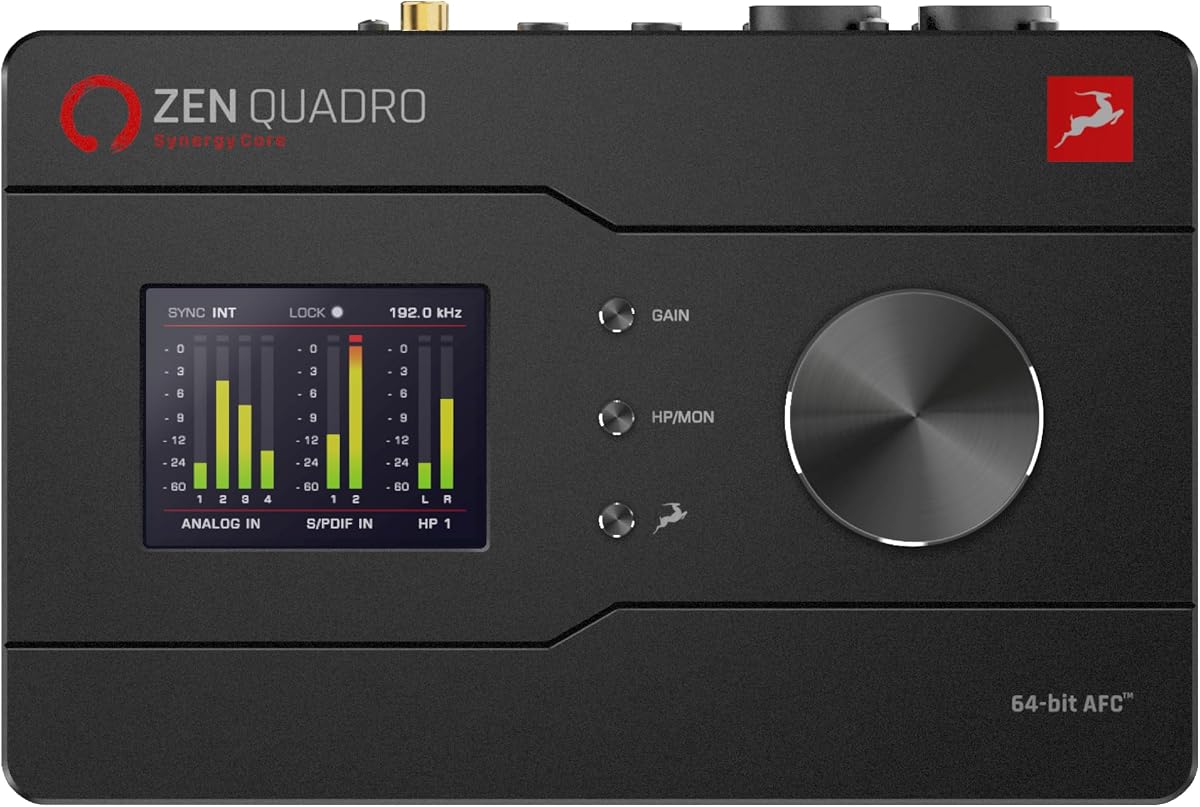
The Antelope Audio Zen Quadro stands out as a top choice for creators who demand professional sound quality without compromising on real-time effects processing.
We may earn a commission when you buy through this link, at no additional cost to you.
Its Synergy Core technology allows you to run over 90 effects using dedicated DSP and FPGA hardware ensuring your computer stays free for other tasks.
While the interface is bus-powered and portable, the included software requires some familiarity to maximize the potential of its routing and effects chains.
If you are building a serious home studio or need reliable gear for mobile sessions the Zen Quadro offers the performance and flexibility you need.
Recording through effects with near-zero latency lets you perform naturally without hearing delays between your input and the speakers or headphones.
With up to 130 dB dynamic range and 64-bit AFC clocking your recordings will capture subtle details with minimal noise and distortion.
We may earn a commission when you buy through this link, at no additional cost to you.
The Focusrite Scarlett Solo 4th Gen remains a industry standard for beginners thanks to its reliable performance and easy to use design.
We may earn a commission when you buy through this link, at no additional cost to you.
It features the same converters as Focusrites flagship interfaces delivering big studio sound that elevates vocals and guitars instantly.
While it lacks advanced routing options it includes a full collection of plugins that help you mix and master without needing extra software.
For songwriters recording alone at home this interface offers the perfect balance of quality ease of use and value.
With a 120dB dynamic range you can capture quiet passages and loud peaks without distortion ensuring professional sounding recordings.
Improved Air mode lifts vocals and guitars to the front of the mix adding musical presence and rich harmonic drive to your tracks.
We may earn a commission when you buy through this link, at no additional cost to you.
The Universal Audio Apollo Twin X QUAD is the gold standard for producers who want to record through iconic vintage gear in real time.
We may earn a commission when you buy through this link, at no additional cost to you.
Its Unison preamps let you use authentic emulations of Neve and API preamps so you hear the sound of the classic consoles while tracking.
Although it demands a Thunderbolt 3 port and a significant budget the access to over 200 DSP plug-ins makes it worth it for serious workflows.
If you need the highest fidelity conversion and want to avoid CPU spikes during mixing this interface delivers unmatched analog tone and reliability.
Record in real time through authentic emulations of Neve and API preamps to get the exact tone of legendary studio equipment.
Access award-winning titles like Capitol Chambers and Sound City Studios to add professional finishing touches to your recordings.
We may earn a commission when you buy through this link, at no additional cost to you.
The Elgato Wave XLR MK.2 is designed specifically for content creators who need powerful DSP effects and intuitive controls for live streaming.
We may earn a commission when you buy through this link, at no additional cost to you.
It features a massive 80dB gain allowing any XLR microphone to be driven loud and clear without introducing excessive background noise.
The Wave FX Processor unifies DSP effects and VST plugins in one signal chain so you can enhance your voice without taxing your CPU.
Streamers and podcasters will appreciate the touch controls and LED feedback that provide instant visual status updates during recording sessions.
Works with Wave Link software for easy audio control with precise routing effects and monitoring natively integrated for your workflow.
Enhance your voice with built-in voice enhancer compressor EQ and more to achieve polished sound without external software.
We may earn a commission when you buy through this link, at no additional cost to you.
The Universal Audio Apollo Twin X DUO provides many of the flagship features of the QUAD model at a more accessible price point for home studios.
We may earn a commission when you buy through this link, at no additional cost to you.
It offers the same Unison preamps that let you record through authentic emulations of classic hardware preamps and guitar amplifiers.
While it has fewer DSP channels than the QUAD version it still grants access to the full library of over 200 UAD DSP and Native plug-ins.
If you need high-end analog tone but do not require eight inputs this interface is a perfect solution for serious two-input recording projects.
Use bass management to add a subwoofer to your monitor setup and hear all the low-end detail in your mixes accurately.
Use Auto-Gain to set your levels across multiple inputs in seconds so you never miss the take while setting up.
We may earn a commission when you buy through this link, at no additional cost to you.
The Solid State Logic 2 MKII Plus brings the legendary SSL sound to home studios with its 32-Bit/192 kHz converters and analog enhancement.
We may earn a commission when you buy through this link, at no additional cost to you.
It includes the Legacy 4K Analog Enhancement which adds character and punch to tracks much like the classic large format consoles.
While it focuses on high fidelity conversion rather than heavy DSP its zero-latency monitoring ensures you hear yourself clearly during takes.
Producers who value the SSL sound and need reliable MIDI I/O for hardware synths will find this interface a valuable addition to their desk.
Experience the classic sound of SSL with the Legacy 4K Analog Enhancement feature that adds character and punch to your tracks.
Connect external MIDI gear easily with the 5-Pin DIN jacks included on this USB-C bus powered interface.
We may earn a commission when you buy through this link, at no additional cost to you.
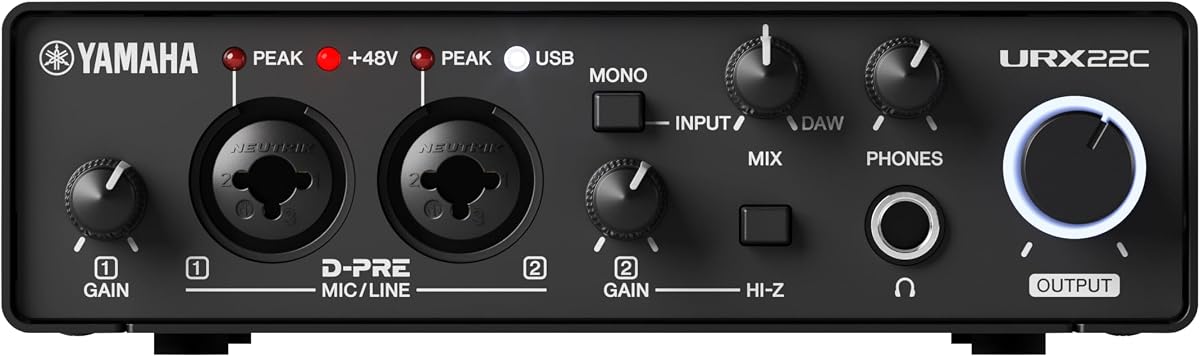
The Yamaha UR22C is a robust and reliable interface that offers latency-free DSP-powered monitoring for musicians who need real-time effects.
We may earn a commission when you buy through this link, at no additional cost to you.
Its Class-A D-PRE mic preamps provide clean and transparent sound while the built-in DSP allows you to apply effects without CPU load.
The rugged full-metal housing ensures durability making it suitable for both home studio use and travel on the road.
If you want a sturdy interface with built-in DSP capabilities for monitoring and basic effects this model is a solid investment.
Enjoy latency-free DSP-powered monitoring with REV-X reverb and Channel Strip so you hear your effects in real time.
Built with a rugged full-metal housing for ultimate durability this interface can withstand the rigors of daily use.
We may earn a commission when you buy through this link, at no additional cost to you.
The MOTU UltraLite-mk5 is a powerhouse for multitrack recording offering up to 40 simultaneous audio channels for complex sessions.
We may earn a commission when you buy through this link, at no additional cost to you.
Its DSP-driven monitor mixing lets you create separate unique mixes for each output pair so different musicians can monitor independently.
With on-board effects including reverb and EQ you can enhance your signals without needing to route everything through your DAW.
This interface is ideal for bands or live recording scenarios where you need robust connectivity and dedicated mixing capabilities.
Mix live inputs to any analog output pair with six separate mix busses and create unique mixes for different monitoring needs.
The high-resolution OLED display lets you view all signal activity at a glance with detailed metering for all analog I/O.
We may earn a commission when you buy through this link, at no additional cost to you.
The Yamaha URX22 stands out with its 4.3 touchscreen providing an intuitive way to control levels and effects without relying on screen menus.
We may earn a commission when you buy through this link, at no additional cost to you.
It features premium microphone preamps with 78 dB gain range and built-in DSP for professional sound and latency-free monitoring.
With dual MAIN/SUB USB ports you can connect multiple computers or stream directly while maintaining high 32-bit/192 kHz audio quality.
If you want modern touch control and a flexible USB architecture for streaming this interface offers a unique and powerful feature set.
Use the 4.3 touchscreen with 5 control knobs to adjust levels and settings instantly without digging into software menus.
Connect a computer plus phone or two computers and route audio between them for seamless live streaming setups.
We may earn a commission when you buy through this link, at no additional cost to you.
The Antelope Audio Zenith 2 is designed specifically for streamers and podcasters needing zero latency recording and easy system audio capture.
We may earn a commission when you buy through this link, at no additional cost to you.
It features a Smart Vocal Chain and integrated Loopback to easily blend mic and system sound for polished live streams.
Unique in its class it offers two headphone outputs with fully independent mixes allowing multiple users to monitor separately during sessions.
If you need a portable and powerful interface that simplifies streaming workflows this model delivers professional results out of the box.
Two headphone outputs with fully independent mixes are perfect for recording sessions where multiple users need separate monitoring.
Transform your voice with a dedicated Smart Vocal Chain and integrated Loopback for system audio capture easily.
We may earn a commission when you buy through this link, at no additional cost to you.
Selecting the right interface with built-in DSP involves considering your specific needs for real-time processing conversion quality and connectivity options.
Look for interfaces that offer dedicated DSP chips to handle effects and mixing without taxing your computer CPU.
This ensures you can record with reverb EQ and compression in real time with near-zero latency.
High-quality preamps with sufficient gain are essential for clean recordings especially when using condenser microphones.
Check the maximum dB gain to ensure it can power demanding mics without adding unwanted noise.
Consider how many inputs you need for instruments and microphones and outputs for monitors and headphones.
Expandable interfaces with ADAT or S/PDIF give you room to grow as your studio setup evolves.
USB-C Thunderbolt or FireWire connectivity affects speed and stability so choose what your computer supports best.
Bus-powered interfaces offer portability while those needing external power may offer more robust performance.
Many interfaces come with DAW software and plugin bundles that can save you money and simplify your workflow.
Ensure the software is compatible with your operating system and integrates well with your preferred recording tools.
Look for zero-latency monitoring and independent headphone outputs if multiple people need to hear different mixes.
Advanced monitor correction can help you hear accurate sound even in untreated acoustic spaces.
Start by connecting your interface to a computer using the recommended cable and installing the latest drivers for optimal performance.
Configure your DAW software to use the interface as the audio device and set the buffer size to balance latency and CPU usage.
Regularly clean the connectors and vents with compressed air to prevent dust buildup that can affect signal quality and cooling.
The main advantage is the ability to process audio effects like EQ and reverb in real time without using your computer CPU. This reduces latency significantly and allows you to record with a finished sound while keeping your system free for other tasks.
Most interfaces require specific drivers for full functionality especially on Windows. Always check the manufacturer website for the latest drivers and install them before connecting your interface to ensure stability and optimal performance.
Many modern interfaces support USB-C and are compatible with tablets and phones via adapters. However you should check the product specifications to confirm OS support and power requirements for mobile devices before purchasing.
It is not strictly necessary but highly beneficial if you want to hear yourself with effects like reverb or compression while recording. This helps with pitch and timing without the distraction of hearing your dry voice.
Thunderbolt interfaces generally offer faster data transfer and lower latency compared to USB which is useful for large multitrack projects. USB interfaces are more universally compatible and often cheaper making them suitable for most home studio needs.
Choose based on your typical recording sessions. If you record solo vocals or guitar one or two inputs may suffice. For recording a band or multiple instruments simultaneously look for interfaces with four or more inputs.
We have reviewed ten top models ranging from budget-friendly options to professional studio-grade interfaces to help you find the perfect match for your needs.
When making your choice consider factors like DSP capability preamp quality and connectivity options to ensure the interface grows with your skills.
Remember that prices change over time so check current deals and availability before making your final purchase decision.