GeeekPi EmbodiQ AI Kit
3.7Editor score
Includes natural language control
Comes with AI agent HAT
Features versatile sensor suite
This expert guide compares the best Arduino Uno Q boards and kits for AI, robotics, and embedded development in October 2026, reviewing specs and use cases.
The Arduino Uno Q represents a significant leap in microcontroller technology, blending traditional real-time control with modern computing power for advanced projects.
We compared ten top-rated boards and kits based on processing capabilities, connectivity options, expansion potential, and suitability for AI vision and robotics work.
Each pick highlights key strengths and ideal use cases to help you choose the right platform, keeping in mind that availability and pricing may vary.
3.7Editor score

4.4Editor score

4.8Editor score
This side-by-side comparison highlights the key specifications and capabilities of the top ten boards and kits available for makers and professionals.


This hybrid board combines the processing power of a Qualcomm MPU with the real-time control of an STM32 MCU for advanced applications.
We may earn a commission when you buy through this link, at no additional cost to you.
It excels in AI vision and robotics projects requiring heavy compute, running Linux Debian and supporting Python alongside Arduino Sketches.
While powerful, it demands more power and might be overkill for simple LED blinking tasks where a standard Uno suffices.
Ideal for engineers and makers pushing into edge AI and IoT, this board offers a unified experience bridging microcontrollers and single-board computers.
The dual-brain architecture allows complex AI inference on the MPU while the MCU handles precise timing for motors and sensors.
Developers can utilize Linux Debian and Python scripts for high-level logic while keeping low-level control within the Arduino ecosystem.
We may earn a commission when you buy through this link, at no additional cost to you.
This kit includes a robust 45W USB-C power supply ensuring stable operation even under heavy computational loads typical in robotics.
We may earn a commission when you buy through this link, at no additional cost to you.
It offers the same powerful hybrid architecture as the base board, making it perfect for engineers building scalable and industrial systems.
The main trade-off is the price, which is justified by the included power supply but might be steep for casual experimenters.
Choose this if you need reliable continuous operation for complex automation without worrying about power supply compatibility.
The included 45W USB-C supply ensures regulated power preventing crashes during intensive AI inference or multi-tasking sessions.
We may earn a commission when you buy through this link, at no additional cost to you.
This kit transforms the Arduino Uno Q into a full single-board computer ready for display and network use right out of the box.
We may earn a commission when you buy through this link, at no additional cost to you.
It includes a rugged aluminum case that protects the board and helps dissipate heat during intensive development sessions.
The main limitation is having 2GB RAM instead of 4GB, which may limit complex multi-process workloads compared to higher-end options.
Best for developers needing immediate connectivity via Ethernet and HDMI without hunting for compatible adapters and cables separately.
The aluminum case not only protects against dust and static but also provides a cleaner look for permanent installations.
We may earn a commission when you buy through this link, at no additional cost to you.
This original Uno R3 remains the gold standard for reliability, offering a classic platform with vast community support and endless tutorials.
We may earn a commission when you buy through this link, at no additional cost to you.
Its simplicity makes it perfect for learning basics and prototyping without the complexity of operating systems or network requirements.
The downside is limited raw power, making it unsuitable for AI vision or complex tasks requiring heavy compute capabilities.
Choose this if you need a sturdy, well-documented base for robotics, automation, or educational projects without extra features.
Every sensor and module has an example sketch, making it easy to adapt code and troubleshoot issues instantly.
We may earn a commission when you buy through this link, at no additional cost to you.
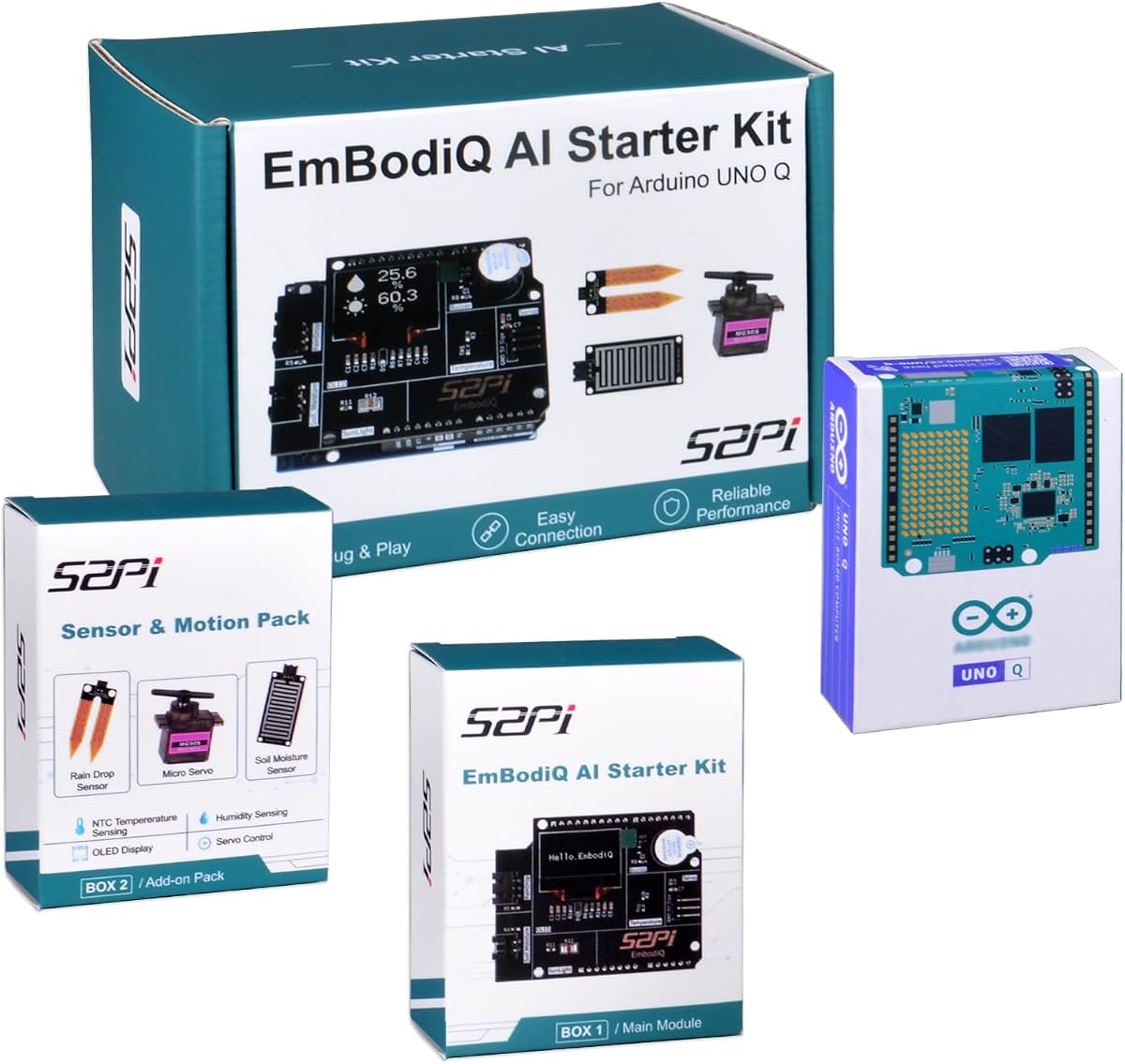
This kit allows you to control hardware using natural language commands, lowering the coding barrier for complex multi-step tasks.
We may earn a commission when you buy through this link, at no additional cost to you.
It includes specific sensors for soil and rain, making it ideal for smart gardening or environmental monitoring prototypes right away.
While innovative, the natural language features require configuration and may be limited to specific API providers or models.
Perfect for educators or enthusiasts wanting to experiment with AI agents and language-based control without deep coding expertise.
The AI Agent HAT enables conditional logic and reasoning, allowing the board to make decisions based on sensor inputs dynamically.
We may earn a commission when you buy through this link, at no additional cost to you.
This board offers a balanced mix of dual-core processing and connectivity options at a price point accessible to most hobbyists.
We may earn a commission when you buy through this link, at no additional cost to you.
The built-in Wi-Fi and Bluetooth enable easy IoT integration, while the DAC and OP-AMP provide precision for audio or analog tasks.
It lacks the full Linux power of the Q but delivers reliable performance for most wireless sensor and control applications.
Ideal for smart home projects and industrial IoT prototypes requiring CAN bus and analog precision without high costs.
The 12-bit DAC allows precise analog signal generation useful for audio projects or detailed sensor interfacing requirements.
We may earn a commission when you buy through this link, at no additional cost to you.
This kit provides a complete set of components and guided lessons to get beginners building projects without needing extra purchases.
We may earn a commission when you buy through this link, at no additional cost to you.
The PDF tutorials walk you through 22+ examples, ensuring you understand basic logic, motor control, and sensor interfacing quickly.
While excellent for learning, the underlying board is standard and does not support the advanced features found in newer Q models.
Choose this if you want a hassle-free start into electronics with all necessary parts and clear instructions in one package.
The guided lessons start simple with blinking LEDs and progress to complex robotics tasks, building skills progressively.
We may earn a commission when you buy through this link, at no additional cost to you.
This board is a reliable, budget-friendly alternative to the official Arduino board, offering the same core functionality at a lower price.
We may earn a commission when you buy through this link, at no additional cost to you.
It includes a USB cable and uses standard headers making it easy to plug into existing shields and project enclosures.
The main limitation is its basic feature set which does not support modern connectivity like Wi-Fi without extra modules.
Best for replacing a lost board or expanding a project where cost is a priority and advanced features are not needed.
It retains the exact dimensions and pinout of the original, ensuring compatibility with thousands of existing shields.
We may earn a commission when you buy through this link, at no additional cost to you.
This entry-level board provides the essential microcontroller functionality needed for basic electronics and Arduino IDE programming.
We may earn a commission when you buy through this link, at no additional cost to you.
It supports common interfaces like UART SPI and I2C allowing connection to a wide range of standard sensors and peripherals.
While it lacks modern connectivity options it serves well as a simple logic controller for small robotics or automation tasks.
Choose this for projects where cost efficiency is key and wireless features are not required for functionality.
Standard interfaces allow connecting displays sensors and modules easily using widely available libraries and code.
We may earn a commission when you buy through this link, at no additional cost to you.
This board offers broad compatibility with various systems including Raspberry Pi making it a versatile option for integrated projects.
We may earn a commission when you buy through this link, at no additional cost to you.
It provides standard Arduino functionality with clear labeling for easy wiring and access to community libraries for quick development.
The main consideration is that generic brands may vary slightly in quality, so checking reviews is advisable before bulk orders.
Best for hobbyists needing a cost-effective controller for diverse projects requiring standard microcontroller features without brand premium.
The board works seamlessly with Raspberry Pi and other platforms allowing flexible system architectures.
We may earn a commission when you buy through this link, at no additional cost to you.
Choosing the right Arduino Uno Q board or kit depends on your project requirements, budget, and technical expertise.
Consider whether you need a traditional microcontroller for simple tasks or a hybrid system capable of running AI models and Linux.
For robotics and complex tasks prioritize boards with dual-core or hybrid architectures like the Qualcomm and STM32 combination.
Assess how much data your project will store and process locally on the board.
More RAM and storage are essential for running machine learning models or complex operating systems.
Check if the board has built-in Wi-Fi Bluetooth or Ethernet depending on how your device will communicate.
Modern boards often include these features to simplify smart device integration.
Ensure the board fits existing shields or offers modern connectors like Qwiic for sensors.
Compatibility with your existing ecosystem saves time and money.
Decide if you need to run Linux or Python alongside Arduino C++ code.
Hybrid boards allow this but may require more technical setup.
Advanced boards may need more stable and higher wattage power supplies than standard models.
Always check power requirements before choosing your adapter.
Kits often include accessories like cases or sensors that add value but increase cost.
Compare board-only options with starter kits based on what you already own.
Begin by connecting your board to a computer using a USB-C cable to install drivers and set up the Arduino IDE.
Ensure you use a stable power source especially when running Linux or heavy processing tasks to avoid unexpected shutdowns.
Store boards in a cool dry place to protect sensitive components from moisture and static discharge.
Yes the hybrid model supports Python scripts alongside traditional Arduino C++ sketches for complex logic and high-level tasks.
The Uno Q has a more powerful hybrid architecture capable of running Linux while the R4 focuses on standard microcontroller functions with Wi-Fi.
Yes most physical shields that fit the classic Uno form factor will work but you may need to check pin mappings.
Yes the hybrid board requires specific drivers to communicate between the MPU and MCU properly through USB.
The hybrid model with robust power and Linux support is well suited for industrial IoT and automation prototypes.
Use the Arduino App Lab or IDE to manage both Arduino Sketches and Linux Python scripts for development.
Yes the hybrid model supports AI vision tasks thanks to its dedicated acceleration and Linux environment capabilities.
Yes the hybrid board includes built-in Wi-Fi 5 and Bluetooth 5.1 for robust wireless connectivity options.
The best board depends on your project scale with the hybrid model offering unmatched power for AI and robotics tasks.
Prioritize connectivity and power requirements first to ensure your project runs smoothly without hardware limitations.
Always verify current availability and pricing on retailer sites as product updates and bundles change frequently.