
ESP32-S3-Nano Microcontroller Development Board
5.0Editor score
Affordable pricing option
8MB PSRAM included
HID emulation support
Compare top Arduino Nano ESP32 boards for IoT and embedded projects with Wi-Fi, Bluetooth, and MicroPython support to find the best fit for your needs.
The Arduino Nano ESP32 represents a significant leap in embedded development, combining powerful processing with seamless wireless connectivity. This compact board offers developers the ability to create sophisticated IoT solutions without sacrificing ease of use or flexibility in design.
We compared ten leading options based on processor performance, wireless capabilities, memory size, and ecosystem support. Our analysis focused on real-world usability for makers, engineers, and students looking to build reliable smart devices and automation systems efficiently.
Each pick highlights specific strengths like USB-C convenience, battery management, or advanced interface support. Prices and availability can change quickly, so always verify the latest details before purchasing your next development platform for professional or hobbyist projects.
5.0Editor score

4.6Editor score

4.8Editor score
This side-by-side comparison evaluates every model on critical technical specifications and real-world performance metrics to help you select the right board for your specific application requirements.


This is the official Arduino Nano ESP32 powered by the ESP32-S3 chip and rated 4.6 stars. It delivers high performance for IoT and embedded applications with dual-core processing and robust wireless features.
We may earn a commission when you buy through this link, at no additional cost to you.
The board supports Wi-Fi and Bluetooth 5.0 for seamless communication. It features USB-C for stable power and faster programming. HID support allows integration with keyboards and mice for advanced input projects.
The trade-off is that it is pricier than generic alternatives. You might also need an external antenna for maximum range in remote locations. These limits are acceptable given the official support and reliability.
Buy this if you want official Arduino quality and MicroPython support. It is ideal for students, professionals, and makers seeking a stable platform for smart home or edge AI projects.
Integrated Wi-Fi and Bluetooth 5.0 enable robust communication with cloud platforms and other devices effortlessly.
MicroPython compatibility allows for rapid prototyping and easier coding compared to traditional C-based development.
We may earn a commission when you buy through this link, at no additional cost to you.
This board uses the ESP32-S3R8 chip and holds a perfect 5.0 star rating. It offers massive memory and flexibility for IoT developers who need cost-effective solutions.
We may earn a commission when you buy through this link, at no additional cost to you.
It features 8MB PSRAM for heavy data tasks and supports switching between Arduino and MicroPython environments. HID emulation helps create custom input devices easily.
Documentation might be less comprehensive than official Arduino boards. Some pins or headers could differ from standard layouts. These minor issues are worth the significant cost savings.
Choose this if you want high specs on a budget. It suits makers building custom interfaces or data-heavy applications who prefer MicroPython or Arduino Cloud integration.
With 8MB PSRAM, complex data processing and large project buffers become much more manageable.
Switching between Arduino IDE and MicroPython lets you pick the best tool for every specific task.
We may earn a commission when you buy through this link, at no additional cost to you.
This premium board uses the RISC-V based ESP32-P4 chip and carries a 4.8 star rating. It targets advanced applications like image processing and industrial automation.
We may earn a commission when you buy through this link, at no additional cost to you.
It includes MIPI-CSI and DSI interfaces for displays and cameras. The JPEG codec and image signal processor enable edge AI and visual tasks. Security features like Secure Boot protect your data.
The learning curve is steeper due to unique interfaces. Power consumption is higher than standard Wi-Fi boards. These drawbacks are acceptable for professional projects needing high throughput.
Buy this for industrial or media-heavy projects. Engineers and advanced developers building cameras or displays will appreciate the specialized hardware and security capabilities.
Built-in JPEG codec and image signal processing allow for sophisticated visual tasks at the edge.
Hardware Secure Boot and flash encryption protect sensitive data and ensure device integrity.
We may earn a commission when you buy through this link, at no additional cost to you.
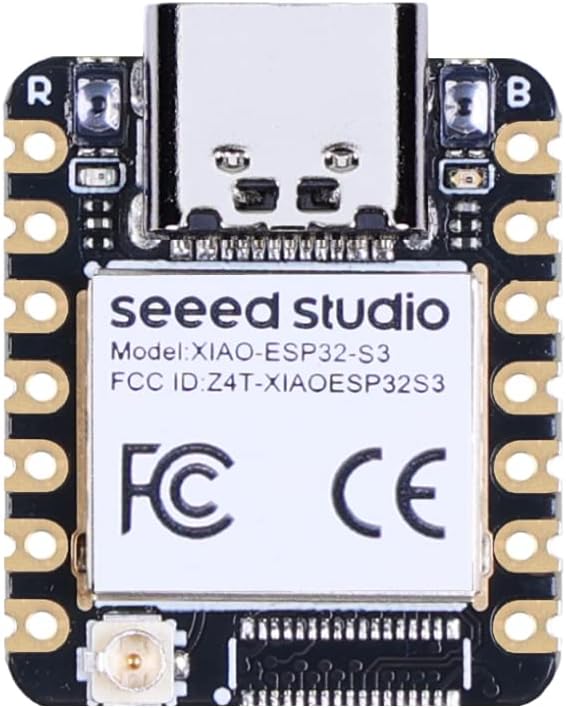
This XIAO board fits in the palm of your hand and rates 4.7 stars. It is designed for wearables and space-constrained projects requiring high efficiency.
We may earn a commission when you buy through this link, at no additional cost to you.
Power modes allow deep sleep at just 14 microamps for battery life. It supports lithium battery charging. RF performance supports 100 meters with U.FL antenna.
Its tiny size makes soldering or wiring tricky for beginners. IO count is lower than full-sized boards. These trade-offs are necessary for wearable device portability.
Choose this for wearables or space limited projects. If you need to build something small and battery-efficient, this board is unmatched in its class.
Deep sleep modes and battery charging support make this ideal for long-lasting portable devices.
Thumb-sized dimensions allow integration into tight spaces or wearable tech applications easily.
We may earn a commission when you buy through this link, at no additional cost to you.
This three-pack bundle is rated 4.4 stars and offers excellent value for teams or multiple prototypes. It provides reliable performance at a fraction of single board costs.
We may earn a commission when you buy through this link, at no additional cost to you.
Each board has a 240MHz dual-core processor and low power clock settings. The castellated module design allows direct soldering to carrier boards. Ceramic antenna supports stable Wi-Fi.
GPIO headers are smaller and might need careful assembly. Documentation is minimal. These cons are negligible when you consider getting three functional boards for less money.
Buy this if you need multiple units for a class or deployment. It is ideal for prototyping several devices or stocking up for future projects efficiently.
Getting three boards in a single pack reduces the per-unit cost significantly for bulk projects.
The castellated module design lets you integrate the board directly into your own custom PCBs.
We may earn a commission when you buy through this link, at no additional cost to you.
This kit comes with over 35 modules and tutorials and rates 4.3 stars. It is designed to guide beginners through essential electronics and IoT development.
We may earn a commission when you buy through this link, at no additional cost to you.
You get sensors, displays, and motors to build weather stations and controllers. The step-by-step online guide has 30+ projects with code. It supports Arduino IDE for easy coding.
Some versions use older ESP32 Bluetooth 4.2 chips. The volume of parts can be overwhelming initially. These issues are acceptable given the structured learning path.
Choose this if you are new to electronics. Students and hobbyists wanting a guided path to learn IoT will find this an invaluable resource.
Guided tutorials walk you from basic circuits to advanced IoT apps without requiring prior experience.
With over 30 projects included you can explore weather stations smart controllers and interactive gadgets.
We may earn a commission when you buy through this link, at no additional cost to you.
This classic Nano variant uses the SAMD21 ARM chip and has a 4.5 star rating. It focuses on secure IoT projects with hardware-level encryption.
We may earn a commission when you buy through this link, at no additional cost to you.
The Secure Element enables encryption for cloud data. It supports Wi-Fi and BLE for connectivity. Pre-soldered headers make wiring breadboards fast.
The processor is slower than the ESP32-S3 for heavy tasks. It is more expensive than alternatives. These trade-offs are acceptable if security is your top priority.
Buy this for secure data applications or commercial prototypes. If you need trusted encryption and official support this board is the safest choice available.
Hardware-level encryption ensures your data stays private when communicating with cloud services.
Being an official Arduino board ensures full IDE support and community resources.
We may earn a commission when you buy through this link, at no additional cost to you.
This classic ESP32 board comes in a three-pack and rates 4.4 stars. It is a staple for IoT projects due to its proven stability and broad compatibility.
We may earn a commission when you buy through this link, at no additional cost to you.
It supports AP STA and AP+STA modes for flexible networking. Compatible with FreeRTOS and LWIP protocol. Low power modes help energy efficient designs.
Bluetooth 4.2 is outdated compared to BLE 5.0 on newer boards. IO pins are standard but basic. These cons are negligible for general IoT and automation tasks.
Choose this for reliable general-purpose IoT. If you need a robust board for smart home sensors this classic chip is always a safe option.
Multiple network modes allow flexible connection strategies for different deployment environments.
Full FreeRTOS support enables efficient multi-threading and real-time task management.
We may earn a commission when you buy through this link, at no additional cost to you.
This three-pack features USB-C and rates 4.7 stars. It offers a modern connector for easier power and serial communication on the ESP32 platform.
We may earn a commission when you buy through this link, at no additional cost to you.
It supports Over-the-Air firmware updates via Wi-Fi. The CP2102 chip ensures stable USB communication. Dual-core performance handles sensors and automation well.
Bluetooth 4.2 is older. The USB bridge is standard. These are minor limits given the convenience of USB-C and OTA capabilities.
Buy this if you want USB-C convenience. Teams or students needing modern connectivity and quick remote updates will appreciate this board design.
USB-C offers reversible plugs and higher power delivery for stable development.
Over-the-Air updates let you patch firmware over Wi-Fi without reconnecting cables.
We may earn a commission when you buy through this link, at no additional cost to you.
This UNO variant combines RA4M1 and ESP32-S3 chips for 4.7 stars. It is a powerful IoT choice for industrial or advanced hobbyist needs.
We may earn a commission when you buy through this link, at no additional cost to you.
It features a built-in LED matrix for visual feedback. CAN bus allows reliable industrial communication. 12-bit DAC and OP-AMP support analog precision.
It is larger than Nano boards and might need more space. Setup is complex. These cons are acceptable for projects needing industrial-grade features.
Choose this for advanced industrial projects. If you need CAN, DAC, or visual indicators this board provides unmatched versatility in the Arduino family.
CAN bus support enables reliable real-time communication in automotive or factory systems.
A built-in 12×8 LED matrix displays messages or data directly on the board.
We may earn a commission when you buy through this link, at no additional cost to you.
Selecting the right board depends on your project requirements for processing power connectivity and specific features.
Look for dual-core processors like ESP32-S3 or RISC-V for multitasking performance. Higher clock speeds around 240MHz help with complex logic or signal processing.
Choose a faster processor if your project involves data streaming AI tasks or complex automation logic.
Prioritize boards with Bluetooth 5.0 or BLE for modern connectivity and better range. Wi-Fi capabilities ensure easy integration with cloud services and local networks.
Ensure the wireless standard matches your smart devices and network infrastructure for seamless communication.
Check for sufficient RAM and flash storage to handle your project code and runtime data. PSRAM is useful for heavy tasks or image processing.
Select memory capacity that supports your application without frequent overflows or reloads.
USB-C is standard for modern boards providing faster power delivery and data transfer. Additional interfaces like CAN or I2C expand peripheral support.
Choose interfaces that align with your sensors and industrial hardware to simplify integration.
Deep sleep modes and power management features are crucial for battery-operated devices. Look for boards designed to minimize consumption when idle.
Prioritize low-power designs for wearable or remote sensor applications needing long battery life.
Hardware encryption and Secure Elements protect sensitive data and prevent unauthorized access. This is vital for commercial or private IoT deployments.
Choose boards with secure boot and encryption for data integrity and trust.
Ensure compatibility with MicroPython Arduino IDE or your preferred language for ease of use. Official support reduces troubleshooting and community help.
Select a platform that matches your coding skills to speed up development.
Nano sizes fit into tight spaces while larger boards offer more IO pins and ports. Decide if portability or expandability is more important.
Match the physical size to your enclosure constraints and project layout needs.
Install drivers and select the correct board in your IDE to establish a stable connection. Use the USB port for both power and programming to simplify setup.
Keep your project code organized and use version control to track changes. Regularly update libraries to ensure compatibility and security.
Avoid overheating during extended use by ensuring adequate airflow. Store boards in dry environments to protect from moisture or corrosion.
Yes it is fully compatible with the Arduino IDE and most standard libraries. You can migrate existing sketches with minor pin adjustments if using different IO pins. Community support makes transitioning seamless for developers.
Yes the ESP32-S3 chip supports Bluetooth 5.0 and BLE for improved connectivity and range. It allows better pairing with modern devices. This support is standard on most official boards.
Most ESP32-S3 boards support MicroPython for easier programming. You can flash the firmware using the USB port. This enables rapid prototyping for developers who prefer Python syntax.
A stable 5V supply via USB-C is recommended for best performance. Use quality power sources to avoid brownouts during Wi-Fi transmission. For battery projects use a regulated voltage converter.
Over-the-Air updates are supported via Wi-Fi on boards with OTA capabilities. You can set this up using platform-specific libraries or web interfaces. This avoids repeated cable connections during development.
Yes models with CAN and security features are suitable for industrial use. Ensure you verify environmental ratings and connectors. Some variants include encryption and robust power management for these scenarios.
The official Arduino Nano ESP32 stands out for performance and official support. For budget needs the ESP32-S3-Nano offers exceptional value with similar specs.
Prioritize wireless standards and security based on your application. Advanced users may prefer the ESP32-P4 for image processing or the UNO R4 for industrial features.
Verify current pricing and availability before purchase. Select the board that balances power and features for your specific development goals.