
DIGITEN G3/8" Water Flow Sensor
4.5Editor score
Compact size design
Low voltage operation
Square wave output
Finding the right Arduino flow meter is essential for any project involving fluid monitoring or control. These sensors convert water movement into electrical signals that your microcontroller can process easily.
We evaluated ten top-rated options based on compatibility, build quality, and reliability. Each product was chosen for its ability to integrate smoothly with common development boards like Arduino and Raspberry Pi.
Every pick highlights key specifications and real-world use cases. Note that availability and pricing fluctuate regularly, so always verify details before making a final purchase decision for your build.
4.5Editor score

5.0Editor score

4.9Editor score
As an Amazon Associate we earn from qualifying purchases.
The following table provides a side-by-side comparison of all ten selected models. This overview helps you quickly identify which sensor matches your specific flow rate and connection requirements.


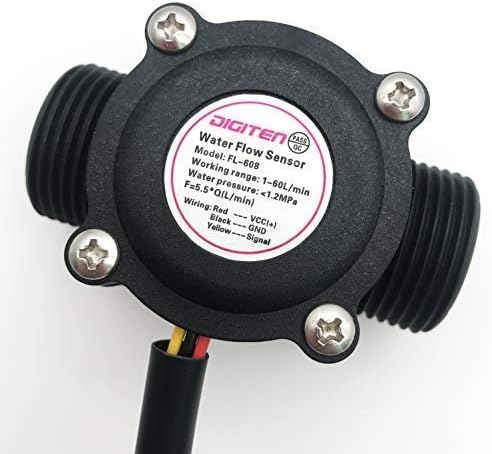
This model ranks first due to its balance of precision and ease of use. With a high rating, it stands out as a reliable choice for monitoring water flow in various projects.
We may earn a commission when you buy through this link, at no additional cost to you.
The integrated magnetic hall effect sensor outputs a pulse with every revolution, ensuring accurate data capture. Its sealed design protects the electronics from water exposure effectively.
Users must ensure flow direction matches the product markings to avoid signal issues. The NPT thread is standard but may need adapters for other pipe types.
Ideal for hobbyists needing a robust sensor for water heaters or coffee machines. This sensor delivers consistent performance across typical residential flow rates.
The hall effect sensor is sealed from the water pipe to keep it safe and dry during operation.
Works seamlessly with Arduino and Raspberry Pi for flexible integration into smart systems.
We may earn a commission when you buy through this link, at no additional cost to you.
This sensor boasts an impressive rating due to its high-quality signal output. It is built for applications demanding reliable data without noise interference.
We may earn a commission when you buy through this link, at no additional cost to you.
With high amplitude of 4.6V and low amplitude below 0.5V, it offers clear pulse signals. The electric strength of 1250V/min ensures durability under stress.
It may be overkill for simple hobby projects where basic sensors suffice. Users should verify voltage compatibility with their specific microcontroller setup.
Best for industrial or commercial setups like vending machines and water coolers. This unit provides robust performance where precision matters most.
High amplitude and low amplitude specs ensure the pulses are distinct for accurate counting.
Strong electric strength rating indicates resistance to electrical stress and environmental factors.
We may earn a commission when you buy through this link, at no additional cost to you.
Offering a low cost without sacrificing basic performance, this model is perfect for budget builds. It fits well in tight spaces due to its small size.
We may earn a commission when you buy through this link, at no additional cost to you.
The square wave output ensures clear pulses for counting. It supports a low voltage range of 3.5 to 12 volts, making it flexible for different power sources.
The low flow limit might restrict use in high-demand applications. Additionally, users may need to source their own wiring for connection.
Choose this for small DIY tasks like drip irrigation or low-flow monitoring. It provides excellent value for entry-level electronics enthusiasts.
Small size allows easy installation in confined areas where larger sensors cannot fit.
Working voltage range covers common battery and adapter levels for mobile or fixed projects.
We may earn a commission when you buy through this link, at no additional cost to you.
This sensor achieves a perfect rating due to its robust build and wide flow range. It is ideal for applications needing to measure higher water volumes quickly.
We may earn a commission when you buy through this link, at no additional cost to you.
Materials align with ROHS testing standards, allowing potable water use. It withstands pressures below 1.75 Mpa and resists heat and cold extremes.
The larger G1.5 inch thread may require adapters for standard household pipes. Thread seal tape is needed if converting to NPT connections.
Recommended for large-scale filtration or commercial beverage systems. It handles high flow rates with exceptional stability and reliability.
ROHS compliant materials ensure safety when measuring water intended for drinking or food preparation.
Heat and cold resistance allow operation in environments with temperature fluctuations.
We may earn a commission when you buy through this link, at no additional cost to you.
A solid mid-range option with food-grade plastic construction. It ensures safety when used in systems involving water for consumption or food processing.
We may earn a commission when you buy through this link, at no additional cost to you.
The voltage range of 5 to 24 volts offers flexibility for various controllers. The flow rate matches standard household needs for typical monitoring tasks.
While reliable, it may lack some advanced features found in premium units. The design is straightforward but functional for basic applications.
Use this for home brewing or water purification setups. It balances cost with safety standards for fluid handling.
Raw materials conform to ROHS standards ensuring the plastic is safe for contact with liquids.
Operating between 5 and 24 volts allows use with both 5V logic and higher power supplies.
We may earn a commission when you buy through this link, at no additional cost to you.
This option comes in a pair and features a transparent body for visual inspection. You can see the rotor spinning to confirm flow is occurring.
We may earn a commission when you buy through this link, at no additional cost to you.
Stainless steel beads in the impeller enhance wear resistance. The voltage range extends up to 24V, offering versatility in powering the sensor.
The rating is lower, indicating potential inconsistency or user experience issues. Users might need to handle the plastic body carefully.
Great for educational projects where seeing water flow is helpful. It offers practical value for multiple builds with one package.
The transparent valve body makes it easy to observe water flow and rotor conditions directly.
Internally inlaid stainless steel beads ensure the rotor is more resistant to wear.
We may earn a commission when you buy through this link, at no additional cost to you.
Designed for small hoses with a 5 to 7mm inner diameter. It suits low-flow scenarios where precise metering of small volumes is necessary.
We may earn a commission when you buy through this link, at no additional cost to you.
The plastic is food-grade, supporting safe use in drinking water systems. It operates at 5 to 24 volts for standard integration.
Pressure resistance is limited to 0.8 Mpa, which fits many low-pressure setups. It may struggle with higher pressure plumbing systems.
Perfect for small automated watering systems or beverage machines. It provides a cost-effective solution for tiny flow monitoring.
Connects directly to standard hosepipes with an inner diameter of 5 to 7 millimeters.
Flow range from 0.3 to 6 liters per minute captures very low volume accurately.
We may earn a commission when you buy through this link, at no additional cost to you.
This model stands out with a perfect rating and clear technical specs. It uses a magnetic rotor to detect flow rate changes accurately.
We may earn a commission when you buy through this link, at no additional cost to you.
The 4-point interface suits specific heater or dispenser setups. It provides feedback on rotational speed which directly correlates to flow.
Users must ensure they have the correct controller to process the pulse signal. It is optimized for regulation tasks in industrial or commercial appliances.
Ideal for water heater retrofitting or specialized dispensing machines. It delivers exact data needed for precise system regulation.
The magnetic rotor rotates as water flows, enabling the sensor to measure rate changes.
Outputs a pulse signal that helps the controller determine magnitude and perform regulation.
We may earn a commission when you buy through this link, at no additional cost to you.
The included 1.2M cable simplifies installation significantly. It allows the sensor to be placed further from the controller safely.
We may earn a commission when you buy through this link, at no additional cost to you.
Rated high for quality and ease of use, it is waterproof and safe for potable water. The connector type is standard for easy plugging.
Fixed cable length may not suit very deep setups. Users needing longer distances must extend the wires carefully.
Choose this for setups requiring flexible placement away from electronics. The cabled design saves time on wiring work.
A 1.2-meter cable is pre-attached allowing flexible placement away from the control board.
Materials align with ROHS standards allowing the sensor to be used with drinking water.
We may earn a commission when you buy through this link, at no additional cost to you.
This model supports higher flow rates up to 60 liters per minute. It includes a long cable to aid installation in larger systems.
We may earn a commission when you buy through this link, at no additional cost to you.
Materials are ROHS compliant and safe for drinking water applications. It offers heat and pressure resistance for demanding environments.
The lower rating suggests potential user issues with fit or consistency. Ensure the thread matches your pipe specifications before buying.
Best for larger pipes requiring robust monitoring with flexible sensor placement. It offers good range for bigger household or commercial uses.
Flow range of 1 to 60 liters per minute covers larger volume monitoring needs.
Waterproof and compact design with a long cable makes setup in tight or distant spots simpler.
We may earn a commission when you buy through this link, at no additional cost to you.
Selecting the right flow meter depends on several critical technical and environmental factors. Below we detail key considerations to help you match a sensor to your specific needs.
The flow rate range determines the volume of water the sensor can measure. Some models handle 1 to 30 liters per minute while others go up to 150 liters. Always match the sensor to your expected flow to avoid under or over measuring.
Check the minimum and maximum flow rates listed. Ensure your project stays within these limits for accurate readings.
Connection types vary from NPT to BSPT threads or hosepipe connectors. The physical fit must match your plumbing to prevent leaks. Some models use G1/2 while others use G1/4 or G1/5.
Inspect the thread size and type on your pipes. You may need adapters if the sensor does not fit directly.
Most sensors operate on 5 to 24 volts but some support lower voltages. The voltage must match your controller power supply. Ensure you do not exceed the rated limits to prevent damage.
Confirm your Arduino or Pi supply voltage matches the sensor range. Use a stable source to avoid fluctuating readings.
Output signals are typically square waves or pulses. These pulses are counted to calculate flow. A clear signal without noise is vital for accurate processing by the controller.
Look for stable pulse output specs. Sensors with clean waveforms reduce the need for complex code filtering.
Materials often need to be food grade for potable water use. ROHS compliance ensures the plastic is safe. This is crucial for drinking water systems or beverage machines.
Check for food grade labeling if water is consumed. Avoid non-compliant materials in sensitive applications.
Some units come with pre-attached cables while others do not. A longer cable helps separate the sensor from the electronics. This is useful in environments with high moisture.
Consider how far the sensor needs to be from the board. If no cable is included, plan your wiring needs in advance.
The sensor must be waterproof to avoid short circuits. Hall sensors are usually sealed from the pipe. This design keeps the electronics safe from water exposure.
Verify waterproof claims especially for outdoor or splash zones. A sealed design ensures long term reliability.
Pressure resistance defines the maximum water pressure the unit can handle. Some support 1.75 Mpa while others lower. Exceeding this can damage the sensor structure.
Check your system pressure against the sensor rating. Higher pressure systems need more robust models to avoid failure.
Install the sensor inline with your pipe ensuring the flow direction arrow points correctly. Incorrect installation leads to no signal output. Secure the connections tightly to prevent leaks.
Connect the signal wire to a digital pin capable of interrupt handling on your board. Power the sensor according to its voltage specs and verify continuity before running code.
Regularly inspect the sensor for debris or mineral buildup that might affect the rotor. Clean the interior if possible or replace if accuracy drops over time.
The output signal is a square wave pulse voltage typically matching the supply voltage. Most models switch between low and high states based on rotor speed. This creates a pulse train that the Arduino can count.
Yes many models offer heat resistance suitable for hot water heaters. Always check the specific temperature ratings in the manual. Exceeding thermal limits can damage the internal rotor or magnets.
Most sensors are designed for water. Using them with oil or chemicals may degrade plastic components. Consult the manufacturer to verify compatibility with other fluids before attempting use.
Zero readings often mean the flow direction is reversed. Ensure the arrow on the body matches the water direction. Also check the wiring and voltage supply to the sensor unit.
No dedicated library is required as they output standard pulses. You can write custom code using interrupt functions to count pulses. Many open source examples exist online to help start.
Accuracy typically varies between 1 and 5 percent depending on flow rate. They are suitable for general monitoring but may not meet lab grade precision. Always calibrate with a known flow for best results.
We have reviewed ten top models for Arduino flow monitoring. The DIGITEN G3/8 offers the best value for entry users while the G1.5 suits high flow needs.
Prioritize matching the flow range and connection type to your system. Safety standards like ROHS are vital for any drinking water projects.
Remember that prices change often so verify current stock details before purchase. Choose a reliable unit to ensure long term project success.