
Handheld Fish Finder Portable Fishing Kayak Fishfinder
4.2Editor score
Portable handheld design
200kHz sonar frequency
4-5 hour battery life
Finding the right tool to locate fish can transform your time on the water. A cheap fishfinder offers the essential sonar technology needed to identify fish, structures, and depth without breaking the bank.
We evaluated ten highly rated models based on sonar quality, ease of use, battery life, and portability. This list covers everything from handheld units to mounted GPS fishfinders suitable for kayaks and small boats.
Each pick highlights key features and real-world performance insights to help you choose. Keep in mind that availability and pricing can fluctuate so checking current listings is always recommended before purchasing.
4.2Editor score
4.6Editor score

4.7Editor score
As an Amazon Associate we earn from qualifying purchases.
This side-by-side comparison highlights the core specifications and capabilities of each model to help you quickly identify which device fits your specific fishing needs and vessel type.


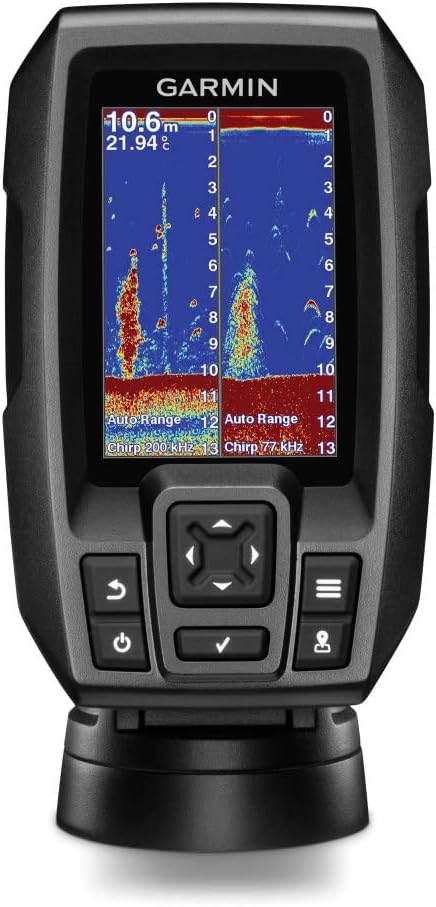
The Garmin Striker 4 stands out as a top contender in the affordable fishfinder market. With a solid 4.6 rating from thousands of users it delivers high frequency sonar that provides near photographic images of underwater structures and fish.
We may earn a commission when you buy through this link, at no additional cost to you.
Its ClearVu scanning sonar offers detailed representations of objects and fish which is crucial for precise positioning. The CHIRP Sonar technology sends continuous sweeps of frequencies resulting in crisper fish arches and better target separation compared to traditional sonars.
While the 3.5 inch display might seem small it is bright and readable thanks to its design. The device is straightforward to install and operate with dedicated buttons. However it lacks the advanced mapping capabilities found in more expensive models which may limit navigation planning.
This unit is ideal for anglers who prioritize clarity and ease of use without needing complex chartplotters. It is a reliable choice for freshwater and saltwater fishing making it a versatile addition to any small boat or kayak setup.
This high frequency sonar delivers detailed images of what lies around your boat helping you identify fish holding areas with precision.
With an IPX7 water rating and intuitive buttons the unit withstands harsh conditions while remaining easy to operate even with wet hands.
We may earn a commission when you buy through this link, at no additional cost to you.
The Lowrance Eagle Fish Finder focuses on usability and screen clarity. Its 4-inch IPS portrait screen remains clear even in direct sunlight which is a common pain point for many anglers using cheaper devices.
We may earn a commission when you buy through this link, at no additional cost to you.
Auto-Tuning Sonar simplifies the process by optimizing settings automatically so you can focus on the fishing rather than tweaking dials. The included 200 kHz Bullet Skimmer provides broad coverage suitable for kayaks and small boats.
While it lacks GPS capabilities the simplicity is its strength. Fish icons with depth help identify targets quickly. The twist-lock connector makes setup and removal fast which is great for those moving the unit between vessels.
This finder is perfect for casual anglers who want a no fuss reliable sonar view. It delivers the essentials needed to locate fish without unnecessary complexity or high cost.
The IPS technology ensures wide viewing angles and brightness so you never lose sight of the screen even in harsh daylight conditions.
Automatic optimization means you spend less time adjusting settings and more time reacting to the sonar data displayed on your screen.
We may earn a commission when you buy through this link, at no additional cost to you.
For anglers on a tight budget this handheld fish finder offers incredible value. It displays water depth and approximate fish locations using a 200kHz sonar frequency that is reliable for most general fishing scenarios.
We may earn a commission when you buy through this link, at no additional cost to you.
Its portability is unmatched allowing you to take it anywhere from kayaks to shore. The included neck strap keeps your hands free while you manage your rod. It operates on four AAA batteries which last about 4 to 5 hours on new cells.
The device allows you to adjust sensitivity levels to suit different water conditions. While it works best when moving slowly under 5mph it provides enough data for dock fishing or ice fishing where movement is minimal.
This unit is an excellent entry level tool for beginners or as a backup device. It proves you do not need to spend a fortune to get useful sonar data on the water.
Weighing almost nothing and fitting in a tackle box this finder ensures you always have a tool to check depth regardless of where you fish.
Whether fishing in freshwater lakes or saltwater environments this device adapts to show depth and fish location with reasonable accuracy.
We may earn a commission when you buy through this link, at no additional cost to you.
The Garmin STRIKER Vivid 4cv brings premium features to a lower cost tier. The vivid scanning sonar color palettes make it easier to distinguish fish from structure which is a key advantage over monochrome models.
We may earn a commission when you buy through this link, at no additional cost to you.
It includes high sensitivity GPS for marking waypoints and viewing boat speed. The Quickdraw Contours mapping adds significant value by allowing real time depth contour mapping which helps you build your own charts.
While the price is higher than basic handhelds it offers a much more complete experience for serious anglers. The tilt and swivel mount ensures you can view the screen comfortably from any angle in the boat.
This device is recommended for those who want advanced mapping without the high cost of top tier systems. It balances performance and price effectively making it a standout in its class.
The color display enhances the ability to see fish arches and bottom structure clearly reducing eye strain during long fishing sessions.
Quickdraw Contours allows you to create your own maps as you fish ensuring you remember productive spots for future trips.
We may earn a commission when you buy through this link, at no additional cost to you.
The Humminbird PiranhaMAX 4 offers robust dual beam sonar technology that gives anglers flexibility in how they view underwater data. You can choose a narrow beam for detail or a wide beam for coverage.
We may earn a commission when you buy through this link, at no additional cost to you.
This versatility helps identify fish and contours more accurately depending on your specific environment. The tilt and swivel mount allows quick adjustments to your viewing angle without fumbling with knobs.
While it lacks GPS and advanced mapping it excels at pure sonar performance. The included transducer and mount ensure you can get up and running quickly after purchase.
This model is ideal for anglers who want a proven sonar unit without extra features they will not use. It delivers reliability and clarity at a competitive price point.
Being able to switch between narrow and wide beams ensures you get the right level of detail or coverage for any fishing spot.
Humminbird is known for durable sonar and this model continues that legacy with clear readings and solid build quality.
We may earn a commission when you buy through this link, at no additional cost to you.
The LUCKY Kayak Portable Fish Depth Finder is designed specifically for kayakers and anglers with limited space. It displays approximate fish locations and water depth clearly so you do not have to guess.
We may earn a commission when you buy through this link, at no additional cost to you.
Its fish and fish schools alarm alerts you to passing fish so you can focus on casting. The neck strap allows you to wear it easily while managing your gear on a kayak.
The device offers five levels of sensitivity adjustment which is useful for varying water conditions. It works in both fresh and salt water making it suitable for shore or boat fishing as well.
This unit is a cost effective solution for those who need portability above all else. It provides essential data without the bulk of a mounted unit.
Designed to be held in one hand and worn around the neck this device ensures you stay free to fish without hindrance.
Adjustable sensitivity lets you tune the device for clear or turbid water improving accuracy in diverse environments.
We may earn a commission when you buy through this link, at no additional cost to you.
The Humminbird Helix 5 Chirp GPS G3 offers advanced navigation and sonar features. Its Dual Spectrum CHIRP Sonar delivers detailed views of fish holding structure with wide and narrow modes.
We may earn a commission when you buy through this link, at no additional cost to you.
Enhanced GPS Navigation includes coverage for thousands of lakes and coastlines. AutoChart Live allows real time mapping of depth contours which is vital for exploring new areas.
While the interface is user-friendly with softkey controls it is more complex than basic models. The keypad is reliable in any weather conditions ensuring consistent performance on the water.
This model is best for anglers who frequently explore new waters and need precise navigation. The mapping features provide significant value despite the higher cost.
Dual spectrum technology provides clearer target separation allowing you to distinguish individual fish from structure effectively.
AutoChart Live creates customized maps as you fish giving you a visual record of the lake's depth and contours.
We may earn a commission when you buy through this link, at no additional cost to you.
This portable fish finder features a wireless sonar probe that can be cast up to 262 feet. This eliminates the need to drill holes in your hull making it ideal for boats where mounting is difficult.
We may earn a commission when you buy through this link, at no additional cost to you.
The sensor connects to the handheld unit wirelessly so you can explore areas far from your boat. The color display shows depth temperature and fish size clearly even in bright sunlight.
It is rechargeable so you do not need to buy batteries constantly. The device works in various environments including lakes rivers and seas offering great flexibility.
This is a great option for shore anglers or those using small boats who need flexibility. It offers a unique solution to scanning deeper water without installation.
The ability to cast the sensor allows you to check water conditions in places your boat cannot reach.
The color LCD enhances visibility of data making it easier to read details under varying light conditions.
We may earn a commission when you buy through this link, at no additional cost to you.
This portable fish finder features a 2.4 inch colorful LCD screen that offers detailed information. It detects fish size icons with depth and water temperature to help you adjust your tactics.
We may earn a commission when you buy through this link, at no additional cost to you.
The rechargeable sensor supports detection up to 147 feet with a 90 degree angle. The sensor includes an attractive lamp that turns on when touching water which can help attract fish.
It is user-friendly with settings saved automatically and a fish alarm feature. The wide application range makes it suitable for kayak ice and shore fishing.
This model is a solid choice for those who need reliable data without complex setup. The lamp feature adds a unique touch for improving catch rates.
The automatic lamp on the sensor can help attract fish to your spot potentially increasing your catch rate.
Support for multiple languages ensures international anglers can read and interpret the screen with ease.
We may earn a commission when you buy through this link, at no additional cost to you.
This wireless fish finder uses both sonar and radio frequencies for fine tuning. It shows water depth temperature and fish size clearly on its LED display.
We may earn a commission when you buy through this link, at no additional cost to you.
The unit is capable of operating for about six hours on a charge. It can be mounted on a boat rod or floated in water to access specific areas.
Note that it will not display fish icons if floating in shallows less than one meter. The sensor turns on automatically when floating which is convenient for checks.
This unit is best for anglers who need a flexible rechargeable unit. It balances functionality with ease of use for various water environments.
The two frequencies allow for more precise control over the readings ensuring better performance in different water conditions.
Having both receiver and sensor rechargeable means you can fish longer without worrying about battery replacements.
We may earn a commission when you buy through this link, at no additional cost to you.
Selecting the right fishfinder depends on your fishing style vessel type and budget. Understanding the key features will help you find a model that fits your needs.
Sonar is the core technology that detects underwater objects. CHIRP sonars send a range of frequencies for better target separation while traditional sonars use a single frequency. Look for models with clear display clarity and adjustable sensitivity to handle different water depths.
Choose CHIRP or high frequency sonars for better detail especially if you fish in deeper or structured waters.
The screen must be readable in various lighting conditions. IPS screens offer better viewing angles and brightness which is helpful in direct sunlight. Size also matters; a 3.5 to 4 inch display is usually sufficient for most portable needs.
Opt for displays with backlight options and high contrast to ensure visibility during early mornings or late evenings.
If you kayak or fish from shore a portable handheld unit is often best. Check for features like neck straps or compact sizes that fit easily in a tackle box. For boats consider if the unit requires mounting or can be used as a temporary solution.
Select a portable unit that balances size and weight with battery life for extended fishing trips.
Battery life determines how long you can fish without interruption. Some units use AAA batteries while others are rechargeable. Ensure the battery lasts at least for a standard fishing day of around six hours.
Look for models with battery saving modes and indicators so you can monitor power levels while out on the water.
Waterproof ratings like IPX7 protect the device from accidental splashes or submersion. This is crucial for saltwater use or fishing in wet conditions. A durable build ensures the device survives the harsh marine environment.
Always check the waterproof rating to ensure the unit matches your typical fishing conditions and water exposure.
GPS functionality helps you mark waypoints and create routes for future fishing. Some models include basic mapping while others support premium chart upgrades. If navigation is a priority consider models with built-in GPS or memory features.
Prioritize units with waypoint memory if you need to return to productive fishing spots regularly without re-scanning.
Simple interfaces with dedicated buttons reduce frustration on the water. Menus should be straightforward so you can change settings quickly. Complex systems might offer more features but can slow you down during active fishing sessions.
Choose a model with intuitive controls that you can operate without reading a manual while out on the boat.
The transducer is the probe that sends and receives sonar signals. Some units come with transom mounted transducers while others use handheld or wireless ones. Ensure the transducer matches your boat type or fishing style.
Select a transducer that fits your installation requirements and provides the beam angle needed for your fishing location.
To start using your fishfinder ensure the transducer is submerged and connected securely. Turn on the unit and allow it a few moments to calibrate to the water depth. Adjust the sensitivity settings based on water clarity and the type of fish you expect.
When fishing keep the transducer clean and free of debris that might block signals. If using a handheld unit move slowly to avoid motion blur. Mark waypoints as you find promising spots to revisit later using the GPS if available.
After use rinse the device with fresh water especially if used in saltwater. Store the unit in a dry place to prevent moisture damage. Regularly check batteries and charge the unit to ensure it is ready for your next trip.
Yes many affordable fishfinders provide accurate readings that are sufficient for most anglers. Look for models with CHIRP or high frequency sonars which offer better detail than basic single frequency units.
Portable fishfinders can be used on large boats especially for shallow areas or specific fishing spots. They are ideal for anglers who want flexibility or temporary sonar without permanent installation.
Most entry level and portable units detect depths from a few feet up to around 300 feet. The exact depth depends on the model frequency and water conditions but this covers the majority of fishing scenarios.
Many portable fishfinders are designed to work in both fresh and saltwater. Ensure the specific model is rated for saltwater use and rinse it thoroughly after each use to prevent corrosion.
Most handheld fishfinders use AAA batteries which are easy to replace. Some newer models offer rechargeable options that reduce long term costs and are more eco-friendly for frequent anglers.
Rinse the device with fresh water after every use to prevent salt buildup. Store it in a protective case and avoid direct sunlight when not in use to prevent screen fading or damage.
Choosing the right fishfinder comes down to balancing your needs with your budget. The Garmin Striker 4 and Handheld Fish Finder offer excellent value for those seeking performance without high costs.
Prioritize features that matter most to your fishing style such as sonar clarity or portability. A model that fits your boat and matches your habits will provide the best returns over time.
Always check current availability and compare options before buying. This guide helps you narrow down the top choices so you can confidently select a reliable tool for your next trip.