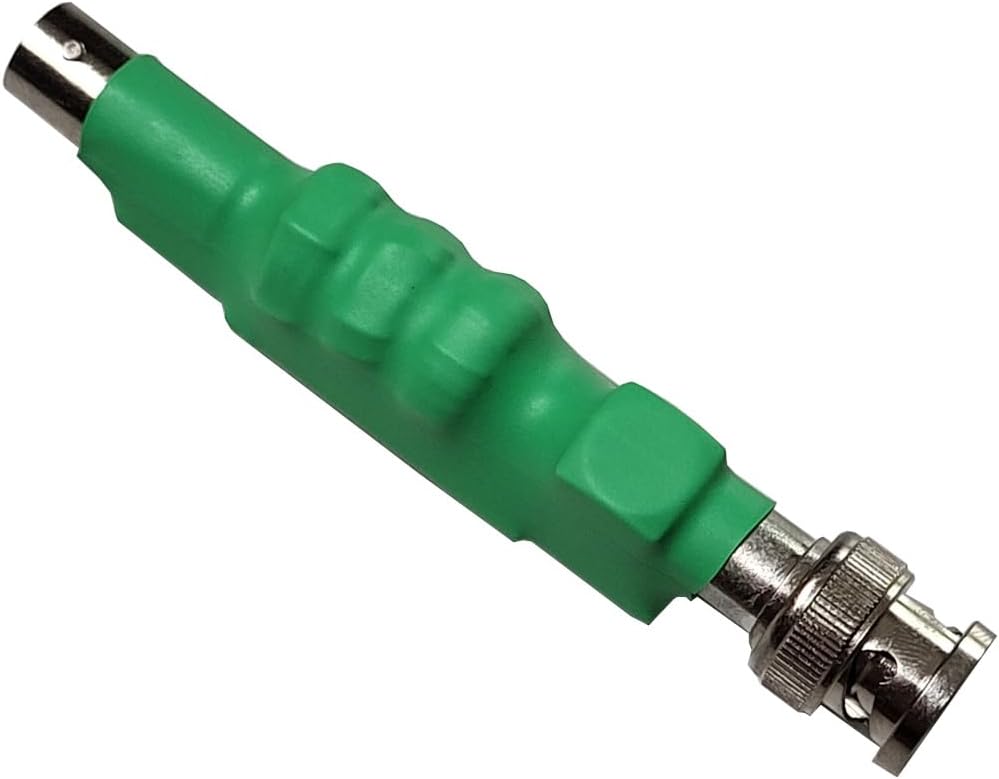
K9DP QRP 20 Meter Portable
4.8Editor score
Lightweight 35 gram design
Up to 20 watts tested
Male/Female BNC connectors
This guide compares the top ham radio bandpass filters for clarity, protection, and performance across HF, VHF, and UHF bands.
Ham radio operators constantly face signal interference that can degrade communication quality. A high-quality bandpass filter is essential for isolating desired frequencies while blocking unwanted noise and overload.
We analyzed ten real products based on power handling, frequency precision, connector types, and user ratings. This list covers options from portable field units to robust station-grade filters.
Each pick highlights key specs, strengths, and trade-offs to help you choose the right filter for your setup. Prices and availability change frequently so verify details before purchasing.
4.8Editor score

5.0Editor score

4.1Editor score
This side-by-side comparison highlights the key technical specifications and use cases for each of the ten selected bandpass filters.
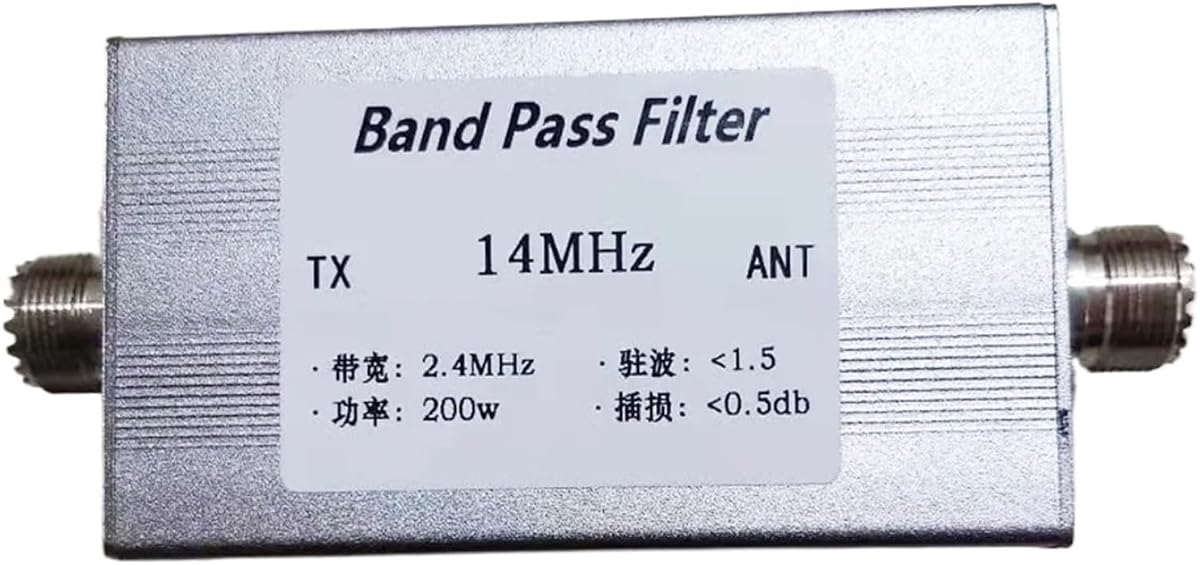


This filter offers a strong balance of power and precision for 14MHz operations. It earned a perfect rating for its robust construction and effective signal isolation.
We may earn a commission when you buy through this link, at no additional cost to you.
Its LC circuit design ensures high sensitivity while the M female connector provides a stable link. The high isolation capability significantly reduces unwanted signals in busy bands.
The trade-off is the fixed frequency design which limits versatility to the 14MHz band. However for contest operators this focused performance outweighs the lack of multi-band options.
Ideal for dedicated shortwave stations needing maximum power handling and clarity. We recommend this for users prioritizing signal purity over flexibility.
Capable of handling up to 200W of power to make it ideal for demanding ham radio applications.
Specialized band pass filter design effectively reduces unwanted signals and enhances communication clarity.
We may earn a commission when you buy through this link, at no additional cost to you.
This module brings five distinct filters into one package to cover the 2m through 23cm bands. It offers great flexibility for VHF and UHF enthusiasts.
We may earn a commission when you buy through this link, at no additional cost to you.
The pushbutton switch allows easy bias voltage application. Its design supports selective signal processing and protects transceivers from overload on busy frequencies.
The bias tee integration adds a step to setup which may confuse beginners. However the coverage of multiple common ISM frequencies justifies the extra complexity.
Perfect for operators using multiple VHF/UHF bands regularly. Choose this when you need broad band coverage in a single solution.
Five ham radio channel filters in one module providing a wide range of frequencies to explore.
Pushbutton switch enables 4.5V bias tee voltage application for smooth device integration.
We may earn a commission when you buy through this link, at no additional cost to you.
This filter offers high isolation across a range of HF frequencies. It supports up to 200W power handling making it suitable for high output stations.
We may earn a commission when you buy through this link, at no additional cost to you.
The SL16-F interface allows tailoring for higher power demands. Its compact size and light weight make integration into fixed or portable setups easy.
Lack of user ratings makes it harder to verify long term performance. Buyers should confirm frequency needs before ordering due to model specificity.
Recommended for HF operators requiring specific frequency options with high power tolerance. It balances size and robustness well.
Handles up to 200w ensuring robust performance in high-power applications.
Separates signals with precision minimizing interference for enhanced sensitivity.
We may earn a commission when you buy through this link, at no additional cost to you.
This 40m filter targets the 7MHz band with high power handling. It aims to boost receiver sensitivity while cutting out-of-band noise effectively.
We may earn a commission when you buy through this link, at no additional cost to you.
Robust SL16-F connectors ensure a reliable physical connection. The anodized aluminum casing provides durability for field or stationary use.
The single band design limits versatility to 40m operations. However its focused approach delivers strong performance where 40m interference is common.
Ideal for 40m operators needing improved clarity and noise reduction. It is a solid choice for that specific band.
Improves receiver sensitivity and reduces out-of-band noise significantly.
Features robust SL16-F connectors for reliable connections.
We may earn a commission when you buy through this link, at no additional cost to you.
This filter is tuned for short wave communication around 3.8MHz. It supports up to 200W power making it suitable for HF transmit setups.
We may earn a commission when you buy through this link, at no additional cost to you.
The focus on signal filtering helps maintain clarity on crowded bands. Its power rating ensures reliability during extended transmission periods.
The product description lacks detailed specifications for easy comparison. Buyers should confirm exact frequency and connector match before purchase.
Recommended for users needing a 3.8MHz filter with high power tolerance. It serves well in shortwave communication scenarios.
Supports up to 200W for robust performance in HF setups.
Optimized for signal filtering in shortwave communication.
We may earn a commission when you buy through this link, at no additional cost to you.
This filter offers choices for 868MHz, 915MHz, 433MHz and 1200MHz applications. It targets RFID and VTX needs with stable performance.
We may earn a commission when you buy through this link, at no additional cost to you.
Imported SMD components ensure durability and consistent results. The unique shielding design helps maintain performance in compact form factors.
The power limit of one watt makes it unsuitable for ham transmit. It is best reserved for receiver or low power transmit links.
Perfect for RFID and drone VTX users needing frequency selectivity. It provides reliable filtering for low power signals.
Good passband ripple coefficient and out-of-band suppression capability.
Imported SMD components ensure stable performance over time.
We may earn a commission when you buy through this link, at no additional cost to you.
This filter targets 10MHz with low insertion loss to preserve signal strength. It features a bandwidth of 7 to 11MHz and SMA connectors.
We may earn a commission when you buy through this link, at no additional cost to you.
High user ratings suggest reliable performance in amateur setups. The low loss spec ensures minimal signal degradation during transmission.
The bandwidth is relatively wide compared to narrow band filters. This may be acceptable for general coverage but less selective for contesting.
Ideal for 10m operators prioritizing signal preservation and ease of use. It balances cost and performance well.
Insertion loss better than 1.3dB for minimal signal degradation.
Bandwidth covers 7 to 11MHz for general use.
We may earn a commission when you buy through this link, at no additional cost to you.
This filter is designed to help HF radios struggle with front-end overload from AM broadcast stations. It is tested up to 100 watts.
We may earn a commission when you buy through this link, at no additional cost to you.
Weighing just 78 grams it is perfect for portable operations like POTA. High quality C0G capacitors and Micrometals toroids ensure reliability.
The lower power rating limits it to QRP or moderate power use. However its lightweight design makes it a top choice for field days.
Recommended for portable HF operators needing broadcast interference rejection. It combines quality build with low weight.
Lightweight portable design weighing just 78 grams.
High quality C0G capacitors and Micrometals toroids.
We may earn a commission when you buy through this link, at no additional cost to you.
This portable filter is made in the USA and designed to reject interference from nearby stations. It handles up to 20 watts of power.
We may earn a commission when you buy through this link, at no additional cost to you.
Weighing just 35 grams it is exceptionally light for field operations. BNC connectors provide a standard and secure connection.
The power limit restricts it to QRP operations. This is acceptable for backpacking or hiking where weight is a primary concern.
Ideal for QRP enthusiasts needing maximum portability. It balances performance and weight better than most options.
Made in the USA personally by K9DP.
Weighing just 35 grams for extreme portability.
We may earn a commission when you buy through this link, at no additional cost to you.
This 7MHz filter targets the 40m band with high power handling. It aims to improve sensitivity and reduce interference effectively.
We may earn a commission when you buy through this link, at no additional cost to you.
Robust SL16-F connectors ensure stable connection in the field. The anodized aluminum casing protects the unit from environmental stress.
Lack of detailed user reviews makes performance verification harder. Buyers should ensure this matches their exact frequency needs.
Recommended for 40m operators requiring high power tolerance. It offers durability and signal clarity.
Compact and durable anodized aluminum casing.
Strong anti-interference capabilities improve receiver sensitivity.
We may earn a commission when you buy through this link, at no additional cost to you.
Selecting the right filter requires evaluating power handling, frequency match, and physical build quality for your specific operating style.
Ensure the filter matches your target band center frequency. A mismatched filter may pass unwanted noise or attenuate your desired signal significantly. Check if the filter is narrow band or wide band based on your operation type.
Always verify the center frequency and bandwidth specifications match your operating needs.
Match the filter power rating to your transmitter output. Exceeding this limit can cause permanent damage to the components. Consider future upgrades and select a filter with a margin above your current power.
Select a power rating that exceeds your typical transmit power to avoid component failure.
Check that the input and output connectors match your equipment cables. Common types include SMA, BNC, SO-239, or Type N. Mismatched connectors require adapters that can introduce loss or mechanical instability.
Confirm connector types and gender compatibility before purchasing to avoid extra accessories.
Consider weight and dimensions if you operate from field locations like POTA or SOTA. Portable filters should be lightweight and rugged to survive transport. Fixed station filters can be larger and heavier without issue.
Prioritize weight and size for portable setups to ensure ease of transport.
Low insertion loss is critical for maintaining signal strength through the filter. A high loss filter weakens both transmit and receive signals. Look for specs that state insertion loss in decibels to compare performance.
Look for insertion loss values below 2dB to maintain strong signal performance.
High-quality components like toroids and capacitors ensure reliability under thermal stress. Aluminum casings protect internal components from physical damage. Check construction notes to confirm durability for field or indoor use.
Check for quality materials and durable casings to ensure long-term reliability.
Some filters offer multiple frequency options or switchable modules for different bands. These provide flexibility if you operate on multiple bands regularly. Single band filters offer better optimization for specific interference problems.
Decide between single band optimization and multi-band flexibility based on your operating habits.
Different filters target different types of interference like BCI or RFI. Choose a filter designed to reject the specific noise source you face. Verify the stopband suppression capabilities match your noise environment.
Match the filter suppression specs to the specific interference types you encounter.
Install the filter between your antenna and transceiver to block unwanted signals. Use high quality coaxial cables to maintain impedance matching and reduce additional loss.
Store portable filters in padded cases to prevent physical damage during transport. Ensure the connectors are protected from dust and moisture while not in use.
Inspect connectors regularly for corrosion or wear that may increase insertion loss. Clean contacts gently with appropriate tools if needed to maintain signal quality.
A bandpass filter blocks signals outside a specific frequency range to reduce interference. It improves clarity by allowing only the desired band to pass through to your receiver or transmitter. This is essential for crowded bands or noisy environments.
Select a filter matching your operating band center frequency. For example choose 14MHz for 20m or 7MHz for 40m. Check your radio's band plan and confirm the filter specifications align with your needs.
Yes many filters work for receive only setups. Ensure the power rating matches your needs even if you transmit low power. Receiving filters can help reduce strong signals that cause overload.
Exceeding the power rating can overheat internal components like inductors or capacitors. This may cause permanent damage and loss of filtering capability. Always stay below the rated limit to ensure reliability.
Properly matched filters should not significantly change your SWR. If you notice high SWR check for poor connections or impedance mismatch. Quality filters maintain stable impedance across the passband.
Portable filters often match stationary performance but prioritize weight savings. They are engineered to handle high power in small form factors. Field tests show they reduce interference effectively during portable operations.
Quality filters can last for many years if kept dry and cool. Components like toroids and capacitors are stable under normal operating conditions. Regular inspection ensures connections remain tight and corrosion free.
Adapters are necessary if your filter and radio connectors differ. Avoid excessive adapters as each introduces potential loss or mismatch. Select a filter with connectors matching your radio to reduce complexity.
Top picks like the 200W Shortwave and K9DP QRP offer distinct advantages for power and portability. Multi-band solutions like Nooelec suit operators requiring broader frequency coverage.
Prioritize frequency match and power handling to ensure compatibility with your setup. Consider connector types and physical build for your operating environment.
Prices and stock vary so check current details before buying. Choose the model that aligns best with your specific interference needs.